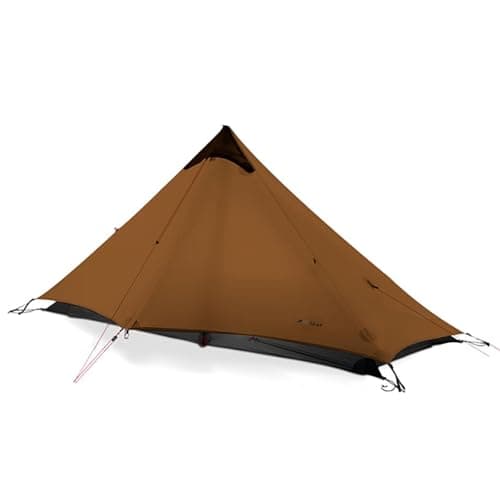
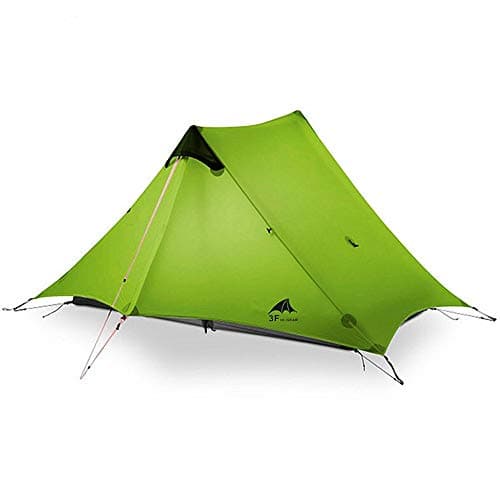
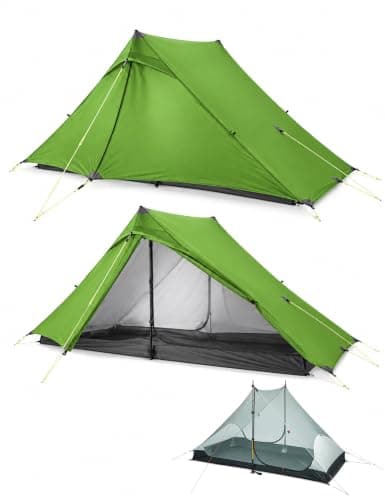
Quick picks
The picks at a glance
| # | Product | Best for | Score | Price |
|---|---|---|---|---|
| 1 |  Naturehike Cloud Up UL 2 The best value figure of any tent that ships with its own pole: within 40 g of the Copper Spur UL2 for a fraction of the price. The 15D fly rated PU 1500 mm+ is the compromise. | Best Freestanding Tent1,220 g (2 lb 11.0 oz)$150–$200 band | 5.8 / 10Value 5.4/10 | Check price · Amazon #ad · Disclosure |
| 2 |  Naturehike Cloud Up UL 1 The lightest solo tent here, and the only one under 1.1 kg that still comes with its own pole and a footprint in the box. A 90 cm inner is the price of that. | Best solo freestanding tent1,060 g (2 lb 5.4 oz)$100–$150 band | 5.6 / 10Value 5.2/10 | Check price · Amazon #ad · Disclosure |
| 3 | 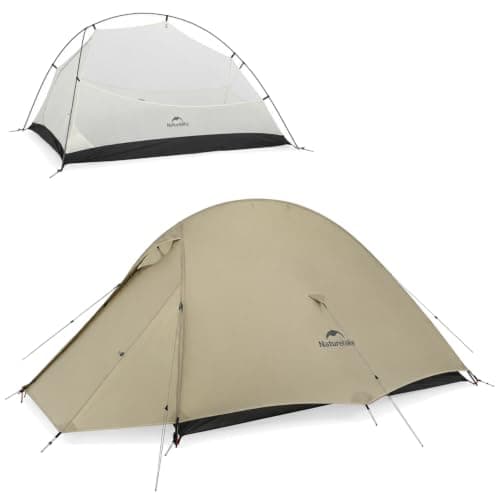 Naturehike Cloud Up Pro 2 A 20D fly at PU 3000 mm+ instead of the UL's 15D at PU 1500 mm+, for 140 g more and a lower list price. The tent to buy if the UL's fabric worries you. | Best two-person all-rounder1,360 g (2 lb 16.0 oz)$150–$200 band | 5.5 / 10Value 4.9/10 | $139.99Amazon #ad · Disclosure |
| 4 | Big Agnes Fly Creek UL2 The lightest tent here by a wide margin, but Big Agnes lists it as semi-freestanding: the foot corners need stakes, so it is not a true pitch-anywhere tent. | Lightest, with an asterisk859 g (1 lb 14.3 oz)$400–$500 band | 5.3 / 10Value 3.3/10 | Check price · Amazon #ad · Disclosure |
| 5 | Big Agnes Copper Spur UL2 Two side doors, two 9 sq ft vestibules and DAC poles at 1,180 g. It ranks here on weight and features, not on value, and the footprint costs extra. | Premium two-door benchmark1,180 g (2 lb 9.6 oz)$500–$700 band | 5.2 / 10Value 1.7/10 | Check price · Amazon #ad · Disclosure |
| 6 | Naturehike Cloud Up Pro 1 A 105 cm peak, a 20D fly at PU 3000 mm+ and a footprint in the box at the lowest list price of the current Naturehike solo tents. The inner is narrow. | Best cheap current solo tent1,230 g (2 lb 11.4 oz)$100–$150 band | 5.1 / 10Value 4.1/10 | Check price · Amazon #ad · Disclosure |
| 7 | 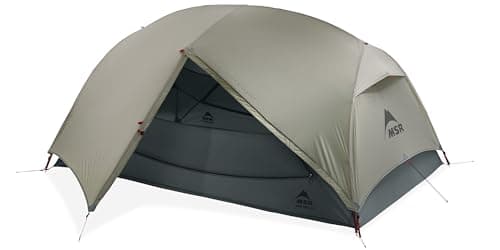 MSR Hubba Hubba LT 2 A true rectangular 32 sq ft floor, two doors and one DAC pole, at the same minimum weight as the Cloud Up Pro 2 for more than three times the list price. | Roomiest floor here1,360 g (2 lb 16.0 oz)$500–$700 band | 5.0 / 10Value 1.4/10 | $547.50Amazon #ad · Disclosure |
| 8 | Clostnature Crux 1-Person Tent The lowest list price of any tent on this site with a PU 5000 fly and bathtub floor. It is also the narrowest, the shortest and the heaviest of the solo picks. | Cheapest freestanding tent1,350 g (2 lb 15.6 oz)$50–$100 band | 4.8 / 10Value 4.3/10 | Check price · Amazon #ad · Disclosure |
#ad · Amazon prices come live from Amazon, last checked November 3, 2026. Weights and list prices are the maker's own figures, and every score is built from those published specs. Tap a row for the full write-up.
A freestanding tent is the one that stands up on its own poles. Push the corners out, clip the body on, and it holds its shape on a tent pad, a rock slab, a wooden platform or a patch of sand where a stake would pull straight out. That independence is worth real money to some people and nothing at all to others, which is why it deserves a ranking of its own rather than a line in a general tent list.
We took every tent in our catalog that ships with its own poles, dropped the models their makers have discontinued, and ranked what was left by how many grams each one saves for every dollar of list price, measured against an ordinary entry-level tent. Three Naturehike Cloud Ups came out on top, and the two best-known premium tents in the category landed in the bottom half. The reason is not that they are bad tents. It is that they weigh almost exactly what the cheap ones weigh.
How we picked
Four rules, all published in full on our methodology page.
The gate: the tent brings its own poles. Every pick here pitches without borrowing the trekking poles in your hands. Seven of the eight are described by their makers as freestanding; the eighth, the Big Agnes Fly Creek UL2, is listed as semi-freestanding, which means the foot corners still need stakes. We kept it because it ships with a pole and flagged the difference everywhere it matters. Trekking-pole shelters are ranked separately in the best trekking pole tents.
Current models only. Naturehike marks both the original Cloud Up 2 and Cloud Up 1 as clearance models it will not restock once sold out, and recommends the Cloud Up Pro in their place (Naturehike). They are good tents and they are still on this site, but a tent you may not be able to buy in six months does not belong at the top of a ranking, so both are discussed below rather than ranked.
The reference: the Kelty Late Start 2P and the Kelty Late Start 1P. Kelty's Late Start pair is what a first-time buyer carries before anyone starts shopping for weight: aluminum poles, a 68D polyester fly and floor, one door and one vestibule. The 2P weighs 1,900 g (4 lb 3.0 oz) and the 1P 1,600 g (3 lb 8.4 oz), both the maker's own minimum weights (Kelty). Two-person tents are scored against the 2P, solo tents against the 1P, so the two sizes rank on the same scale.
The value metric: grams saved per dollar. Grams saved against the matching reference, divided by the maker's list price, is 35% of the score. Absolute weight is 20%, space and weather protection 25%, materials and durability 10%, and ease and versatility 10%. Weights are each maker's minimum or trail weight — body, fly and poles, no stakes or sacks — and every number traces to a maker page in the Sources list. See how every pick is researched.
Why three Naturehike Cloud Ups lead the ranking
That gap is the whole argument of this site in one line. Forty grams is a candy bar. The price difference is most of a sleeping quilt. If you want 90% of ultralight for a fraction of the price, a double-wall freestanding tent is the single easiest place on your gear list to get it, because the cheap tents and the expensive tents use broadly similar fabric weights and broadly similar pole counts.
What the Cloud Up UL 2 actually gives you: 1,220 g (2 lb 11.0 oz) minimum weight, a 210 x 130 x 105 cm inner, a 0.72 m² vestibule, a Yuksom UL 8.5 mm aluminum pole, and a 210T polyester footprint in the box rated PU 5000 mm+ (Naturehike). What it gives up is fly fabric: 15D nylon listed at PU 1500 mm+ in the tech specs. Naturehike's own page is inconsistent here — a feature blurb on the same page claims 4000 mm — and we rank on the lower, specified figure.
One door is the other compromise, and it is a real one for two people. Whoever sleeps on the far side climbs over the other to get out at 2 a.m. Every Naturehike pick on this list has that problem; the two premium tents solve it.
The fabric step-up: Cloud Up Pro 2 over Cloud Up UL 2
If the 15D fly is the thing that bothers you — and it bothers plenty of people who camp in sustained rain — the Cloud Up Pro 2 is the answer and it costs less, not more. Naturehike lists it with a 20D silicone-coated nylon ripstop fly at PU 3000 mm+ and a 210T floor layer at PU 5000 mm+, at a minimum weight of 1,360 g (2 lb 16.0 oz) and a packed weight of 1.53 kg (Naturehike). Against the UL 2 that is 140 g (4.9 oz) more on the scale for double the stated hydrostatic head, in a lower price band.
It ranks third rather than first only because our value metric rewards grams saved, and the Pro 2 saves 540 g (1 lb 3.0 oz) vs the Kelty Late Start 2P against the UL 2's larger figure. On the ground, I would call this the better buy for most two-person trips in the Pacific Northwest, the Appalachians, or anywhere else a fly spends three days wet. What a hydrostatic-head number does and does not tell you is covered in silnylon vs silpoly vs Dyneema.
What the premium tents actually buy
The Copper Spur UL2 and the Hubba Hubba LT 2 are the two tents most people are trying to decide whether to avoid. Both are excellent. Neither is a weight argument.
- Doors and vestibules. Big Agnes lists two side doors and two 9 sq ft vestibules on the Copper Spur UL2 (Big Agnes); MSR lists two StayDry doors and 16 sq ft of total vestibule on the Hubba Hubba LT 2 (MSR). Every budget pick here has one door.
- Floor shape. MSR's 32 sq ft floor is a true rectangle with no taper, which is the largest and the most usable floor in this group. The Copper Spur tapers from 52 to 42 in.
- Poles. DAC Featherlite NFL and NSL on the Copper Spur, a single DAC NFL 9.3 mm pole on the Hubba Hubba. The budget tents use unbranded 7001 or Yuksom aluminum.
- Weight. The Copper Spur is 40 g (1.4 oz) under the Cloud Up UL 2. The Hubba Hubba LT 2 weighs 1,360 g (2 lb 16.0 oz), which is exactly the Cloud Up Pro 2's minimum weight.
So the honest pitch for either premium tent is not “it is lighter.” It is “it is roomier, easier to live in for two, and built from parts with a longer track record, for about the same weight.” That is a legitimate thing to pay for. It is just not a grams argument, and anyone selling it to you as one is not reading the spec tables. Why the gap exists at all is the subject of why ultralight tents are so expensive.
The semi-freestanding asterisk
It is worth knowing what else the Fly Creek trades for that weight: one head-end door for two people, a 15D fabric rated 1500 mm, and a 28 sq ft floor that tapers to 42 in at the foot. Big Agnes also publishes a Fast Fly weight of 676 g with the footprint, which is the lightest configuration of any tent on this page and leaves you sleeping under the fly alone.
The solo picks
Solo tents are scored against the Kelty Late Start 1P (1,600 g (3 lb 8.4 oz)), so their grams-saved figures are smaller than the two-person numbers. Three current models made the list.
#2, Naturehike Cloud Up UL 1. At 1,060 g (2 lb 5.4 oz) it is the lightest solo tent here and the lightest tent on this site that still arrives with its own pole and a footprint. Naturehike lists a 210 x 90 x 105 cm inner, a 0.45 m² vestibule and the same 15D fly at PU 1500 mm+ as the two-person UL (Naturehike). It saves 540 g (1 lb 3.0 oz) vs the Kelty Late Start 1P, which is the best solo value figure in the group.
#6, Naturehike Cloud Up Pro 1. Same trade as the two-person pair: 1,230 g (2 lb 11.4 oz), a 20D fly at PU 3000 mm+, a 105 cm peak and a footprint included, in the lowest price band of the current Naturehike solo tents (Naturehike). The catch is the 90 cm inner width, which is 20 cm narrower than the old Cloud Up 1 it replaced. If you keep your pack beside you rather than in the vestibule, that is the number that will annoy you.
#8, Clostnature Crux 1P. The cheapest tent on this entire site, and it still saves 250 g (8.8 oz) vs the Kelty Late Start 1P. Clostnature lists a 210T polyester fly and bathtub floor at PU 5000, two aluminum poles, 14 stakes and a one-year guarantee (Clostnature). The reasons it ranks last are all in the dimensions: an 81 cm wide, 91 cm tall inner is the narrowest and lowest here, and at 1,350 g (2 lb 15.6 oz) it is the heaviest of the solo picks. For a first tent that will see a handful of trips a year, it is a lot of shelter for very little money. For a solo tent you plan to live in, spend up one tier. The full solo field, trekking-pole shelters included, is ranked in the best 1-person backpacking tents.
Side by side
The cards below carry every sourced spec. This table pulls out the five numbers that decide most freestanding tent purchases, plus both reference tents for scale.
| Tent | Pitch | Doors | Fly | Weight |
|---|---|---|---|---|
| Cloud Up UL 2 | Freestanding | 1 | 15D, PU 1500 mm+ | 1,220 g (2 lb 11.0 oz) |
| Cloud Up UL 1 | Freestanding | 1 | 15D, PU 1500 mm+ | 1,060 g (2 lb 5.4 oz) |
| Cloud Up Pro 2 | Freestanding | 1 (taller door) | 20D, PU 3000 mm+ | 1,360 g (2 lb 16.0 oz) |
| Fly Creek UL2 | Semi-freestanding | 1 (head end) | 15D, 1500 mm | 859 g (1 lb 14.3 oz) |
| Copper Spur UL2 | Freestanding | 2 side | 15D/20D, 1500 mm | 1,180 g (2 lb 9.6 oz) |
| Cloud Up Pro 1 | Freestanding | 1 (taller door) | 20D, PU 3000 mm+ | 1,230 g (2 lb 11.4 oz) |
| Hubba Hubba LT 2 | Freestanding | 2 StayDry | 20D, 1200 mm | 1,360 g (2 lb 16.0 oz) |
| Clostnature Crux 1P | Freestanding | 1 D-shaped | 210T polyester, PU 5000 | 1,350 g (2 lb 15.6 oz) |
| Reference: Late Start 2P | Freestanding | 1 | 68D polyester, 1200 mm | 1,900 g (4 lb 3.0 oz) |
| Reference: Late Start 1P | Freestanding | 1 | 68D polyester, 1200 mm | 1,600 g (3 lb 8.4 oz) |
Read the Fly column and the Weight column together and the pattern is hard to miss: the cheap tents are light because their fabric is thin, and the expensive tents are light because their fabric is thin too. The Kelty references are heavy because 68D polyester is three times the denier of everything above them. That is the trade you are actually making, not brand against brand. How much a tent should weigh in the first place is the subject of how much a backpacking tent should weigh.
What missed the cut, and why
Naturehike Cloud Up 2 and Cloud Up 1 (clearance). Both score well — the Cloud Up 2 saves 520 g (1 lb 2.3 oz) vs the Kelty Late Start 2P at 1,380 g (3 lb 0.7 oz), the Cloud Up 1 saves 400 g (14.1 oz) vs the Kelty Late Start 1P at 1,200 g (2 lb 10.3 oz) — and the Cloud Up 1 has the widest inner of any solo tent here at 110 cm, with a 20D fly rated PU 4000 mm (Naturehike). They are excluded only because Naturehike says both will not be restocked. If you find either at a good price while stock lasts, the Cloud Up 1 in particular is the roomiest cheap solo tent we have looked at.
Kelty Late Start 1P and 2P (the references). They save nothing by definition, which puts them at the bottom of any grams-per-dollar ranking. What they offer instead is 68D polyester, pre-bent poles and Quick Corners, which is why they turn up in the best backpacking tents for beginners rather than here (Kelty).
Every trekking-pole shelter. A Lanshan 2 or an X-Mid 2 beats all eight of these tents on weight and most of them on price, because leaving the poles at home is the biggest single saving available in a shelter. They are excluded by the gate, not by the scoring. If you already carry poles, read trekking pole tent vs freestanding tent before you buy anything on this page.
Three- and four-person tents. Different references, different scale. They are ranked in the best 3-person tents and the best 4-person tents.
In detail
The picks, in full
Best Freestanding Tent
Naturehike Cloud Up UL 2
The best value figure of any tent that ships with its own pole: within 40 g of the Copper Spur UL2 for a fraction of the price. The 15D fly rated PU 1500 mm+ is the compromise.
Published specsFrom the maker, with the source linked
| Weight | 1,220 g (2 lb 11.0 oz) (minimum weight (approx. 1.22 kg / 2.69 lbs as listed)) |
|---|---|
| List price | $150–$200 MSRP band (per naturehike.com, checked Sep 2026) |
| Value | Value 5.4/10vs the reference Kelty Late Start 2P at 1,900 g (4 lb 3.0 oz) |
| Inner size | 210 x 130 x 105 cm (82.7 x 51.2 x 41.3 in); inner area approx. 2.73 m² |
| Door / vestibule | Enlarged front door with ventilation window; vestibule floor approx. 0.72 m² |
| Fly | 15D ripstop nylon, silicone coated, PU 1500 mm+ in the tech specs (a feature blurb on the same page says 4000 mm; the lower figure is shown) |
| Floor | 20D nylon, silicone coated, PU 3000 mm+; included footprint 210T polyester, PU 5000 mm+ |
| Pitch | Freestanding; Yuksom UL 8.5 mm aluminum alloy pole |
| Packed | Packaged weight approx. 1.38 kg (3.04 lbs); 13 x 40 cm |
How the 5.8 score breaks down
- Grams per dollar (35%, computed)
- 5.4
- Weight (20%, computed)
- 5.0
- Space & weather protection (25%)
- 6.5
- Materials & durability (10%)
- 5.0
- Ease & versatility (10%)
- 8.0
What the specs support
- Lightest of the budget freestanding 2P tents here
- 130 cm wide inner and 105 cm peak, the same as the Cloud Up Pro 2
- Footprint included
Where it falls short
- 15D fly listed at PU 1500 mm+, the lowest fly rating of the Naturehike 2P tents here
- One front door for two people
- Naturehike's page contradicts itself on the fly rating (1500 mm in the specs, 4000 mm in a feature blurb)
Skip it if…
Skip it if you camp where storms are the norm: its 15D fly is listed at PU 1500 mm+, half the Cloud Up Pro 2's PU 3000 mm+ rating.
#ad · Price as of November 3, 2026 · Affiliate disclosure for the link to Naturehike Cloud Up UL 2
Best solo freestanding tent
Naturehike Cloud Up UL 1
The lightest solo tent here, and the only one under 1.1 kg that still comes with its own pole and a footprint in the box. A 90 cm inner is the price of that.
Published specsFrom the maker, with the source linked
| Weight | 1,060 g (2 lb 5.4 oz) (minimum weight (approx. 1.06 kg / 2.34 lbs as listed)) |
|---|---|
| List price | $100–$150 MSRP band (per naturehike.com, checked Sep 2026) |
| Value | Value 5.2/10vs the reference Kelty Late Start 1P at 1,600 g (3 lb 8.4 oz) |
| Inner size | 210 x 90 x 105 cm (82.7 x 35.4 x 41.3 in); inner area approx. 1.89 m² |
| Door / vestibule | Larger front entrance with ventilation window; vestibule floor approx. 0.45 m² |
| Fly | 15D nylon, silicone coated, PU 1500 mm+ |
| Floor | 20D nylon, silicone coated, PU 3000 mm+; included footprint 210T polyester, PU 5000 mm+ |
| Poles | Yuksom UL 8.5 mm aluminum alloy |
| Packed | Packaged weight approx. 1.22 kg (2.69 lbs); 13 x 39 cm |
How the 5.6 score breaks down
- Grams per dollar (35%, computed)
- 5.2
- Weight (20%, computed)
- 4.7
- Space & weather protection (25%)
- 6.5
- Materials & durability (10%)
- 5.0
- Ease & versatility (10%)
- 7.5
What the specs support
- Lightest of the budget solo tents here
- Footprint included
- 105 cm peak height
Where it falls short
- 15D fly rated PU 1500 mm+, lower than the Cloud Up Pro 1's PU 3000 mm+
- 90 cm inner width
- Naturehike does not call it freestanding on this page
Skip it if…
Skip it if you expect sustained heavy rain: the 15D fly is listed at PU 1500 mm+, half the rating of the Cloud Up Pro 1's 20D fly.
#ad · Price as of November 3, 2026 · Affiliate disclosure for the link to Naturehike Cloud Up UL 1
Best two-person all-rounder
Naturehike Cloud Up Pro 2
A 20D fly at PU 3000 mm+ instead of the UL's 15D at PU 1500 mm+, for 140 g more and a lower list price. The tent to buy if the UL's fabric worries you.
Published specsFrom the maker, with the source linked
| Weight | 1,360 g (2 lb 16.0 oz) (minimum weight (approx. 1.36 kg / 2.99 lbs as listed)) |
|---|---|
| List price | $150–$200 MSRP band (per naturehike.com, checked Sep 2026) |
| Value | Value 4.9/10vs the reference Kelty Late Start 2P at 1,900 g (4 lb 3.0 oz) |
| Inner size | 210 x 130 x 105 cm (82.7 x 51.2 x 41.3 in), length x width x peak height |
| Door | Taller door design (Naturehike does not list a door or vestibule count) |
| Fly | 20D nylon ripstop, silicone coated, PU 3000 mm+ |
| Floor | Ground sheet 20D silicone-coated nylon ripstop (PU 3000 mm+); 210T polyester ripstop floor layer (PU 5000 mm+) |
| Pitch | Freestanding; Yuksom lightweight aluminum alloy pole |
| Packed | Packed weight approx. 1.53 kg (3.37 lbs); 13 x 40 cm |
| Included | Footprint, 14 stakes, 5 guy lines; PFC-free DWR version also sold |
How the 5.5 score breaks down
- Grams per dollar (35%, computed)
- 4.9
- Weight (20%, computed)
- 4.0
- Space & weather protection (25%)
- 6.5
- Materials & durability (10%)
- 6.0
- Ease & versatility (10%)
- 8.0
What the specs support
- Packed weight of 1,530 g (3.37 lbs), versus 1,800 g for the Cloud Up 2 it replaces
- 130 cm wide inner, 5 cm wider than the Cloud Up 2
- Footprint included in the box
Where it falls short
- Naturehike publishes no door or vestibule count
- Ground sheet is listed at PU 3000 mm+, below the older Cloud Up 2's PU 4000 mm+
Skip it if…
Skip it if you need two doors and two vestibules: Naturehike describes one taller door, while the Hubba Hubba LT 2 and Copper Spur UL2 list two of each.
#ad · Price as of November 3, 2026 · Affiliate disclosure for the link to Naturehike Cloud Up Pro 2
Lightest, with an asterisk
Big Agnes Fly Creek UL2
The lightest tent here by a wide margin, but Big Agnes lists it as semi-freestanding: the foot corners need stakes, so it is not a true pitch-anywhere tent.
Published specsFrom the maker, with the source linked
| Weight | 859 g (1 lb 14.3 oz) (trail weight (1 lb 14 oz / 859 g as listed)) |
|---|---|
| List price | $400–$500 MSRP band (per bigagnes.com, checked Sep 2026) |
| Value | Value 3.3/10vs the reference Kelty Late Start 2P at 1,900 g (4 lb 3.0 oz) |
| Floor | 86 x 52/42 in (218 x 132/107 cm), head/foot; 28 sq ft (2.6 m²) |
| Head height | 42 in (107 cm) |
| Doors / vestibules | 1 front (head-entry) door / 1 vestibule, 8 sq ft (0.7 m²) |
| Fabric | HyperBead recycled 15D nylon ripstop fly and floor, 1500 mm; recycled 15D nylon and polyester mesh body |
| Pitch | Semi-freestanding; DAC Featherlite NFL pole with stake-supported foot corners |
| Packed | Total weight 2 lb 4 oz (1.01 kg); 19 x 6 in (49 x 16 cm) |
| Fast Fly | 1 lb 8 oz (676 g) with the footprint, sold separately |
How the 5.3 score breaks down
- Grams per dollar (35%, computed)
- 3.3
- Weight (20%, computed)
- 7.7
- Space & weather protection (25%)
- 6.0
- Materials & durability (10%)
- 5.0
- Ease & versatility (10%)
- 6.5
What the specs support
- Lightest trail weight of any tent here
- 42 in head height, the tallest of the Big Agnes UL2s listed
- Fast Fly option drops to 676 g with the footprint
Where it falls short
- Semi-freestanding: the foot corners need stakes
- One head-end door for two people
- 15D fabric rated 1500 mm
Skip it if…
Skip it if you camp on rock slabs or wooden platforms where stakes won't hold: Big Agnes lists it as semi-freestanding, with stake-supported foot corners.
#ad · Price as of November 3, 2026 · Affiliate disclosure for the link to Big Agnes Fly Creek UL2
Premium two-door benchmark
Big Agnes Copper Spur UL2
Two side doors, two 9 sq ft vestibules and DAC poles at 1,180 g. It ranks here on weight and features, not on value, and the footprint costs extra.
Published specsFrom the maker, with the source linked
| Weight | 1,180 g (2 lb 9.6 oz) (trail weight (2 lb 10 oz / 1.18 kg as listed)) |
|---|---|
| List price | $500–$700 MSRP band (per bigagnes.com, checked Sep 2026) |
| Value | Value 1.7/10vs the reference Kelty Late Start 2P at 1,900 g (4 lb 3.0 oz) |
| Floor | 88 x 52/42 in (224 x 132/107 cm), head/foot; 29 sq ft (2.7 m²) |
| Head height | 40 in (102 cm) |
| Doors / vestibules | 2 side doors / 2 vestibules, 9 + 9 sq ft (0.8 + 0.8 m²) |
| Fabric | HyperBead 15D nylon with 20D solution-dyed ripstop fly and floor, 1500 mm; 15D nylon with 20D ripstop and 15D polyester mesh body |
| Pitch | Freestanding; DAC Featherlite NFL, NSL and pressfit poles |
| Packed | Total weight 3 lb (1.37 kg); 19.5 x 4 in (50 x 11 cm) |
| Fast Fly | 2 lb 2 oz (955 g) with the footprint, sold separately |
How the 5.2 score breaks down
- Grams per dollar (35%, computed)
- 1.7
- Weight (20%, computed)
- 5.3
- Space & weather protection (25%)
- 8.5
- Materials & durability (10%)
- 6.0
- Ease & versatility (10%)
- 8.5
What the specs support
- Two doors and two 9 sq ft vestibules
- Freestanding with no need to stake the corners for a full pitch (Big Agnes)
- Awning-style doors can be propped with trekking poles or the included extra guylines
Where it falls short
- Highest list price of any tent in this group
- 15D/20D fabric rated 1500 mm; the recommended footprint costs extra
Skip it if…
Skip it if value is the point: the Cloud Up UL 2 lists within 40 g of it for under a third of the price, and here the footprint is an extra purchase.
#ad · Price as of November 3, 2026 · Affiliate disclosure for the link to Big Agnes Copper Spur UL2
Best cheap current solo tent
Naturehike Cloud Up Pro 1
A 105 cm peak, a 20D fly at PU 3000 mm+ and a footprint in the box at the lowest list price of the current Naturehike solo tents. The inner is narrow.
Published specsFrom the maker, with the source linked
| Weight | 1,230 g (2 lb 11.4 oz) (minimum weight (approx. 1.23 kg / 2.71 lbs as listed)) |
|---|---|
| List price | $100–$150 MSRP band (per naturehike.com, checked Sep 2026) |
| Value | Value 4.1/10vs the reference Kelty Late Start 1P at 1,600 g (3 lb 8.4 oz) |
| Inner size | 210 x 90 x 105 cm (83 x 35 x 41 in), length x width x peak height |
| Door | Taller door design (Naturehike does not list a door or vestibule count) |
| Fly | 20D nylon ripstop, silicone coated, PU 3000 mm+ |
| Floor | Ground sheet 20D silicone-coated nylon ripstop (PU 3000 mm+); 210T polyester ripstop floor layer (PU 5000 mm+) |
| Poles | Yuksom lightweight aluminum alloy |
| Packed | Minimum package weight approx. 1.39 kg (3.06 lbs); 13 x 39 cm |
| Included | Footprint, 14 stakes, 5 guy lines |
How the 5.1 score breaks down
- Grams per dollar (35%, computed)
- 4.1
- Weight (20%, computed)
- 3.2
- Space & weather protection (25%)
- 6.5
- Materials & durability (10%)
- 6.0
- Ease & versatility (10%)
- 7.5
What the specs support
- Current model with a footprint in the box
- 105 cm peak height, tied with the Cloud Up UL 1 for tallest of the solo tents here
- 370 g under the Kelty Late Start 1P
Where it falls short
- 90 cm inner width, 20 cm narrower than the Cloud Up 1
- Naturehike publishes no door or vestibule count and does not call it freestanding on this page
Skip it if…
Skip it if you want elbow room or keep your pack inside: the inner is 90 cm wide, 20 cm narrower than the Cloud Up 1 it replaces.
#ad · Price as of November 3, 2026 · Affiliate disclosure for the link to Naturehike Cloud Up Pro 1
Roomiest floor here
MSR Hubba Hubba LT 2
A true rectangular 32 sq ft floor, two doors and one DAC pole, at the same minimum weight as the Cloud Up Pro 2 for more than three times the list price.
Published specsFrom the maker, with the source linked
| Weight | 1,360 g (2 lb 16.0 oz) (minimum weight (3 lb / 1.36 kg; tent body, rainfly and poles per MSR's definition)) |
|---|---|
| List price | $500–$700 MSRP band (per cascadedesigns.com, checked Sep 2026) |
| Value | Value 1.4/10vs the reference Kelty Late Start 2P at 1,900 g (4 lb 3.0 oz) |
| Floor | 32 sq ft (2.95 m²), true rectangular floorplan (no taper) |
| Peak height | 40 in (102 cm) |
| Doors / vestibules | 2 doors / 2 side-entry vestibules, 16 sq ft (1.48 m²) total |
| Fly | Solution-dyed 20D ripstop nylon, 1200 mm polyether urethane and PFAS-free silicone |
| Floor fabric | Solution-dyed 20D ripstop nylon, 1800 mm polyether urethane, PFAS-free DWR |
| Pitch | Freestanding; (1) DAC NFL 9.3 mm pole |
| Packed | Packaged weight 3 lb 6 oz (1.54 kg); 20 x 5.5 in (51 x 14 cm) |
How the 5.0 score breaks down
- Grams per dollar (35%, computed)
- 1.4
- Weight (20%, computed)
- 4.0
- Space & weather protection (25%)
- 9.0
- Materials & durability (10%)
- 6.5
- Ease & versatility (10%)
- 8.5
What the specs support
- Largest floor of the tents here (32 sq ft)
- Rectangular floor MSR says has room for two on luxury pads
- Two StayDry doors with rain gutters and kickstand vents
Where it falls short
- Lists for more than three times the Cloud Up Pro 2 at the same minimum weight
- Fly listed at 1200 mm
- Body is mostly micromesh: breathable, but less sheltered from cold wind
Skip it if…
Skip it if the budget is the point: you pay more than three times the Cloud Up Pro 2's list price for the same 1,360 g minimum weight.
#ad · Price as of November 3, 2026 · Affiliate disclosure for the link to MSR Hubba Hubba LT 2
Cheapest freestanding tent
Clostnature Crux 1-Person Tent
The lowest list price of any tent on this site with a PU 5000 fly and bathtub floor. It is also the narrowest, the shortest and the heaviest of the solo picks.
Published specsFrom the maker, with the source linked
| Weight | 1,350 g (2 lb 15.6 oz) (minimum trail weight (2.97 lbs / 1.35 kg; fly, inner tent and poles only, as listed)) |
|---|---|
| List price | $50–$100 MSRP band (per clostnature.com, checked Sep 2026) |
| Value | Value 4.3/10vs the reference Kelty Late Start 1P at 1,600 g (3 lb 8.4 oz) |
| Size | 220 x 81 x 91 cm (7 ft 3 in x 2 ft 8 in x 3 ft), length x width x height |
| Door / vestibule | 1 D-shaped door / 1 large side vestibule |
| Fabric | 210T polyester rain fly and bathtub floor, PU 5000 coating; mesh inner walls |
| Pitch | Freestanding; 2 aluminum poles, 14 aluminum stakes |
| Packed | Total weight 4 lbs (1.8 kg); 38 x 13 x 13 cm |
| Warranty | One-year guarantee for material and workmanship defects |
| Model name | Sold on Amazon as the Crux; clostnature.com lists it as the '1 Person Lightweight Backpacking Tent' |
How the 4.8 score breaks down
- Grams per dollar (35%, computed)
- 4.3
- Weight (20%, computed)
- 2.2
- Space & weather protection (25%)
- 6.0
- Materials & durability (10%)
- 6.0
- Ease & versatility (10%)
- 7.5
What the specs support
- Lowest list price of any tent here
- PU 5000 coating on the fly and bathtub floor
- Freestanding two-pole frame with a pole repair kit included
Where it falls short
- 81 cm (2 ft 8 in) inner width, the narrowest solo tent here
- One-year guarantee, versus longer coverage from the name brands
- Heaviest of the Naturehike and Clostnature solo tents here (1,350 g)
Skip it if…
Skip it if you like to sit up inside: the listed height is 91 cm (3 ft), 14 cm lower than the Cloud Up Pro 1 and Cloud Up UL 1.
#ad · Price as of November 3, 2026 · Affiliate disclosure for the link to Clostnature Crux 1-Person Tent
Decision 1: own poles or trekking poles
This is the only decision on the page that changes your shelter weight by hundreds of grams, so make it first. A freestanding tent carries its own structure: a pole set, usually 200-350 g of it, that exists whether or not you also carry trekking poles. A trekking-pole shelter deletes that weight by using something you were already holding.
Buy a freestanding tent if you camp on tent pads, platforms, slickrock, sand or frozen ground; if you want to pitch the tent, pick it up and move it three feet; or if you do not use trekking poles and are not going to start. Buy a trekking-pole shelter if you already walk with poles and your campsites take stakes. Our guide to whether you need trekking poles is the companion to that choice, and how to choose a backpacking tent walks the whole decision from the start.
Decision 2: solo tent or two-person tent
Two numbers settle this. First, the weight: the Cloud Up UL 2 is only 160 g (5.6 oz) heavier than the solo Cloud Up UL 1, because the pole and the fly do not scale down much. Second, the floor: 130 cm of width against 90 cm.
If you hike alone but like keeping your pack inside, a two-person tent is a small weight penalty for a large comfort gain, and it is the choice most experienced solo hikers make. If you split a tent with a partner, going two-person is obvious — but do the division honestly: half a two-person tent is lighter per person than any solo tent on this page. The full two-person field is ranked in the best 2-person backpacking tents.
Decision 3: reading the fabric numbers without being fooled
Three numbers appear on every fly spec and only two of them mean much.
| Number | What it means | Range on this page |
|---|---|---|
| Denier (15D, 20D, 68D) | Yarn thickness. Lower is lighter and tears more easily. | 15D to 68D |
| Hydrostatic head (1200-5000 mm) | Water pressure the coating resists in a lab, not a storm rating. | PU 1200 mm to PU 5000 |
| Fabric type (nylon, polyester) | Nylon is stronger for the weight; polyester sags less when wet. | 15D-20D nylon, 210T-68D polyester |
The trap is comparing a high hydrostatic head on heavy polyester against a lower one on thin nylon and concluding the cheap tent is “more waterproof.” The Crux's PU 5000 polyester genuinely resists more water pressure than the Copper Spur's 1500 mm nylon; it is also the heaviest solo tent here and the one with the shortest warranty. Pick the number that matches your failure mode: thin nylon fails by tearing, cheap coatings fail by delaminating after a few seasons.
Decision 4: how many doors you need
One door is fine for one person. For two, it is the thing you will complain about, and no amount of fabric spec makes up for climbing over someone at night. Every budget pick on this page has one door; the Copper Spur UL2 and the Hubba Hubba LT 2 are the only two-door tents in the group, and that feature is a real part of what their price buys.
The budget workaround is to sleep head-to-toe, or to put the person who gets up at night on the door side. That works, and it is still worse than two doors.
Decision 5: footprints, stakes and what is actually in the box
This is where the cheap tents quietly win again. Every Naturehike pick here includes a footprint; Naturehike also lists 14 stakes and 5 guy lines with the Pro models, and the Crux ships with 14 aluminum stakes and a pole repair kit. Big Agnes sells the Copper Spur UL2 footprint separately, and Kelty sells the Late Start footprint separately too.
Whether you need a footprint at all is a genuine argument, and we make the case both ways in do you need a tent footprint. The stakes, on the other hand, are worth replacing on any tent in this price range: factory stakes are usually bent wire, and a set of Y-beam or nail pegs is the cheapest upgrade on this site. Ours are ranked in the best ultralight tent stakes.
Finally, put the tent in the context of the rest of the kit. The shelter is one of the big three, and a freestanding tent is the one of the three where a budget pick costs you the least performance. Spend the difference on a pack that carries well — the trade between an ultralight pack and a comfort-first one is laid out in Osprey Exos 58 vs Atmos AG 65 — or on a water filter you will actually use, which is covered in how to choose a backpacking water filter.
How we scored this
How these picks were chosen
Every weight and list price here comes straight from the maker's own product page, measured against a named mainstream reference, then turned into one number: grams saved per dollar. Every figure links to the page it came from, so you can check any of it in a click.
Value and weight are computed from those published numbers; function, durability and ease are scored from the specs, manuals and standards each maker publishes. Commissions never set a score or decide a pick. The formula, weights and references are published.
What changed
- Published.
Questions
Frequently asked
What is the best freestanding backpacking tent?
Is a freestanding tent worth the extra weight?
What is the difference between freestanding and semi-freestanding?
How much should a freestanding backpacking tent weigh?
Is Naturehike a good brand for a freestanding tent?
Do these tents come with a footprint?
Receipts
Sources
- Naturehike: Cloud Up UL 2-Person product page (checked 2026-10-23)
- Naturehike: Cloud Up UL 1-Person product page (checked 2026-10-23)
- Naturehike: Cloud Up Pro 2-Person product page (checked 2026-10-23)
- Naturehike: Cloud Up Pro 1-Person product page (checked 2026-09-22)
- Naturehike: Cloud Up 2-Person product page, clearance note (checked 2026-09-22)
- Naturehike: Cloud Up 1-Person product page, clearance note (checked 2026-09-22)
- Big Agnes: Fly Creek UL2 product page and spec table (checked 2026-09-22)
- Big Agnes: Copper Spur UL2 product page and spec table (checked 2026-09-22)
- MSR (Cascade Designs): Hubba Hubba LT 2 product page (checked 2026-09-22)
- Clostnature: 1 Person Lightweight Backpacking Tent (Crux) product page (checked 2026-09-22)
- Kelty: Late Start 2P product page, the 2-person reference (checked 2026-09-22)
- Kelty: Late Start 1P product page, the solo reference (checked 2026-09-22)
Weights, list prices and specs on this page come from each maker's own pages, linked on every product, and performance figures such as boil times or flow rates are the maker's claims, labeled that way, so you always know whose number you're reading. Amazon sets its own prices and changes them often, so buy buttons link to the live listing. Read the full method.