The kit
Every item, every gram
- Base weight
- 3,917 g (8 lb 10.2 oz)
- List-price total
- Fits the $500 budget (MSRP basis)
- Items
- 9
| Slot | Pick | Weight | List price | Buy |
|---|---|---|---|---|
| Shelter | 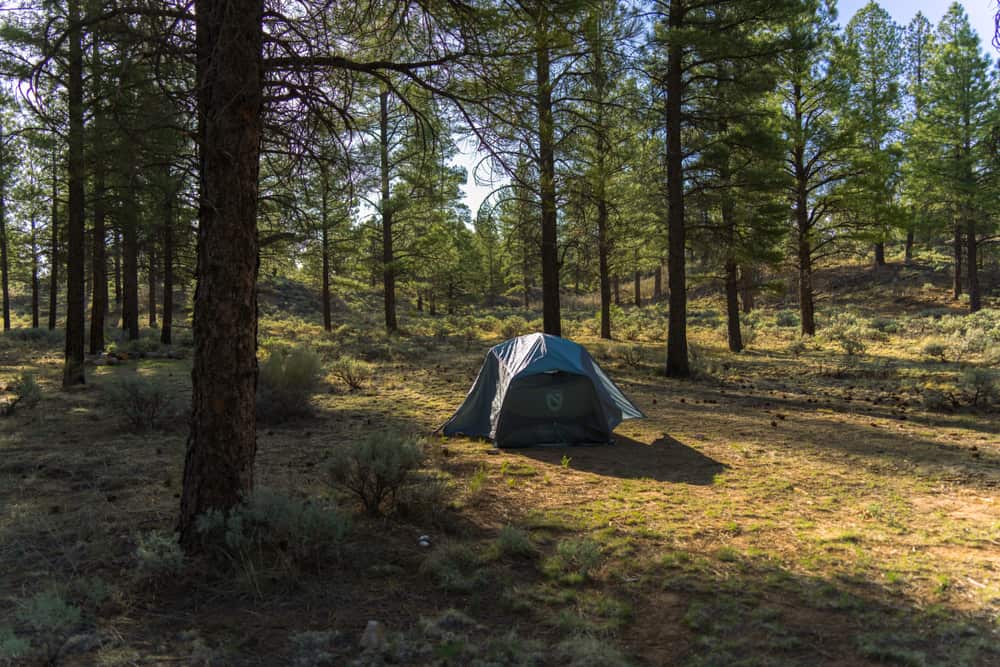 Clostnature Crux 1-Person Tent The cheapest tent that still passes as a real three-season shelter, and it needs no trekking poles to pitch. Where it's ranked → | 1,350 g (2 lb 15.6 oz) | $50–$100 band | |
| Sleep insulation | 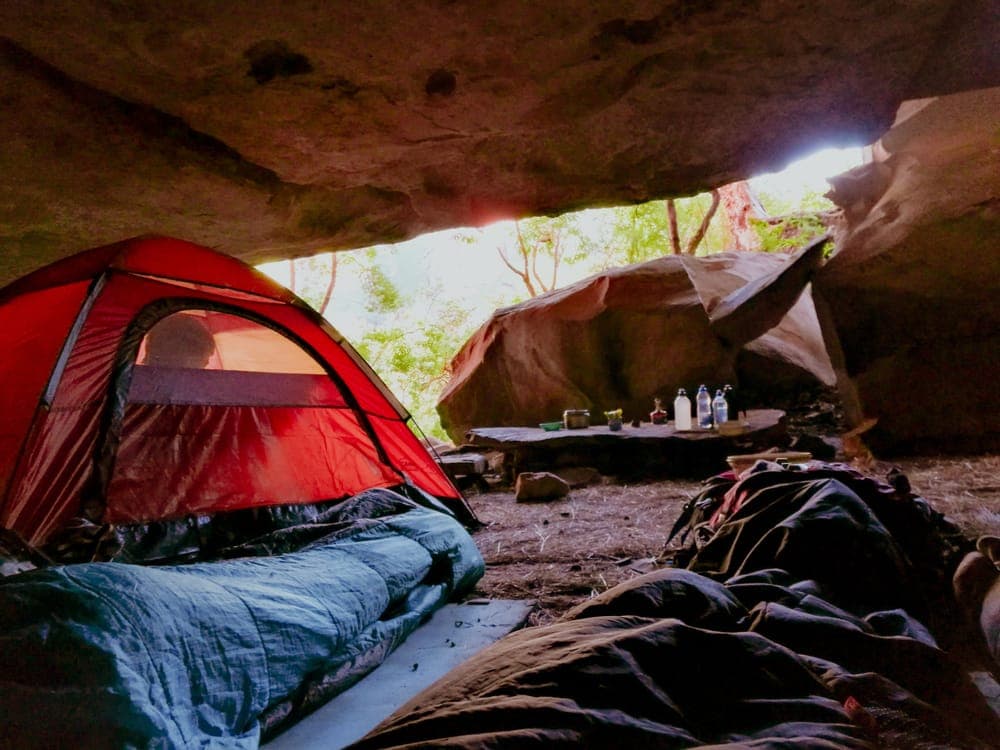 Paria Thermodown 30 Down Quilt A real 800-fill quilt rated to 30°F by the maker, for less than any bag here and far less than a colder-rated quilt. Where it's ranked → | 765 g (1 lb 11.0 oz) | $150–$200 band | |
| Sleeping pad | 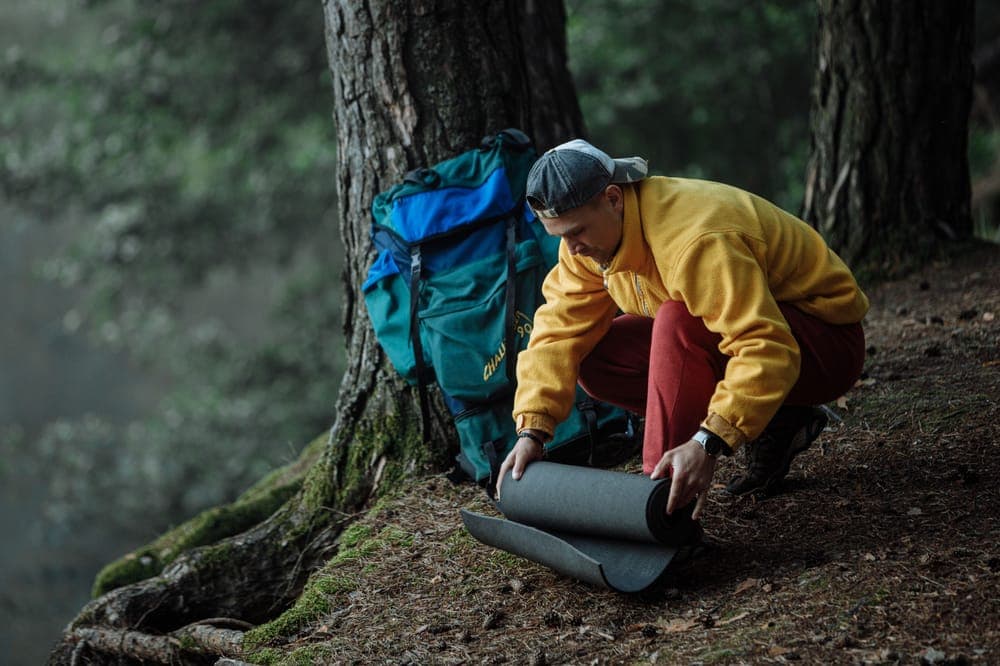 Therm-a-Rest RidgeRest Classic (Regular) Closed-cell foam that can't puncture, at the lowest list price and the best grams-saved-per-dollar figure of any pad tracked. Where it's ranked → | 400 g (14.1 oz) | $25–$50 band | |
| Pack | 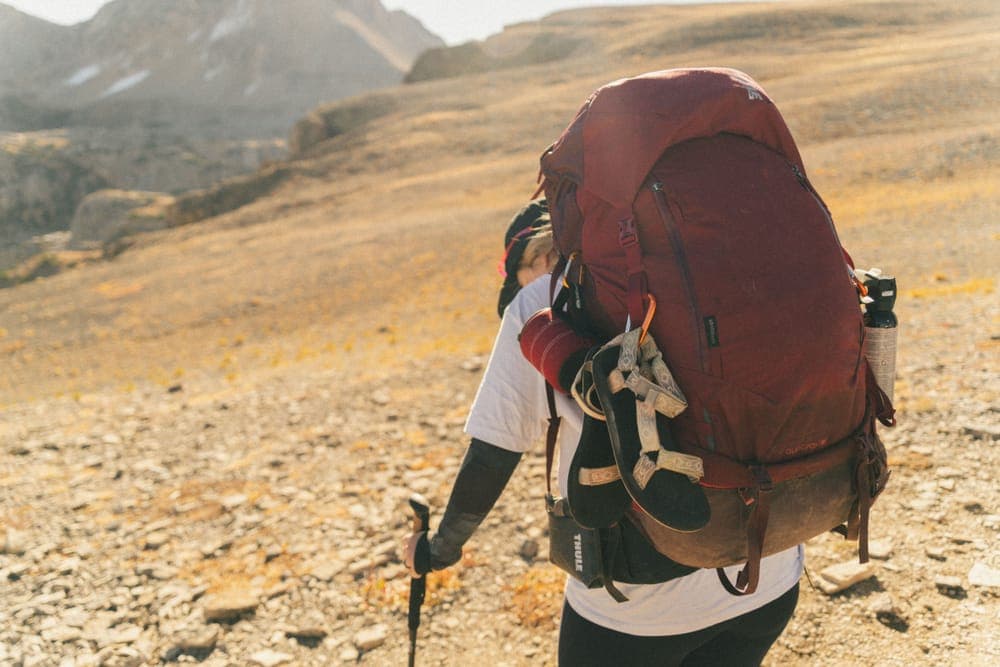 3F UL Gear QiDian 40+16 The cheapest sub-kilogram pack tracked, with enough volume for a light multi-day load once the rest of the kit is this light. Where it's ranked → | 850 g (1 lb 14.0 oz) | $50–$100 band | |
| Stove | 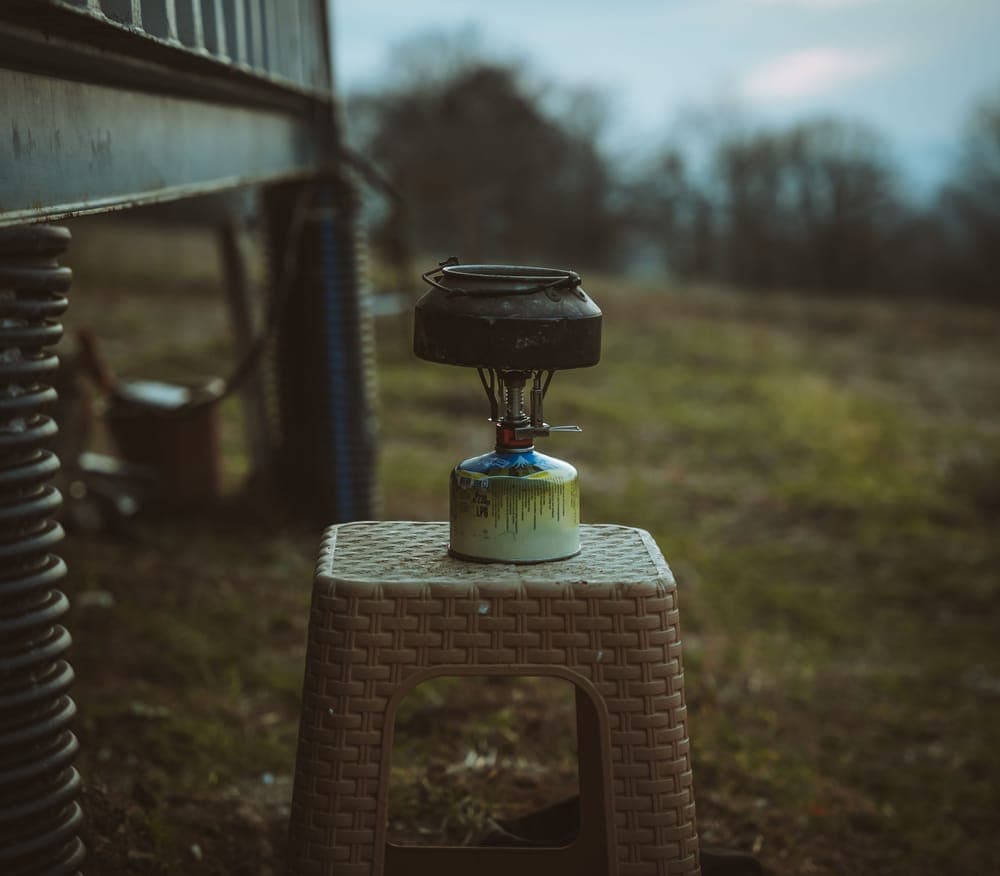 Fire Maple FMS-300T A titanium canister stove that undercuts the mainstream reference stove on both weight and list price. Where it's ranked → | 45 g (1.6 oz) | $25–$50 band | |
| Pot | 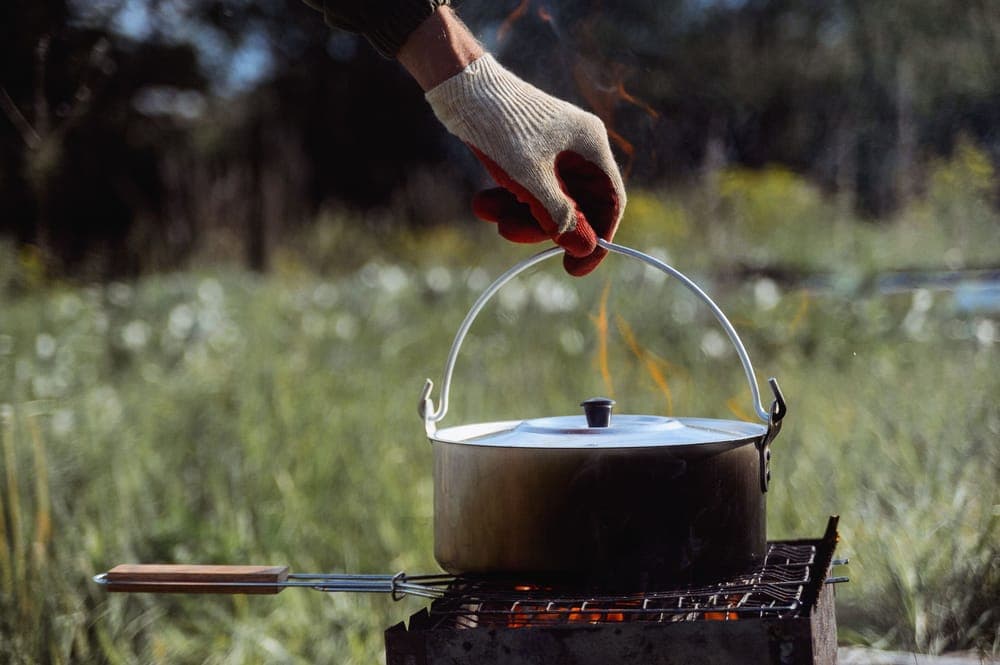 TOAKS Titanium 750ml Pot (POT-750) 750 ml is enough for one, it nests a canister and stove inside, and it carries the lowest list price of the titanium pots tracked. Where it's ranked → | 103 g (3.6 oz) | $25–$50 band | |
| Water filter |  Sawyer Mini (SP128) The cheapest filter tracked and Sawyer's own lightest, at the cost of the slowest flow of its three pocket filters. Where it's ranked → | 57 g (2.0 oz) | $25–$50 band | |
| Headlamp |  Petzl TIKKINA A simple AAA lamp at the lowest list price tracked, backed by a 5-year warranty; no red mode and no rechargeable battery. Where it's ranked → | 92 g (3.2 oz) | Under $25 band | |
| Rain protection |  Frogg Toggs Ultra-Lite2 Rain Poncho The cheapest rain cover tracked and lighter than the mainstream reference jacket, with no grommets to pitch it as a tarp. Where it's ranked → | 255 g (9.0 oz) | Under $25 band | |
| Totals | Base weight counts everything packed; nothing here is carried in hand. | 3,917 g (8 lb 10.2 oz) | Within budget | #ad · Disclosure |
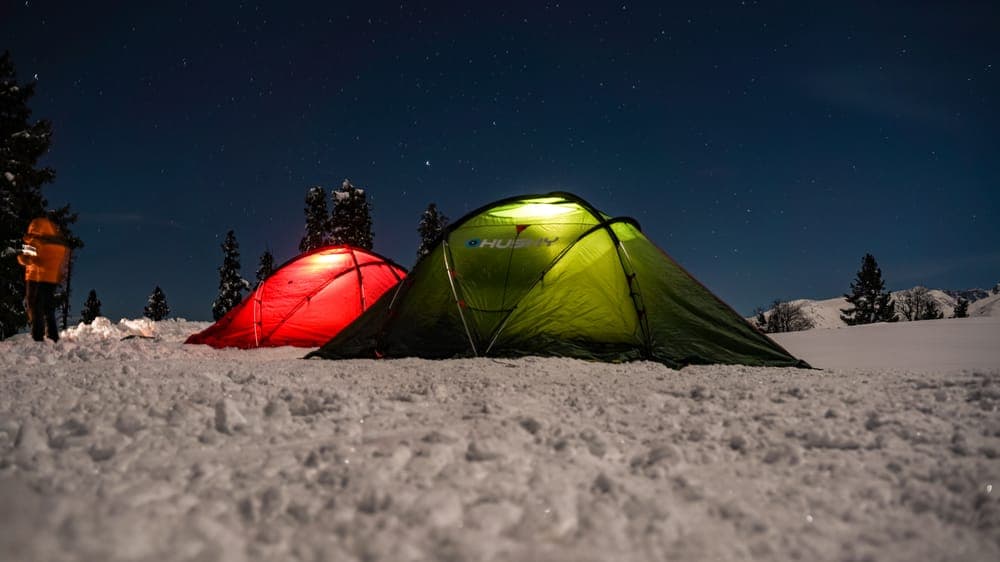
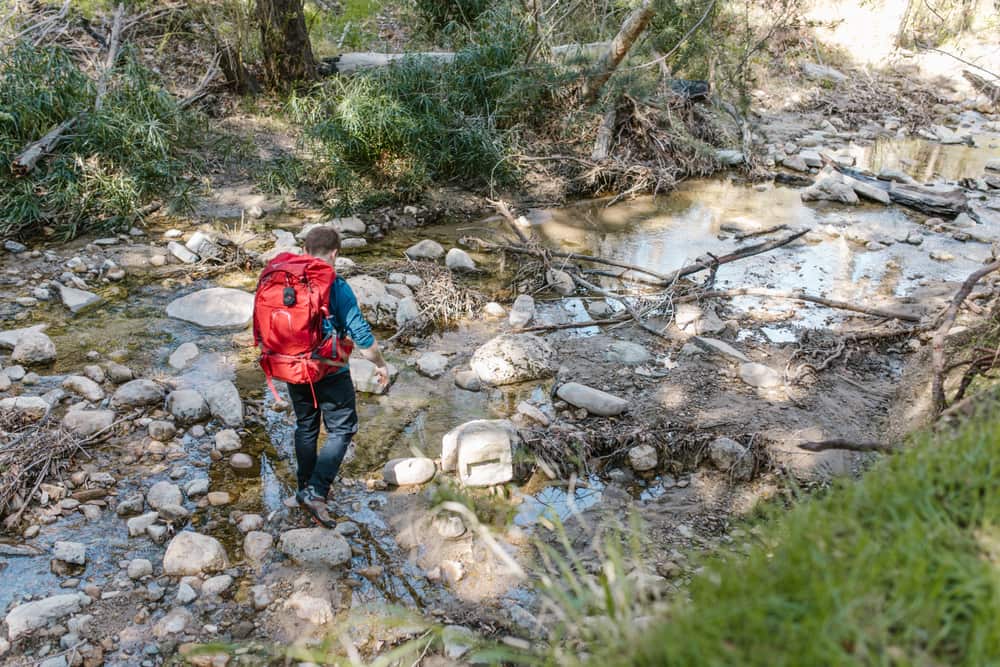
Weights and list prices are the makers' own published figures (each linked on the product's card and ranking page). The total uses list prices, not Amazon's, which change daily: check each listing. Photos are illustrative.
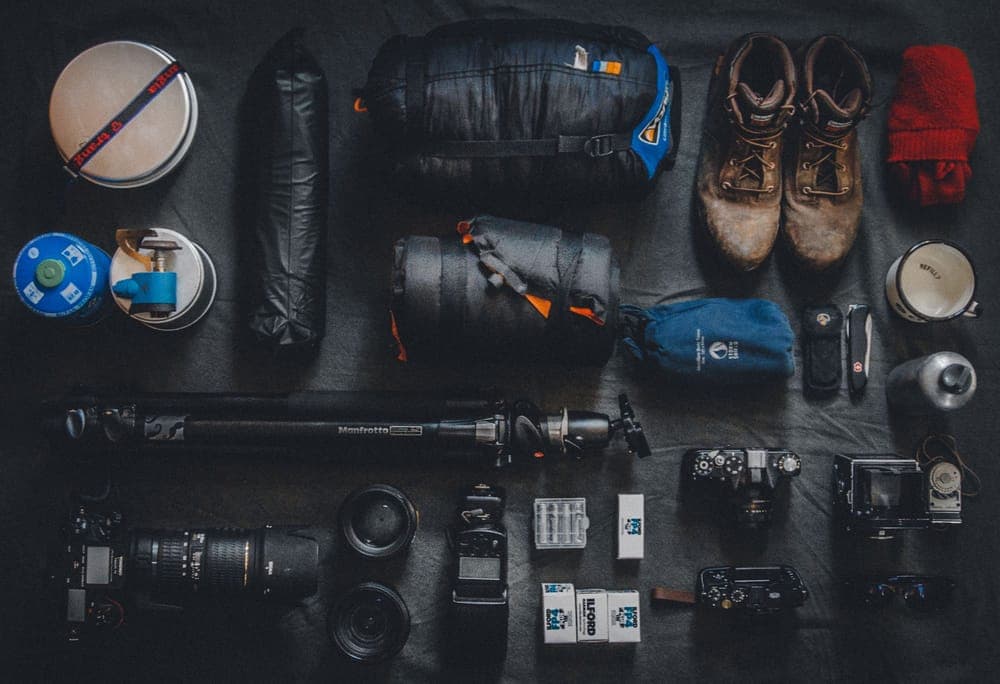
Every slot in this build got the same test: what is the cheapest item that still does the job on a real three-season trip, and how much does the next-cheapest alternative cost in grams? The reference weights and scoring weights behind every figure on this page are published on our methodology page, which every pick below links back to.
The nine items below clear the $500 ceiling with room to spare. That headroom isn't padding — it's what's left after the one item that really eats a tight budget: a genuine three-season quilt. Two slots carry almost the entire compromise of building at this price, and this page names both of them plainly instead of hiding them in a spec table.
How this kit is built
Nine slots, each filled from the cheapest pick that clears a basic function bar: a shelter with a real fly and floor rating, a sleep system rated for the season stated (never claimed beyond the maker's own number), a pad with a published R-value, a pack rated to carry the rest of the kit plus a few days of food and water, and a stove, pot, filter, headlamp and rain layer that all do their one job without extras. Every item links to the roundup where it's ranked, so you can see the alternatives it beat and the ones that beat it on weight for more money.
Every weight and price on this page is pulled live from the same registry that ranks every roundup on this site, not typed by hand into this article — so if a maker changes a list price or a spec, this page changes with it. The grams-saved figures compare each pick to a single named, currently-sold, mainstream reference product per category (a Kelty tent, an Osprey pack, an MSR stove, and so on), never to a cherry-picked worst case. The full reference list and scoring weights are on the methodology page.
Two products that would otherwise be strong picks are missing on purpose. The lightest canister stove we track, the BRS-3000T at 25 g (0.9 oz), publishes no US list price, so it can't be scored on value or fit a dollar budget at all — it's worth knowing about, but it can't be a line item here. And no trekking poles appear in this build: the tent below is freestanding, so nothing extra needs buying just to pitch it.
The shelter
The Clostnature Crux 1-Person Tent is the cheapest tent that still qualifies as a real backpacking shelter here: a freestanding two-pole frame, a PU-coated fly and bathtub floor, and a pole repair kit in the box. It weighs 1,350 g (2 lb 15.6 oz), which is heavier than almost every other tent we track, and the inner is narrow at 81 cm wide and only 91 cm tall — you sit up carefully, not casually. That's the trade for the lowest list price of any tent in our catalog and for not needing a trekking pole to stand up.
The maker backs it with a one-year guarantee against material and workmanship defects, shorter than the multi-year coverage the pricier tents in our catalog carry, and worth weighing against how many seasons you expect to get out of it. What you don't give up: a fly and bathtub floor rated PU 5000, on par with far more expensive shelters, and a real freestanding pitch that goes up on rock, sand or a wooden tent platform where a trekking-pole design would struggle to find purchase for its stakes.
The obvious upgrade is the 3F UL Gear Lanshan 1, our top-scoring budget solo tent: it saves 825 g (1 lb 13.1 oz) vs the Kelty Late Start 1P and its value figure is Value 8.6/10. Against this kit's tent it 575 g (1 lb 4.3 oz) lighter, for a higher MSRP band. It also needs a trekking pole to pitch, which is real money most hikers already own but this kit's ceiling can't assume. See the full field in best 1-person backpacking tents.
The sleep system
The Paria Thermodown 30 Down Quilt is an 800-fill down quilt the maker rates to 30°F, for less than every colder-rated quilt we track. That rating is Paria's own loft-based figure, not an ISO or EN lab test, and 30°F is the top of its comfort range, not the bottom of what it can handle — treat it as a spring-through-fall piece for most temperate trips, not a shoulder-season-into-frost bag. It saves 256 g (9.0 oz) vs the Kelty Cosmic Synthetic 40, and its value figure is Value 4.5/10. Full field at best budget backpacking quilts.
This is where the next tier of money buys the most. The Zenbivy Core Quilt 25°F Down, rated colder at 25°F, is also 28 g (1.0 oz) lighter, for a higher MSRP band. That single swap is most of the difference between this build and the $1,000 build.
A quilt this cheap still gets two real features: a cinchable footbox for cold feet and a sleeping-pad strap system, so it doesn't slide off in the night the way a blanket would. What it skips against the pricier quilts in our catalog is a draft collar at the neck, which matters most exactly on the cold nights this quilt's 30°F rating is already close to its limit. Pair it with a base layer and a beanie on any night near that mark, rather than assuming the quilt alone carries the whole job.
Under it, the Therm-a-Rest RidgeRest Classic (Regular) is closed-cell foam: R 2, can't puncture, and it saves 280 g (9.9 oz) vs the Therm-a-Rest Trail Scout (Regular) at the lowest list price of any pad tracked — the best grams-saved-per-dollar figure in the whole catalog (Value 10.0/10). The trade is thickness: 1.5 cm of foam under your hip, and it rides outside the pack rolled to 20 x 8 in rather than packing inside. Side sleepers feel the ground through it more than back sleepers do; if that's you, budget for the pad upgrade before any other line item in this build. An insulated air pad like the Therm-a-Rest NeoAir XLite NXT (Regular) is 30 g (1.1 oz) lighter and far warmer, for a higher MSRP band. Full field at best budget sleeping pads.
The pack
The 3F UL Gear QiDian 40+16 is a frameless roll-top that saves 828 g (1 lb 13.2 oz) vs the Osprey Rook 65 against the framed reference pack, at the lowest list price of any pack tracked and the best value figure in the whole catalog (Value 10.0/10). The maker rates it to a 12 kg loaded weight and offers no torso sizing, so it's a pack you buy once the rest of your kit is already this light, not a pack that will carry a heavy food-and-water load comfortably. See the full field at best budget ultralight backpacks.
The Granite Gear Virga3 55 adds real torso sizing and a higher load rating for a higher MSRP band, and it's actually 88 g (3.1 oz) lighter still. That's the pack this kit's $1,000 successor carries instead.
Fit matters more on a frameless pack than a framed one, because there's no aluminum stay to distribute an uneven load onto your hips. The maker's own advice is to lean on a well-packed load and a snug hipbelt rather than a rigid frame — pack the foam pad against your back for structure, heavy items close to your spine, and keep the total well under that 12 kg ceiling with a lighter kit like the rest of this build. A two-to-three night trip's food, water and fuel fits inside that limit comfortably; a week-long resupply gap pushing several liters of water and days of food will not.
3F lists this pack at 40 L in the main body plus 16 L across its external pockets, and its page doesn't detail pocket counts or hipbelt storage — worth checking against the roundup's full spec table before you buy if organized outside access matters to you. What it lacks in fit adjustment it makes up for in raw volume: 56 L on paper is enough for the rest of this build plus several days of food, even without a frame to help carry it.
Cooking and water
The Fire Maple FMS-300T is a 45 g titanium canister stove that undercuts the mainstream reference stove on both weight and list price ($25–$50 MSRP band), with a stated boil time in the same range as the big-brand stove it's measured against. It has no igniter and no pressure regulator — pack a lighter and don't plan on cooking in sub-freezing wind. The TOAKS Titanium 750ml Pot (POT-750) holds 750 ml, enough for a freeze-dried meal and a hot drink, and TOAKS lists a 110 g isobutane canister and this exact stove as fitting inside it — one nested unit, at the lowest list price of the titanium pots we track.
The Sawyer Mini (SP128) is Sawyer's cheapest filter, rated by Sawyer for up to 100,000 gallons despite its 57 g weight. Sawyer's own comparison ranks it the slowest-flowing and most frequently backwashed of its three pocket filters — fine for one person filtering a liter or two at a time, tedious for filtering camp water for a group. The Sawyer Squeeze (SP129) flows faster for the same MSRP band more. Full fields at best budget backpacking stoves, best titanium backpacking pots and best backpacking water filters.
Light and rain
The Petzl TIKKINA is the cheapest headlamp tracked and it runs on AAA batteries sold at any trail-town store, backed by a 5-year warranty from Petzl. It has no red night-vision mode, and at 92 g (3.2 oz) it's heavier than every rechargeable lamp we track. The Nitecore NU25 MCT UL is 45 g (1.6 oz) lighter and adds a red mode for a higher MSRP band more — one of the best small upgrades in the whole kit, which is why it's the pick in the next two tiers.
The Frogg Toggs Ultra-Lite2 Rain Poncho is the cheapest rain layer tracked and it saves 50 g (1.8 oz) vs the Marmot Men's PreCip Eco Rain Jacket. It has no grommets or tie-outs, so it can't double as a tarp the way some ponchos here can, and Frogg Toggs publishes no fabric denier or waterproof rating for it. It does add side snaps to close the gap along your ribs in a crosswind, and an adjustable hood with cord locks — not nothing, for the price. The Frogg Toggs Ultra-Lite2 Rain Jacket (men's) is a real jacket with a storm flap and an adjustable hood for a few dollars more — the pick once the budget loosens. See both fields at best budget rain jackets and the ultralight backpacking gear list for the headlamp.
The gates every pick had to clear
A cheap kit isn't automatically a good one, so every slot had a function floor before price ever entered the picture. The shelter needed a real fly and floor coating, not just a tarp — the Clostnature Crux 1-Person Tent's PU 5000 rating clears that easily. The pad needed a published R-value rather than a maker's marketing adjective — R 2 is on the low edge for cold nights but it's a real, stated number. The quilt needed a maker-published temperature rating, stated plainly here as Paria's own loft-based figure rather than an independent lab test, because that distinction matters and this page doesn't blur it. The water filter needed a specific, maker-stated removal claim, not a vague “purifies water” line. Every item that didn't clear its gate is absent from this build, at any price.
What's not in this kit
This is a base-weight kit, and base weight has a specific, published definition: everything you carry in and on your pack, minus what you eat, drink, burn and wear. That means this list — and its total — leaves out food, the water you're actually carrying at any given moment, the fuel canister, and the clothes on your body when you start hiking (base layers, hiking shirt, pants, boots or trail runners). It also leaves out a few genuinely optional items — a pillow, a sit pad, a second pair of socks — that this budget doesn't have room for and a lot of hikers do fine without. None of that is hidden; it's the standard the whole industry uses to make one kit comparable to another, and it's explained in full in what is base weight in backpacking.
What the $1,000 build buys you
Move up to the $1,000 build and four slots change: the tent moves to a lighter trekking-pole shelter (which does mean buying poles, listed separately since they're carried in hand, not packed), the quilt drops five degrees of rating while cutting real weight, the pad becomes an insulated air pad, and the pack gains torso sizing. The stove, pot, rain layer and headlamp mostly hold steady — the headlamp and water filter both step up to the version already named above as the better pick. The pattern holds at every tier on this site: money buys grams fastest in the shelter, the sleep system and the pack, and barely moves the needle on the small stuff.
Who this kit suits
If I were outfitting someone for their first few backpacking trips and $500 was the real ceiling, not an opening offer, this is close to the list I'd hand them: nothing here is disposable-grade, and every pick earned its slot on a published number, not a guess. What I'd flag before a trip: check the weather against that 30°F quilt rating honestly, and if the forecast says otherwise, a cheap fleece layer worn to bed does more for warmth than anything in this budget can add.
It suits short trips more than long ones — a weekend or a three-night loop where the pack never has to carry much beyond what's listed here, and where a spare afternoon at home to seal nothing (this tent needs no seam sealing) and pack a trial load matters more than a fitted torso or a second tent door. It's a poor fit for anyone planning sustained cold-weather trips, or anyone who already owns trekking poles and would rather put that unspent poncho-and-tent-premium toward a lighter shelter instead — in that case, price out the trekking-pole tent field directly rather than starting from this exact list. For a broader shopping list beyond these nine items, start with the backpacking checklist, and for the logic behind lightening any kit further, see how to lower your base weight.
How we scored this
Units we claim to have tested: 0
Most gear sites say they tested everything. We didn't, and we say so. What we did instead: took every weight and list price from the maker's own page, measured each product against a named mainstream reference, and computed grams saved per dollar. Every number links to where it came from.
The score is spec-derived: value and weight are computed from those numbers, and the rest are judgments from published specs, not test results. Commissions never set a score or decide a pick. The formula, weights and references are published.
Questions
Frequently asked
Can you build a real ultralight backpacking kit for $500?
What is base weight in backpacking?
Why doesn't this kit include trekking poles?
Is a quilt or a sleeping bag better for a $500 kit?
How much does a full set of backpacking gear cost?
Is ultralight backpacking worth it on a budget?
What's the biggest weight compromise in a budget backpacking kit?
Does the Sawyer Mini filter remove viruses?
Receipts
Sources
- Clostnature: 1 Person Lightweight Backpacking Tent product page (checked 2026-09-22)
- 3F UL Gear: Lanshan 1 product page (checked 2026-09-22)
- Paria Outdoor Products: Thermodown 30 Down Quilt product page (checked 2026-09-22)
- Zenbivy: Core Quilt product page (checked 2026-09-22)
- Therm-a-Rest (Cascade Designs): RidgeRest Classic product page (checked 2026-09-22)
- Therm-a-Rest (Cascade Designs): NeoAir XLite NXT product page (checked 2026-09-22)
- 3F UL Gear: QiDian 40+16 UL Pack product page (checked 2026-09-22)
- Granite Gear: Virga3 55 Unisex product page (checked 2026-09-22)
- Fire Maple: FMS-300T Titanium Backpacking Stove product page (checked 2026-09-22)
- BRS: BRS-3000T product page, English site (checked 2026-09-22)
- TOAKS: Titanium 750ml Pot (POT-750) product page (checked 2026-09-22)
- Sawyer: MINI Water Filtration System (SP128) product page (checked 2026-09-22)
- Sawyer: Squeeze Water Filtration System (SP129CL) product page (checked 2026-09-22)
- Petzl USA: TIKKINA product page (checked 2026-09-22)
- Nitecore: NU25 MCT UL user manual PDF (checked 2026-09-22)
- Frogg Toggs: Ultra-Lite2 Rain Poncho product page (checked 2026-09-22)
- Frogg Toggs: Ultra-Lite2 Rain Jacket product page (checked 2026-09-22)
We haven't tested the gear on this page and we don't pretend to. Weights, list prices and specs come from each maker's own pages (linked on every product), and performance figures such as boil times or flow rates are the maker's claims, labeled that way. Amazon sets its own prices and changes them often, so buy buttons link to the live listing. Where a figure isn't published, we say so. Read the full method.