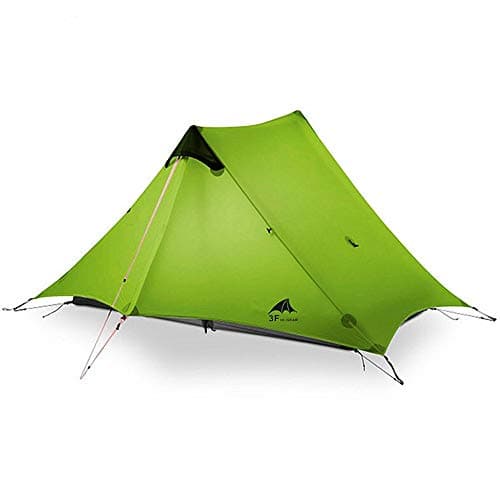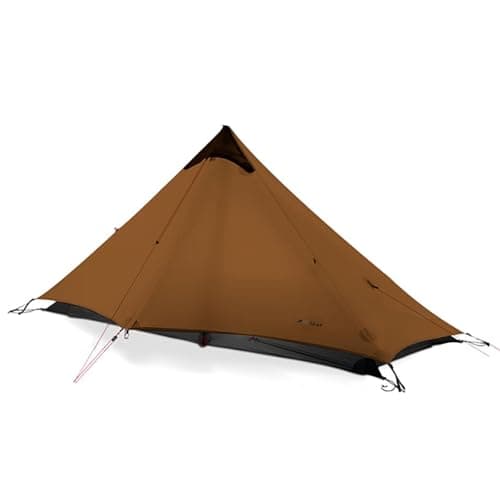
“Do I need trekking poles?” is one of those questions where the gear industry has an obvious commercial interest in a yes, and where the honest answer for most people is “probably not, but they might be the best cheap upgrade you make.” So let's separate the two halves properly: the case where poles are genuinely a matter of preference, and the case where they are a hard requirement most first-time buyers don't see coming.
The honest answer, up front
Millions of people backpack without poles and are fine. They are not safety equipment, they do not make you faster on flat ground, and they occupy your hands, which matters more than people expect when you want to eat, take a photo, or scramble. If you have never used them and you are buying your first kit, poles are not where the first dollars should go — a pack that fits, a shelter you trust and a pad warm enough for your trips all matter more. Our beginner backpacking gear guide puts that order in writing.
That said, poles are one of the few pieces of gear where the cheap version does most of the job. The gap between a budget adjustable pair and a premium one is largely weight and warranty, not function, which makes “try poles” an unusually low-risk experiment. If you hate them you have spent very little; if you love them you have found a real improvement for the price of a couple of freeze-dried dinners.
When poles are required gear, not an accessory
This is the part that catches budget buyers out, and it is the reason this page exists on a site about getting lighter for less. A large share of the cheapest ultralight shelters on the market are trekking-pole tents: they have no poles of their own, and they pitch on the poles you were already carrying. That is exactly how they get so light and so cheap.
The catch is that the advertised weight excludes the poles. The 3F UL Gear Lanshan 2 Pro is listed at 902 g (1 lb 15.8 oz) with trekking poles explicitly not included. The Zpacks Duplex is listed at 505 g (1 lb 1.8 oz) on the same basis. If you do not already own poles, the real cost of one of those shelters is the tent plus a pair of poles, and the real carried weight is the tent plus however much your poles weigh — which, across the pairs we track, ranges from 280 g (9.9 oz) up to 590 g (1 lb 4.8 oz) per pair.
If you are still deciding between shelter types, read trekking-pole tent vs freestanding tent first. The poles question is downstream of that one, and the comparison there prices both routes honestly.
Pole lengths your tent actually needs
If your shelter needs poles, it needs poles of a particular length, and this is where a cheap pair can quietly fail. Every figure below is the shelter maker's own stated requirement:
- 3F UL Gear Lanshan 2 Pro: two trekking poles, 120–125 cm, not included.
- Zpacks Duplex: two 48 in (122 cm) trekking poles or tent poles, plus 6 to 8 stakes, none included.
- Six Moon Designs Lunar Duo: 45 in (114 cm) poles, not included.
- Durston X-Mid 2: two trekking poles; the fly pitches to a 48 in (122 cm) peak height.
Read those four and the design brief for your poles writes itself: you want a pair that adjusts comfortably through roughly 114 to 125 cm. Most adjustable poles do. The Cascade Mountain Tech pairs run 66–137 cm, Black Diamond's Trail runs 100–140 cm, and the Gossamer Gear LT5 is marked with a tent graphic right at 125 cm so a pole-tent pitch is repeatable.
What the research actually found
There is real published evidence here, and it is worth quoting accurately rather than hand-waving at “studies show.” Howatson and colleagues published a controlled field study in Medicine and Science in Sports and Exercise in 2011, titled “Trekking poles reduce exercise-induced muscle injury during mountain walking.”
Thirty-seven physically active participants (26 male, 11 female) were split into a trekking-pole group and a no-pole group, carried a day sack, and ascended and descended Mount Snowdon. The researchers measured maximal voluntary contraction, muscle soreness, creatine kinase and vertical jump performance before, immediately after, and at 24, 48 and 72 hours after the trek.
Note carefully what that does and does not say. It is about recovery and perceived effort on a mountain day, not about speed, and not about injury rates over a season. It was a single day on one mountain with a day sack, not a thru-hike with a full load. And the most load-bearing phrase in the whole abstract is “reduce the potential for subsequent injury” — a mechanism, inferred from preserved muscle function, not a measured reduction in injuries.
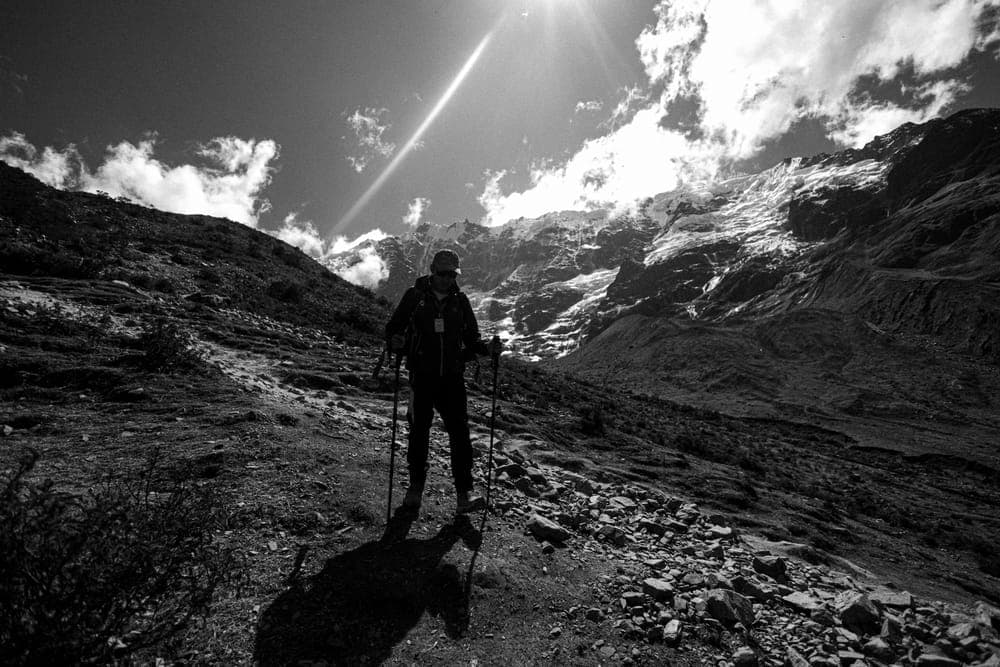
Still, it points the same direction most multi-day hikers describe: the benefit shows up going down, and it shows up the next morning. If your reason for considering poles is sore quads on descents or knees that object on day three, that is the use case with actual evidence behind it.
When to skip them
Being even-handed, there are real reasons not to buy poles:
- You want your hands free. Scrambling, photography, navigation, kids — poles are a genuine nuisance for all of it, and stowing and deploying them repeatedly gets old.
- You hike mostly flat, maintained trail with a light pack. The evidence above is about mountain descents. On a flat lakeside path with 20 lb on your back, there is much less to gain.
- Your base weight is already very low and your shelter is freestanding. Then poles are pure addition: weight in your hands, money out of your pocket, and no structural job to do.
- You have not actually tried them. Borrow a pair before buying four figures of carbon. Plenty of people discover they dislike the rhythm.
There is also an honest trail-etiquette point. Carbide tips chew up soft trail surfaces and leave marks on rock. Most poles ship with rubber tip covers, including every pair we track, and using them on hard or heavily used surfaces is the considerate default.
Poles and your base weight
One accounting quirk worth knowing, because it changes how pole weight should feel to you. By the usual convention, trekking poles in your hands are carried, not packed, so they sit outside base weight — which is exactly how this site treats them in its budget builds: poles are listed but excluded from the base-weight total. If you are new to the term at all, our what is base weight guide defines it.
That convention is useful, not a loophole. The grams are still on your body and still cost you energy. But it does mean that if you are chasing a base-weight target, poles are one of the cheapest places to stop worrying about grams — and conversely, that paying a premium for the very lightest pair buys you a number that your base weight will not even show. The Black Diamond Distance Carbon Z is 310 g (10.9 oz) lighter than the cheapest aluminum pair here; neither figure appears in a base-weight total.
Compare that with the gear that does count. A grade of down fill power is the same kind of pay-more-carry-less decision, except the grams land inside your pack where the number is visible — which is why down fill power explained is a better place to spend an upgrade budget than a premium pole if you are chasing a base-weight target.
What to buy if the answer is yes
The buying brief is short. You want a pair that adjusts through the 114–125 cm range your shelter may need, locks reliably, and does not cost so much that trying poles becomes a commitment. Lever locks are easier to adjust with cold hands than twist locks. Cork or EVA grips both work; cork is more pleasant in heat. Rubber tip covers should be in the box.
Our picks for this
Four pairs, from cheapest to lightest
Every weight here is the maker's own figure, per pair. All four adjust or are sized to cover the pole lengths the shelters above call for, with one important exception noted on the last.
Cheapest adjustable pair for pole tents
Cascade Mountain Tech Aluminum Quick Lock Trekking Poles (Cork Grip)
590 g (1 lb 4.8 oz)$25–$50 band3.2 / 10The cheapest way to find out whether you like poles. Adjusts 66-137 cm, which covers every pole-tent length on this page, and is the heaviest pair here by the maker's figure.
Check price · Amazon#ad · Price as of November 3, 2026 · Affiliate disclosure for the link to Cascade Mountain Tech Aluminum Quick Lock Trekking Poles (Cork Grip)
Best budget carbon poles
Cascade Mountain Tech Carbon Fiber Quick Lock Trekking Poles (Cork Grip)
459 g (1 lb 0.2 oz)$50–$100 band5.7 / 10The same range in carbon for meaningfully less weight, and the best value of the four. Only a 1-year warranty, and Cascade's own pages say aluminum resists lateral snaps better than carbon.
Check price · Amazon#ad · Price as of November 3, 2026 · Affiliate disclosure for the link to Cascade Mountain Tech Carbon Fiber Quick Lock Trekking Poles (Cork Grip)
Name-brand aluminum with FlickLocks
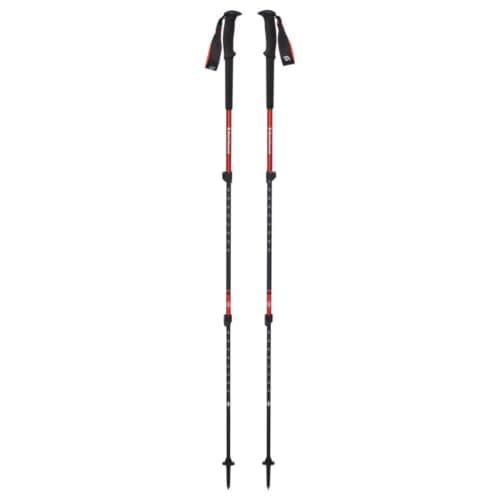
Black Diamond Trail Trekking Poles
480 g (1 lb 0.9 oz)$100–$150 band4.5 / 10Aluminum with dual external FlickLocks that adjust with gloves on, snow baskets included and a 2-year warranty. Heavier than every carbon option here and costs more than the Cascade carbon pair that beats it on weight.
$87.88Amazon#ad · Price as of November 3, 2026 · Affiliate disclosure for the link to Black Diamond Trail Trekking Poles
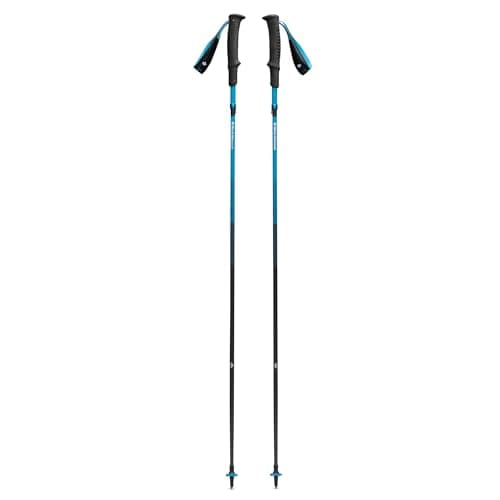
Fastest-packing folding poles
Black Diamond Distance Carbon Z
280 g (9.9 oz)$200–$300 band7.6 / 10The lightest and fastest-packing pair, folding to 35-44 cm. Fixed length though: pick one size and you cannot adjust it, which is a real drawback if your shelter pitches on poles.
$209.95Amazon#ad · Price as of November 3, 2026 · Affiliate disclosure for the link to Black Diamond Distance Carbon Z
Photos are illustrative, not the product. Scores are spec-derived.
For the full field, including the cottage-brand pairs and the two Montem models, see our best budget trekking poles ranking, which scores all of them on grams saved per dollar against LEKI Journey Lite at 510 g (1 lb 2.0 oz) per pair.
Aluminum or carbon
The weight gap is real: the Cascade Mountain Tech carbon pair is 131 g (4.6 oz) lighter than the same maker's aluminum pair, by Cascade's own figures. So is the durability difference, and it runs the other way. Cascade's own product pages state that aluminum is less likely to snap under lateral pressure than carbon, which is the kind of admission worth reading twice when it comes from the company selling you the carbon.
Practically: carbon if you mostly stay on trail and want the grams; aluminum if you lean on poles hard, cross streams, travel off-trail, or simply would rather a pole bend than break a long way from the road. Warranty is part of this decision too, and it is published: the Cascade carbon pair carries a 1-year warranty, Black Diamond gives two years on the Trail and the Distance Carbon Z, and LEKI covers shaft breakage for life on the Journey Lite. A snapped pole is a bigger problem when your tent pitches on it.
What we can't tell you
We can't tell you whether you personally will like hiking with poles. It is a preference, not a spec, and nothing in a maker's published data predicts it. Borrowing a pair for a weekend will answer that question better than any page can.
We can't tell you how long a given pair lasts. No pole maker publishes a cycle count, a lateral load rating or a failure rate, so warranty length is the only durability figure on the table and we treat it as exactly that — a statement about the company's confidence, not a measured lifespan.
And we can't extend the Snowdon study beyond what it measured. It was one day, one mountain, a day sack, 37 people. It is good evidence that poles help your legs recover from a descent. It is not evidence that poles prevent injuries over a season, make you faster, or help on flat ground, and anyone telling you it shows those things has read the headline and not the abstract.
What this means for your budget
If you own or want a trekking-pole shelter, poles are not a separate purchase decision — they are part of the shelter's price and part of its weight, and you should add both to the tent's listed figures before comparing it to a freestanding tent. That is the single most common accounting mistake in budget ultralight, and it is the reason this page sits in the builds hub rather than the gear pages.
If your shelter stands on its own, treat poles as an optional comfort upgrade with genuine evidence behind it for descents, and buy at the cheap end to find out whether you like them. There is no case we can see for spending near the top of this category on a first pair. Once you know you want poles and you are seriously cutting weight, the pole rankings show where the next grams cost the least, and how to lower your base weight shows the places that usually beat them.
How we scored this
How these picks were chosen
Every weight and list price here comes straight from the maker's own product page, measured against a named mainstream reference, then turned into one number: grams saved per dollar. Every figure links to the page it came from, so you can check any of it in a click.
Value and weight are computed from those published numbers; function, durability and ease are scored from the specs, manuals and standards each maker publishes. Commissions never set a score or decide a pick. The formula, weights and references are published.
Questions
Frequently asked
Do I really need trekking poles for backpacking?
What length trekking poles do I need for a trekking-pole tent?
Are trekking poles proven to help?
Do trekking poles count toward base weight?
Should I buy aluminum or carbon trekking poles?
Are fixed-length folding poles okay for a pole tent?
How much should I spend on my first pair of trekking poles?
Receipts
Sources
- Howatson G., Hough P., Pattison J., Hill J., Blagrove R., Glaister M., Thompson K.G.: 'Trekking poles reduce exercise-induced muscle injury during mountain walking', Medicine and Science in Sports and Exercise, 2011 (doi:10.1249/mss.0b013e3181e4b649); abstract via WestminsterResearch (checked 2026-10-09)
- Cascade Mountain Tech: Aluminum Quick Lock Trekking Poles (cork grip) product page (checked 2026-09-22)
- Cascade Mountain Tech: Carbon Fiber Quick Lock Trekking Poles (cork grip) product page, incl. the aluminum-vs-carbon note and 1-year warranty (checked 2026-09-22)
- Black Diamond: Trail Trekking Poles product page, 100-140 cm range and 2-year warranty (checked 2026-09-22)
- Black Diamond: Distance Carbon Z Poles product page, fixed 105-130 cm sizes and per-pair weights (checked 2026-09-22)
- Gossamer Gear: LT5 Three Piece Carbon Trekking Poles product page, tent graphic marked at 125 cm (checked 2026-09-22)
- LEKI USA: Journey Lite trekking poles product page, the reference pole for this class (checked 2026-09-22)
- 3F UL Gear: Lanshan 2 Pro product page, 'two trekking poles, 120-125 cm (not included)' (checked 2026-09-22)
- Zpacks: Duplex Tent product page, 'two 48 in (122 cm) trekking poles or tent poles' required (checked 2026-09-22)
- Six Moon Designs: Lunar Duo product page, 45 in (114 cm) poles not included (checked 2026-09-22)
- Durston Gear: X-Mid 2 product page, two trekking poles and a 48 in (122 cm) peak height (checked 2026-09-22)
Weights, list prices and specs on this page come from each maker's own pages, linked on every product, and performance figures such as boil times or flow rates are the maker's claims, labeled that way, so you always know whose number you're reading. Amazon sets its own prices and changes them often, so buy buttons link to the live listing. Read the full method.