Quick picks
The picks at a glance
| # | Product | Best for | Score | Price |
|---|---|---|---|---|
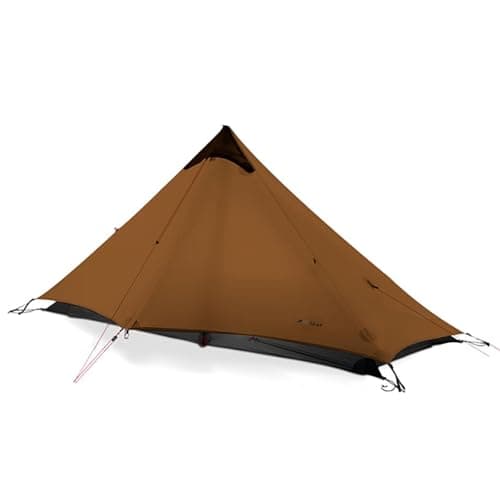
| 1 |  Naturehike Cloud Up Pro 3 A footprint and 15 stakes in the box, freestanding, and enough room that two people plus packs never touch the walls. | Best beginner tent overall1,750 g (3 lb 13.7 oz)$150–$200 band | 7.7 / 10Value 8.3/10 | Check price · Amazon #ad · Disclosure |
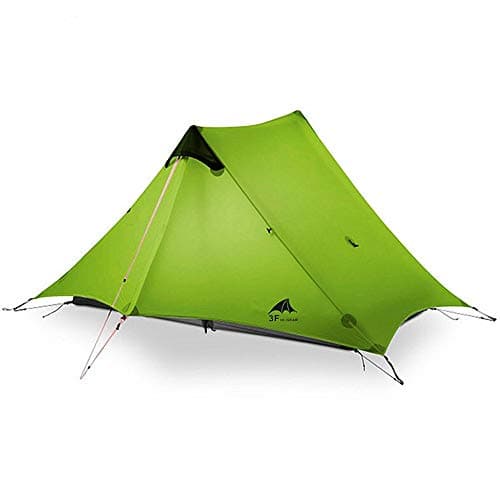
| 2 |  Naturehike Cloud Up UL 2 The lightest tent here that still arrives with the footprint and stakes included and pitches without trekking poles. | Lightest complete beginner kit1,220 g (2 lb 11.0 oz)$150–$200 band | 5.8 / 10Value 5.4/10 | Check price · Amazon #ad · Disclosure |
| 3 | 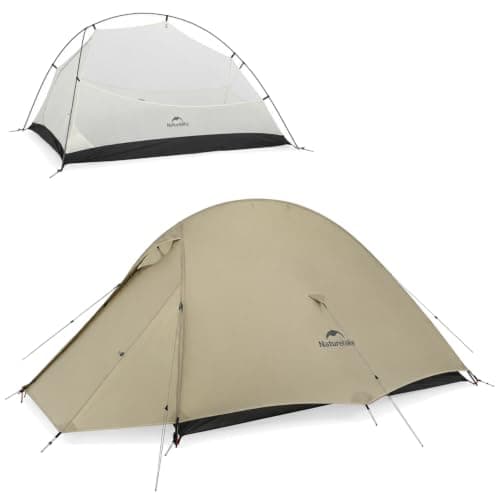 Naturehike Cloud Up Pro 2 The same shape and pole as the UL in tougher fabric, with a footprint and 14 stakes, for less money. | Best value first tent1,360 g (2 lb 16.0 oz)$150–$200 band | 5.5 / 10Value 4.9/10 | $139.99Amazon #ad · Disclosure |
| 4 | 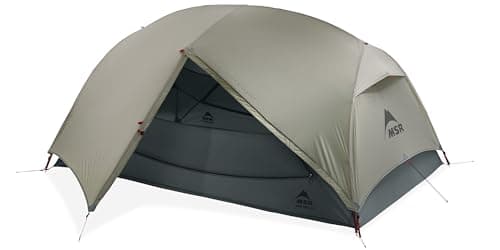 MSR Hubba Hubba LT 2 Two doors, a true rectangular floor and a single-pole pitch that is hard to get wrong. Costs three times the Naturehikes. | Best tent to learn on and keep1,360 g (2 lb 16.0 oz)$500–$700 band | 5.0 / 10Value 1.4/10 | $547.50Amazon #ad · Disclosure |
| 5 |  Clostnature Crux 1-Person Tent Freestanding, PU 5000 on fly and floor, 14 stakes in the box, and the lowest list price of any tent we track. | Cheapest complete solo tent1,350 g (2 lb 15.6 oz)$50–$100 band | 4.8 / 10Value 4.3/10 | Check price · Amazon #ad · Disclosure |
| 6 | 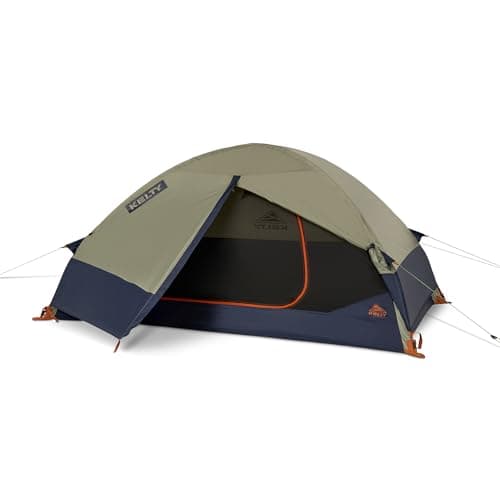 Kelty Late Start 2P The tent a first-time buyer usually walks out with, and the weight every lighter tent on this site is measured against. | The reference first tent1,900 g (4 lb 3.0 oz)$150–$200 band | 3.2 / 10No grams saved vs the reference | $159.95Amazon #ad · Disclosure |
#ad · Amazon prices come live from Amazon, last checked November 3, 2026. Weights and list prices are the maker's own figures, and every score is built from those published specs. Tap a row for the full write-up.
Almost every “best backpacking tent” list is written for someone on their fourth tent. The rankings go to trekking-pole shelters that need poles you may not own, arrive unsealed, and pitch badly until you have done it a dozen times. Those tents are genuinely better — most of them sit near the top of our flagship ranking — and they are the wrong first purchase.
So this page has a deliberately narrow gate. Freestanding, so it stands up on its own while you work out where the door should face. Double wall, so condensation lands on the fly rather than your bag. Factory-sealed seams, so it is waterproof out of the box. And every pole and stake included, so you are not discovering at the trailhead that the pegs were sold separately.
| You are | Start with |
|---|---|
| Two people who want room to sit up and sort gear | Naturehike Cloud Up Pro 3 |
| Two people counting grams already | Naturehike Cloud Up UL 2 |
| Two people on the tightest budget | Naturehike Cloud Up Pro 2 |
| Buying once and keeping it for a decade | MSR Hubba Hubba LT 2 |
| Going solo and spending as little as possible | Clostnature Crux 1 |
What a first tent has to do
Four things, in this order.
Stand up without stakes. A freestanding tent lets you pitch it, look at it, and move it three metres left. Non-freestanding shelters need tension from the first peg, which means the first pitch in wind is a fight.
Arrive waterproof. Several excellent tents ship unsealed with a tube of sealant and an instruction to spend an evening on it. That is fine on your third tent. On your first it is the thing you skip and then regret.
Keep condensation off you. A double wall puts a mesh inner between you and the wet fly. Every tent here is a double wall for that reason; the full trade-off is here.
Come complete. Stakes, guy lines, and ideally a footprint. Three of the six tents here include a footprint, which on a first purchase is worth more than 100 g of saved weight.
How we picked
Full rubric at our methodology page. The gate: freestanding, double wall, all poles and stakes in the box, no instruction from the maker to seal the seams before first use, and a maker-published weight. The reference for the two-person tents is the Kelty Late Start 2P at 1,900 g (4 lb 3.0 oz) — the tent a first-time buyer most often walks out of a shop with. Grams saved against the class reference per dollar of list price is 35% of the score, weight alone 20%, space and weather protection 25%, materials 10%, ease 10%.
Solo and three-person tents are scored against their own class references, so the numbers on the cards are never comparing a one-person tent to a three-person one.
The evidence side by side
The three Naturehikes that carry most of this page.
| Published spec | Naturehike Cloud Up Pro 3 | Naturehike Cloud Up UL 2 | Naturehike Cloud Up Pro 2 |
|---|---|---|---|
| Weight | 1,750 g (3 lb 13.7 oz) | 1,220 g (2 lb 11.0 oz) | 1,360 g (2 lb 16.0 oz) |
| List price | $150–$200 band | $150–$200 band | $150–$200 band |
| Value | Value 8.3/10 | Value 5.4/10 | Value 4.9/10 |
| Floor | 210T polyester ripstop, PU 5000 mm+ | 20D nylon, silicone coated, PU 3000 mm+; included footprint 210T polyester, PU 5000 mm+ | Ground sheet 20D silicone-coated nylon ripstop (PU 3000 mm+); 210T polyester ripstop floor layer (PU 5000 mm+) |
| Fabric | — | — | — |
| Pitch | Yuksom lightweight aluminum alloy; freestanding | Freestanding; Yuksom UL 8.5 mm aluminum alloy pole | Freestanding; Yuksom lightweight aluminum alloy pole |
| Score | 7.7 / 10 | 5.8 / 10 | 5.5 / 10 |
The buy-once option, the cheapest solo tent, and the reference.
| Published spec | MSR Hubba Hubba LT 2 | Clostnature Crux 1-Person Tent | Kelty Late Start 2P |
|---|---|---|---|
| Weight | 1,360 g (2 lb 16.0 oz) | 1,350 g (2 lb 15.6 oz) | 1,900 g (4 lb 3.0 oz) |
| List price | $500–$700 band | $50–$100 band | $150–$200 band |
| Value | Value 1.4/10 | Value 4.3/10 | No grams saved vs the reference |
| Floor | 32 sq ft (2.95 m²), true rectangular floorplan (no taper) | — | 89 x 54 in (226 x 137 cm); 30.6 sq ft (2.8 m²) |
| Doors / vestibules | 2 doors / 2 side-entry vestibules, 16 sq ft (1.48 m²) total | 1 D-shaped door / 1 large side vestibule | 1 / 1; vestibule area 7.4 sq ft (0.69 m²) |
| Fabric | Solution-dyed 20D ripstop nylon, 1800 mm polyether urethane, PFAS-free DWR | 210T polyester rain fly and bathtub floor, PU 5000 coating; mesh inner walls | 68D polyester fly and floor, 1200 mm, PFAS-free DWR; no-see-um mesh walls |
| Score | 5.0 / 10 | 4.8 / 10 | 3.2 / 10 |
The number worth staring at: the gap between the Kelty reference and the Cloud Up UL 2 is 680 g (1 lb 8.0 oz), at a similar list price. That is the single easiest weight saving available to a first-time buyer, and it needs no new skills at all.
Who each pick is for
1. Naturehike Cloud Up Pro 3: the best beginner tent overall
1,750 g (3 lb 13.7 oz) minimum weight for a freestanding double wall with a 20D silicone-coated nylon fly at PU 3000 mm+ over a 210T floor at PU 5000 mm+, and a footprint, 15 stakes and six guy lines in the box. It saves 1,150 g (2 lb 8.6 oz) vs the Clostnature 3-Man Tent, giving it a value figure of Value 8.3/10. The inner is 220 x 180 cm, which is a great deal of room for two.
Buy it if two of you want the easiest possible first tent and do not mind carrying it as a pair. Skip it if anyone is near six foot: 220 cm of inner length is short.
2. Naturehike Cloud Up UL 2: the lightest complete kit
1,220 g (2 lb 11.0 oz) on a Yuksom 8.5 mm aluminum pole, with a 210 x 130 cm inner, an included 210T footprint at PU 5000 mm+ and an enlarged front door with a vent. The catch is the fly: Naturehike's tech specs give it PU 1500 mm+, even though a feature blurb on the same page claims 4000 mm. We show the lower figure, which makes this the least storm-proof tent here on paper.
Buy it if weight matters to you from day one and your trips are fair-weather. Skip it if the forecast is wet — the Cloud Up Pro 2 below publishes double the fly rating for less money.
3. Naturehike Cloud Up Pro 2: the value pick
1,360 g (2 lb 16.0 oz), a 20D silicone-coated nylon fly at PU 3000 mm+, a 210T floor layer at PU 5000 mm+, a footprint, 14 stakes and five guy lines, and the lowest list price of the two-person tents here. It saves 540 g (1 lb 3.0 oz) vs the Kelty Late Start 2P, and it asks a higher MSRP band less than the MSR.
If you want one recommendation for two people with no other information, this is it. Naturehike does not print a door or vestibule count for the Pro series, which is noted on its card.
Buy it if you want the most tent for the least money with nothing else to buy. Skip it if you want two doors — Naturehike builds the Cloud Up as a front-entry shelter.
4. MSR Hubba Hubba LT 2: the tent to learn on and keep
32 sq ft of true rectangular floor, a 40 in peak, two side doors, 16 sq ft of vestibule and a single DAC NFL 9.3 mm pole that makes the pitch almost impossible to get wrong. At 1,360 g (2 lb 16.0 oz) it saves 540 g (1 lb 3.0 oz) vs the Kelty Late Start 2P, but its list price is more than three times the Cloud Up Pro 2, which is why its value figure lands where it does.
Its published waterproof figures are lower than the Naturehikes' — 1,200 mm fly, 1,800 mm floor — which surprises people. MSR's answer is fabric quality and seam taping rather than coating thickness, and the tent has a long reputation behind it, but we report the published numbers.
Buy it if you expect to still be backpacking in ten years and want to buy once. Skip it if you are not yet sure you will enjoy this: it is a lot of money to find out.
5. Clostnature Crux 1: the cheapest complete solo tent
1,350 g (2 lb 15.6 oz) for a freestanding one-person double wall with 210T polyester at PU 5000 on both fly and bathtub floor, one D-shaped door, one large side vestibule, two aluminum poles and 14 aluminum stakes. It saves 250 g (8.8 oz) vs the Kelty Late Start 1P and carries the lowest list price of any tent on this site.
Buy it if you are going alone and want to spend as little as possible on a tent that arrives complete. Skip it if you want the lightest solo shelter — see the 1-person ranking.
6. Kelty Late Start 2: the reference first tent
The tent the two-person scores on this site are measured against: 1,900 g (4 lb 3.0 oz), 30.6 sq ft of floor, one door and one 7.4 sq ft vestibule, 68D polyester at 1,200 mm, and Kelty's Quick Corners, which are the fastest clips here. The footprint is sold separately.
It is on the page because it is genuinely what most first-time buyers end up with, and because it is a perfectly good tent. It simply weighs 500 g more than tents at the same price, and that is the whole argument of this site.
Buy it if you want a mainstream brand with shop-floor support and a fast pitch. Skip it if you care about weight at all: everything above it here is lighter for similar money.
The tents to avoid on your first trip
Trekking-pole tents. The Lanshan 2 and Durston X-Mid 2 are near the top of our flagship ranking and they are the wrong first tent: they need two trekking poles you may not own, and the pitch takes practice to get taut. Read trekking-pole versus freestanding before you decide otherwise.
Anything that ships unsealed. The Lanshan 2 Pro and the Six Moon Lunar Duo both need seam sealing before the first wet night. The makers say so plainly. It is an evening of work and a skill worth having — later.
Single-wall shelters and bivies. Lower weight, much more condensation management. Our tent versus bivy comparison shows that a bivy is usually heavier and dearer than a budget trekking-pole tent anyway.
Ultralight nylons under 15D. A 0.55 oz Dyneema canopy is astonishing and it is not what you want while you are still learning where to pitch and how hard to tension. The fabric guide explains what each one tolerates.
What else you have to buy
The other two costs people forget: a pad with enough R-value for the ground you will actually sleep on, and stakes that hold in the soil you have. Every tent here includes stakes, but bent-wire pegs are the first thing most people upgrade. If yours came with wire, the stake comparison is the cheapest upgrade on this site.
If you are assembling a whole kit rather than just a tent, our beginner gear list and the $500 build put a tent, bag, pad and pack together at a total that is actually achievable.
For the decision-by-decision version of this — capacity, pitch type, wall count, fabric, floor area and weight, in that order — read how to choose a backpacking tent.
Almost every tent here is freestanding, which is the right call for a first tent. When weight starts to matter more than simplicity, the best freestanding backpacking tents ranks the lighter models that still stand up on their own poles.
In detail
The picks, in full
Best beginner tent overall
Naturehike Cloud Up Pro 3
A footprint and 15 stakes in the box, freestanding, and enough room that two people plus packs never touch the walls.
Published specsFrom the maker, with the source linked
| Weight | 1,750 g (3 lb 13.7 oz) (minimum weight (Naturehike lists approx. 1.75 kg / 3.86 lbs; packed weight approx. 1.93 kg)) |
|---|---|
| List price | $150–$200 MSRP band (per naturehike.com, checked Sep 2026) |
| Value | Value 8.3/10vs the reference Clostnature 3-Man Tent at 2,900 g (6 lb 6.3 oz) |
| Expanded size | 220 x 180 x 110 cm (86.6 x 70.9 x 43.3 in), length x width x peak height |
| Fly | 20D nylon ripstop with silicone coating, PU 3000 mm+ |
| Floor | 210T polyester ripstop, PU 5000 mm+ |
| Poles | Yuksom lightweight aluminum alloy; freestanding |
| Packed | Approx. 17 x 43 cm (6.7 x 16.9 in) diameter x length |
| Included | Rainfly, inner tent, pole, 15 stakes, 6 guy lines, footprint, storage bag |
| Doors | Double-layer build with vestibule space; Naturehike does not print a door or vestibule count on this page |
How the 7.7 score breaks down
- Grams per dollar (35%, computed)
- 8.3
- Weight (20%, computed)
- 7.7
- Space & weather protection (25%)
- 7.5
- Materials & durability (10%)
- 6.5
- Ease & versatility (10%)
- 7.5
What the specs support
- Lightest minimum weight of any 3-person tent here by the makers' own figures.
- Footprint and 15 stakes are in the box, both extra purchases on most trekking-pole shelters.
- Freestanding, so it pitches on rock, sand and tent platforms.
Where it falls short
- Naturehike does not publish a door or vestibule count for this model.
- The 220 cm inner length is the shortest of the freestanding picks here, tight for a hiker near 6 ft.
Skip it if…
Skip it if anyone in the tent is close to 6 ft tall: the inner is 220 cm long and the Mongar BASE 3 and MSR give you more room end to end.
#ad · Price as of November 3, 2026 · Affiliate disclosure for the link to Naturehike Cloud Up Pro 3
Lightest complete beginner kit
Naturehike Cloud Up UL 2
The lightest tent here that still arrives with the footprint and stakes included and pitches without trekking poles.
Published specsFrom the maker, with the source linked
| Weight | 1,220 g (2 lb 11.0 oz) (minimum weight (approx. 1.22 kg / 2.69 lbs as listed)) |
|---|---|
| List price | $150–$200 MSRP band (per naturehike.com, checked Sep 2026) |
| Value | Value 5.4/10vs the reference Kelty Late Start 2P at 1,900 g (4 lb 3.0 oz) |
| Inner size | 210 x 130 x 105 cm (82.7 x 51.2 x 41.3 in); inner area approx. 2.73 m² |
| Door / vestibule | Enlarged front door with ventilation window; vestibule floor approx. 0.72 m² |
| Fly | 15D ripstop nylon, silicone coated, PU 1500 mm+ in the tech specs (a feature blurb on the same page says 4000 mm; the lower figure is shown) |
| Floor | 20D nylon, silicone coated, PU 3000 mm+; included footprint 210T polyester, PU 5000 mm+ |
| Pitch | Freestanding; Yuksom UL 8.5 mm aluminum alloy pole |
| Packed | Packaged weight approx. 1.38 kg (3.04 lbs); 13 x 40 cm |
How the 5.8 score breaks down
- Grams per dollar (35%, computed)
- 5.4
- Weight (20%, computed)
- 5.0
- Space & weather protection (25%)
- 6.5
- Materials & durability (10%)
- 5.0
- Ease & versatility (10%)
- 8.0
What the specs support
- Lightest of the budget freestanding 2P tents here
- 130 cm wide inner and 105 cm peak, the same as the Cloud Up Pro 2
- Footprint included
Where it falls short
- 15D fly listed at PU 1500 mm+, the lowest fly rating of the Naturehike 2P tents here
- One front door for two people
- Naturehike's page contradicts itself on the fly rating (1500 mm in the specs, 4000 mm in a feature blurb)
Skip it if…
Skip it if you camp where storms are the norm: its 15D fly is listed at PU 1500 mm+, half the Cloud Up Pro 2's PU 3000 mm+ rating.
#ad · Price as of November 3, 2026 · Affiliate disclosure for the link to Naturehike Cloud Up UL 2
Best value first tent
Naturehike Cloud Up Pro 2
The same shape and pole as the UL in tougher fabric, with a footprint and 14 stakes, for less money.
Published specsFrom the maker, with the source linked
| Weight | 1,360 g (2 lb 16.0 oz) (minimum weight (approx. 1.36 kg / 2.99 lbs as listed)) |
|---|---|
| List price | $150–$200 MSRP band (per naturehike.com, checked Sep 2026) |
| Value | Value 4.9/10vs the reference Kelty Late Start 2P at 1,900 g (4 lb 3.0 oz) |
| Inner size | 210 x 130 x 105 cm (82.7 x 51.2 x 41.3 in), length x width x peak height |
| Door | Taller door design (Naturehike does not list a door or vestibule count) |
| Fly | 20D nylon ripstop, silicone coated, PU 3000 mm+ |
| Floor | Ground sheet 20D silicone-coated nylon ripstop (PU 3000 mm+); 210T polyester ripstop floor layer (PU 5000 mm+) |
| Pitch | Freestanding; Yuksom lightweight aluminum alloy pole |
| Packed | Packed weight approx. 1.53 kg (3.37 lbs); 13 x 40 cm |
| Included | Footprint, 14 stakes, 5 guy lines; PFC-free DWR version also sold |
How the 5.5 score breaks down
- Grams per dollar (35%, computed)
- 4.9
- Weight (20%, computed)
- 4.0
- Space & weather protection (25%)
- 6.5
- Materials & durability (10%)
- 6.0
- Ease & versatility (10%)
- 8.0
What the specs support
- Packed weight of 1,530 g (3.37 lbs), versus 1,800 g for the Cloud Up 2 it replaces
- 130 cm wide inner, 5 cm wider than the Cloud Up 2
- Footprint included in the box
Where it falls short
- Naturehike publishes no door or vestibule count
- Ground sheet is listed at PU 3000 mm+, below the older Cloud Up 2's PU 4000 mm+
Skip it if…
Skip it if you need two doors and two vestibules: Naturehike describes one taller door, while the Hubba Hubba LT 2 and Copper Spur UL2 list two of each.
#ad · Price as of November 3, 2026 · Affiliate disclosure for the link to Naturehike Cloud Up Pro 2
Best tent to learn on and keep
MSR Hubba Hubba LT 2
Two doors, a true rectangular floor and a single-pole pitch that is hard to get wrong. Costs three times the Naturehikes.
Published specsFrom the maker, with the source linked
| Weight | 1,360 g (2 lb 16.0 oz) (minimum weight (3 lb / 1.36 kg; tent body, rainfly and poles per MSR's definition)) |
|---|---|
| List price | $500–$700 MSRP band (per cascadedesigns.com, checked Sep 2026) |
| Value | Value 1.4/10vs the reference Kelty Late Start 2P at 1,900 g (4 lb 3.0 oz) |
| Floor | 32 sq ft (2.95 m²), true rectangular floorplan (no taper) |
| Peak height | 40 in (102 cm) |
| Doors / vestibules | 2 doors / 2 side-entry vestibules, 16 sq ft (1.48 m²) total |
| Fly | Solution-dyed 20D ripstop nylon, 1200 mm polyether urethane and PFAS-free silicone |
| Floor fabric | Solution-dyed 20D ripstop nylon, 1800 mm polyether urethane, PFAS-free DWR |
| Pitch | Freestanding; (1) DAC NFL 9.3 mm pole |
| Packed | Packaged weight 3 lb 6 oz (1.54 kg); 20 x 5.5 in (51 x 14 cm) |
How the 5.0 score breaks down
- Grams per dollar (35%, computed)
- 1.4
- Weight (20%, computed)
- 4.0
- Space & weather protection (25%)
- 9.0
- Materials & durability (10%)
- 6.5
- Ease & versatility (10%)
- 8.5
What the specs support
- Largest floor of the tents here (32 sq ft)
- Rectangular floor MSR says has room for two on luxury pads
- Two StayDry doors with rain gutters and kickstand vents
Where it falls short
- Lists for more than three times the Cloud Up Pro 2 at the same minimum weight
- Fly listed at 1200 mm
- Body is mostly micromesh: breathable, but less sheltered from cold wind
Skip it if…
Skip it if the budget is the point: you pay more than three times the Cloud Up Pro 2's list price for the same 1,360 g minimum weight.
#ad · Price as of November 3, 2026 · Affiliate disclosure for the link to MSR Hubba Hubba LT 2
Cheapest complete solo tent
Clostnature Crux 1-Person Tent
Freestanding, PU 5000 on fly and floor, 14 stakes in the box, and the lowest list price of any tent we track.
Published specsFrom the maker, with the source linked
| Weight | 1,350 g (2 lb 15.6 oz) (minimum trail weight (2.97 lbs / 1.35 kg; fly, inner tent and poles only, as listed)) |
|---|---|
| List price | $50–$100 MSRP band (per clostnature.com, checked Sep 2026) |
| Value | Value 4.3/10vs the reference Kelty Late Start 1P at 1,600 g (3 lb 8.4 oz) |
| Size | 220 x 81 x 91 cm (7 ft 3 in x 2 ft 8 in x 3 ft), length x width x height |
| Door / vestibule | 1 D-shaped door / 1 large side vestibule |
| Fabric | 210T polyester rain fly and bathtub floor, PU 5000 coating; mesh inner walls |
| Pitch | Freestanding; 2 aluminum poles, 14 aluminum stakes |
| Packed | Total weight 4 lbs (1.8 kg); 38 x 13 x 13 cm |
| Warranty | One-year guarantee for material and workmanship defects |
| Model name | Sold on Amazon as the Crux; clostnature.com lists it as the '1 Person Lightweight Backpacking Tent' |
How the 4.8 score breaks down
- Grams per dollar (35%, computed)
- 4.3
- Weight (20%, computed)
- 2.2
- Space & weather protection (25%)
- 6.0
- Materials & durability (10%)
- 6.0
- Ease & versatility (10%)
- 7.5
What the specs support
- Lowest list price of any tent here
- PU 5000 coating on the fly and bathtub floor
- Freestanding two-pole frame with a pole repair kit included
Where it falls short
- 81 cm (2 ft 8 in) inner width, the narrowest solo tent here
- One-year guarantee, versus longer coverage from the name brands
- Heaviest of the Naturehike and Clostnature solo tents here (1,350 g)
Skip it if…
Skip it if you like to sit up inside: the listed height is 91 cm (3 ft), 14 cm lower than the Cloud Up Pro 1 and Cloud Up UL 1.
#ad · Price as of November 3, 2026 · Affiliate disclosure for the link to Clostnature Crux 1-Person Tent
The reference first tent
Kelty Late Start 2P
The tent a first-time buyer usually walks out with, and the weight every lighter tent on this site is measured against.
Published specsFrom the maker, with the source linked
| Weight | 1,900 g (4 lb 3.0 oz) (minimum weight (Kelty lists 4 lbs 5 oz / 1.9 kg; the 1.9 kg metric figure is used, same as the reference)) |
|---|---|
| List price | $150–$200 MSRP band (per kelty.com, checked Sep 2026) |
| Value | No grams saved vs the referencevs the reference Kelty Late Start 2P at 1,900 g (4 lb 3.0 oz) |
| Floor | 89 x 54 in (226 x 137 cm); 30.6 sq ft (2.8 m²) |
| Height | 42.5 in (108 cm), from Kelty's L x W x H dimensions |
| Doors / vestibules | 1 / 1; vestibule area 7.4 sq ft (0.69 m²) |
| Fabric | 68D polyester fly and floor, 1200 mm, PFAS-free DWR; no-see-um mesh walls |
| Poles | 2 aluminum poles, pre-bent; Quick Corners setup |
| Packed | Packaged weight 4 lbs 12 oz (2.1 kg); 16 x 6.5 x 6.5 in |
| Footprint | Sold separately (Late Start 2P Footprint) |
How the 3.2 score breaks down
- Grams per dollar (35%, computed)
- 0.0
- Weight (20%, computed)
- 0.0
- Space & weather protection (25%)
- 6.5
- Materials & durability (10%)
- 7.5
- Ease & versatility (10%)
- 8.0
What the specs support
- 68D polyester fly and floor, more than three times the denier of the 20D budget-UL fabrics
- Largest floor of the budget two-person tents here (30.6 sq ft)
- Quick Corners and pre-bent poles keep setup simple
Where it falls short
- At 1,900 g it is the heaviest two-person tent in this group
- One door and one vestibule
- Fly and floor listed at 1200 mm
Skip it if…
Skip it if you carry the tent solo on long trips: its 1,900 g minimum weight is 520 g or more above every Naturehike Cloud Up 2-person model.
#ad · Price as of November 3, 2026 · Affiliate disclosure for the link to Kelty Late Start 2P
How to choose your first backpacking tent
- Count the people, then add room. Two beginners in a two-person tent with packs inside is tight. Two in a three-person tent is comfortable, and the Cloud Up Pro 3 weighs less than the mainstream two-person reference.
- Insist on freestanding for tent one. You will pitch it in the dark, on a slope, with the door facing the wrong way. Freestanding lets you fix that by picking it up.
- Check the words “factory sealed” or “taped seams”. If the page instead mentions a sealing kit, the tent is not waterproof when it arrives.
- Read what is in the box. Footprint, stakes, guy lines. The Naturehike Cloud Up Pro tents include all three; the Kelty and the MSR sell the footprint separately.
- Compare the published waterproof numbers, not the brand. On paper the two cheapest tents here publish the highest floor ratings. That is not a mistake, and it is worth knowing before you spend.
- Pitch it in the garden before the trip. Once. That single hour is worth more than any upgrade on this page.
Mistakes to avoid
- Buying the lightest tent you can afford. The lightest shelters need poles, sealing and practice. Our flagship ranking exists for your second tent.
- Reading packed weight as trail weight. The Cloud Up Pro 2 is 1.36 kg minimum and about 1.53 kg packed. Both are on its card; only one is the figure to compare.
- Assuming a two-person tent fits two people and their packs. Most do not. That is what vestibules are for, and why the extra floor in a three-person tent is worth its grams.
- Skipping the stakes that came in the box. Every tent here needs staking out properly even when it is freestanding, or the fly touches the inner and you wake up damp.
- Spending the whole budget on the tent. A tent you love with a pad that is too cold is a bad night. Read R-value explained before you allocate the money.
How we scored this
How these picks were chosen
Every weight and list price here comes straight from the maker's own product page, measured against a named mainstream reference, then turned into one number: grams saved per dollar. Every figure links to the page it came from, so you can check any of it in a click.
Value and weight are computed from those published numbers; function, durability and ease are scored from the specs, manuals and standards each maker publishes. Commissions never set a score or decide a pick. The formula, weights and references are published.
What changed
- Published.
Questions
Frequently asked
What is the best backpacking tent for beginners?
Should a beginner buy a freestanding tent?
How much should a beginner spend on a backpacking tent?
Do beginners need a tent footprint?
Is a 1-person or 2-person tent better for a first trip?
What does a beginner tent need to come with?
Receipts
Sources
- Naturehike: Cloud Up Pro 3-Person product page (checked 2026-09-26)
- Naturehike: Cloud Up UL 2-Person product page (checked 2026-09-22)
- Naturehike: Cloud Up Pro 2-Person product page (checked 2026-09-22)
- MSR (Cascade Designs): Hubba Hubba LT 2-Person product page (checked 2026-09-22)
- Clostnature: 1 Person Lightweight Backpacking Tent (sold as the Crux) product page (checked 2026-09-22)
- Kelty: Late Start 2P Tent product page, the 2-person reference (checked 2026-09-22)
Weights, list prices and specs on this page come from each maker's own pages, linked on every product, and performance figures such as boil times or flow rates are the maker's claims, labeled that way, so you always know whose number you're reading. Amazon sets its own prices and changes them often, so buy buttons link to the live listing. Read the full method.