The definition
Base weight is the total weight of your backpack and everything packed inside or strapped to it at the trailhead, not counting what you're wearing and what you'll use up along the way. Wikipedia's ultralight backpacking entry states it plainly: base weight is "the weight of a fully loaded backpack at the start of a trip, excluding worn weight and consumables such as food, water, and fuel". It's a deliberately narrow number, and the narrowness is the point: it isolates the gear decisions you actually control (which tent, which quilt, which pack) from things that change trip to trip regardless of what you buy (how many days of food, how hot the weather is).
Why base weight, not total weight
Total pack weight — everything you actually carry out of the trailhead, food and water included — is the number your shoulders feel. Base weight is the number that's useful for shopping, because it's the part that stays fixed trip to trip once you own the gear. A three-day trip and a ten-day trip in the same kit have wildly different total weights, driven almost entirely by food, but identical base weights. That's what makes base weight comparable across gear reviews, forum posts and this site's own product pages: it's the one number that isolates a gear decision from a trip decision.
It also explains why this site's grams-per-dollar method is built on base-weight categories specifically. A stove, a tent or a pack has one weight regardless of how long your trip is; food doesn't, so it can't be ranked the same way a piece of gear can.
What counts, what doesn't
| Category | Counts toward base weight? | Examples |
|---|---|---|
| Shelter, sleep system, pack | Yes | Tent, quilt or bag, sleeping pad, backpack |
| Cook and water gear | Yes | Stove, pot, water filter, empty bottles |
| Spare and packed clothing | Yes | A rain jacket folded in your pack, spare socks |
| Worn clothing and footwear | No | Boots, the shirt and pants you hike in |
| Trekking poles, if carried in hand | No | Poles used while walking, not packed away |
| Consumables | No | Food, water, stove fuel |
The gap between base weight and what you actually feel on your shoulders is called total pack weight (or sometimes skin-out weight, when worn items are added back in). A light base weight with five days of food and two liters of water can still feel heavy leaving the trailhead — base weight just isolates the part that's a permanent, repeatable gear decision from the part that changes with every trip.
The edge cases people get wrong
A handful of items don't sort cleanly into the table above, and they're where most base-weight numbers quietly go wrong:
- Empty water bottles and reservoirs. The container counts toward base weight even though the water inside it doesn't. Weigh your bottle empty.
- Stuff sacks, dry bags and the little ditty bag your first-aid kit lives in. Easy to forget because they're not exciting gear, but they're real, packed weight.
- A bear canister or food-storage container. The canister itself is base weight, carried empty or full; only the food inside it is a consumable.
- Shared gear on a group trip. If your tent-mate carries the tent, it's not in your base weight that trip — but it should still be logged so your solo-trip number stays honest.
- Batteries already installed in a headlamp or stove igniter. These count, since they ship and travel as part of the device, unlike loose spare batteries you might also carry (which count too, they're just a separate line item).
The usual thresholds
There's no official standard body sets, but the same rough bands show up across the backpacking community. Per Wikipedia's ultralight backpacking entry (sourced from base-weight conventions widely used by hikers and gear writers):
| Style | Typical base weight |
|---|---|
| Traditional backpacking | 6,800 g (14 lb 15.9 oz) to 13,600 g (29 lb 15.7 oz), and in some cases 25,000 g (55 lb 1.8 oz) or more |
| Lightweight ("light") | Below 6,800 g (14 lb 15.9 oz) |
| Ultralight | Below 4,500 g (9 lb 14.7 oz) |
The same article credits rock climber Ray Jardine with popularizing the modern ultralight movement through his 1992 book PCT Hiker's Handbook, later reissued as Beyond Backpacking. Jardine claimed a base weight of 5,700 g (12 lb 9.1 oz) on his first Pacific Crest Trail thru-hike, and below 4,500 g (9 lb 14.7 oz) by his third — a real example of the same gear-by-gear process this site's how to lower your base weight guide walks through, decades before ultralight fabrics existed to make it easier.
Read these bands as a direction, not a pass-fail test. A hiker moving from 30 pounds to 20 pounds has made a bigger practical difference to their knees and their pace than a hiker splitting hairs between 9 and 10 pounds. Ultralight vs traditional backpacking covers what you actually trade for each step down.
How to calculate your own
- Separate your gear into three piles: base weight (packed items), worn items (what you'll have on your body), and consumables (food, water, fuel).
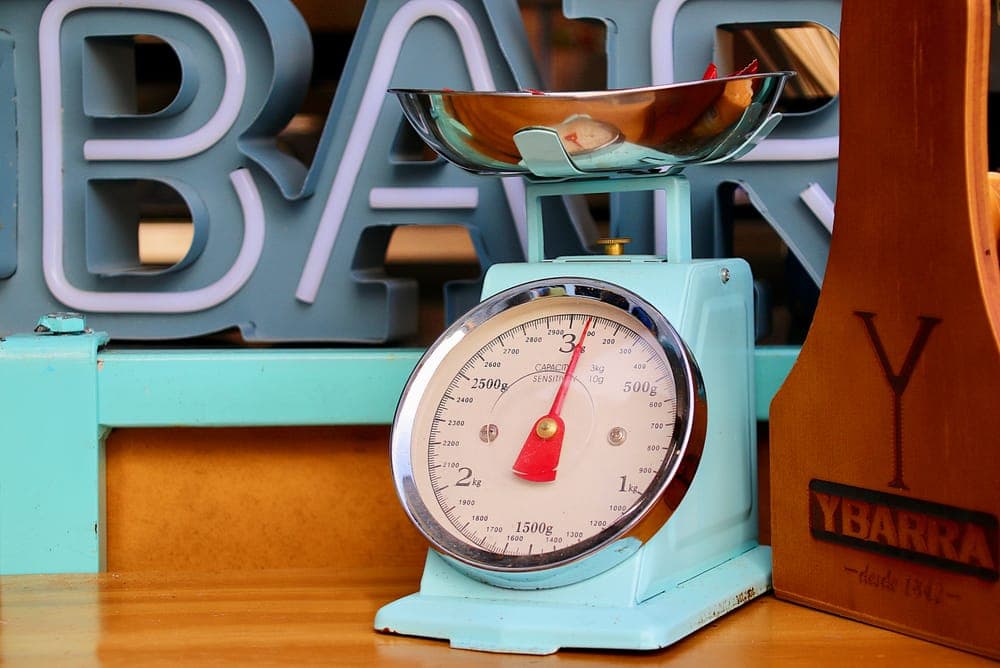
- Weigh the base-weight pile on a kitchen or luggage scale, item by item if your scale is small, or your loaded pack minus consumables and worn items if it isn't. A postal or luggage scale reading in grams is more precise than most bathroom scales.
- Log each item's weight in a spreadsheet or a notes app as you go — this is also how you'll find your heaviest, least-justified items later, which is the whole point of the upgrade-order guide. Don't skip small items because they seem trivial: a dozen forgotten 20-gram odds and ends add up to a category's worth of weight, and they're invisible until you actually log them.
- Add it up. That total, in grams, is your base weight. Compare it to the table above, or just track it trip to trip and watch it drop as you swap in lighter picks.
A spreadsheet works better than a mental tally: one row per item, columns for category (shelter, sleep, pack, cook, worn, consumable), weight in grams, and where it came from. That log is also what makes the next upgrade decision easy — sort by weight within the base-weight rows and the heaviest, least-justified items rise straight to the top.
If you're starting from nothing rather than auditing an existing kit, the ultralight backpacking gear list gives you one value pick per category with the weight already printed, and the backpacking checklist covers everything outside base weight too.
What this means for your budget
You don't need to hit the ultralight band to benefit from thinking in base weight. Most of the available weight, for most budgets, sits in three categories: shelter, sleep system and pack — see the big three for why those three usually move more grams per dollar than anything else you own. A tent weighs less because a maker uses a lighter fabric and a simpler pole structure, not because it's more expensive for its own sake — and the site's grams-per-dollar method exists to separate the two.
The value-hunter version of this exercise isn't chasing the single lightest kit possible. It's finding where the next dollar buys the most grams, then spending there before moving on. A hiker with an unmeasured, heavier-than-they-think kit almost always has one or two categories doing most of the damage; finding those categories is worth more than any single product recommendation, because it tells you where your own money should go rather than someone else's.
Two specific starting points, if you want to see your own base weight change: swap out your tent (see how much a tent should weigh) or your pack (see how heavy your pack should be) — both guides walk through the same math from the other end. If you want the three big categories priced out together as a starting kit rather than one at a time, the $500 build does that math for you.
Our picks for this
Where the big three fit
Shelter, quilt and pack are the three categories the thresholds above are usually won or lost on. Each of these swaps a mainstream, entry-level product for a lighter one at a real gram-per-dollar value.
Budget double-wall trekking-pole tent for 2
3F UL Gear Lanshan 2
1,060 g (2 lb 5.4 oz)$150–$200 band7.0 / 10A double-wall, two-door shelter that saves real grams against a mainstream freestanding tent.
Check price · Amazon#ad · Price set by Amazon · Affiliate disclosure for the link to 3F UL Gear Lanshan 2
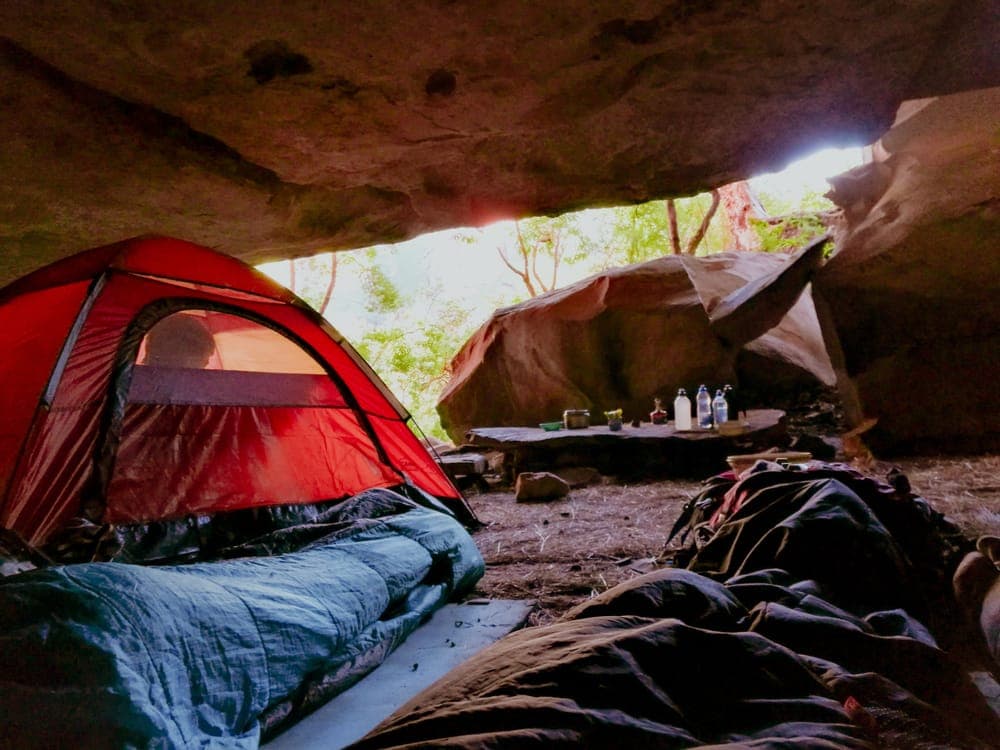
Best value 25°F quilt
Zenbivy Core Quilt 25°F Down
737 g (1 lb 10.0 oz)$200–$300 band7.2 / 10Drops the zipper, hood and underside insulation a mummy bag carries.
Check price · Amazon#ad · Price set by Amazon · Affiliate disclosure for the link to Zenbivy Core Quilt 25°F Down
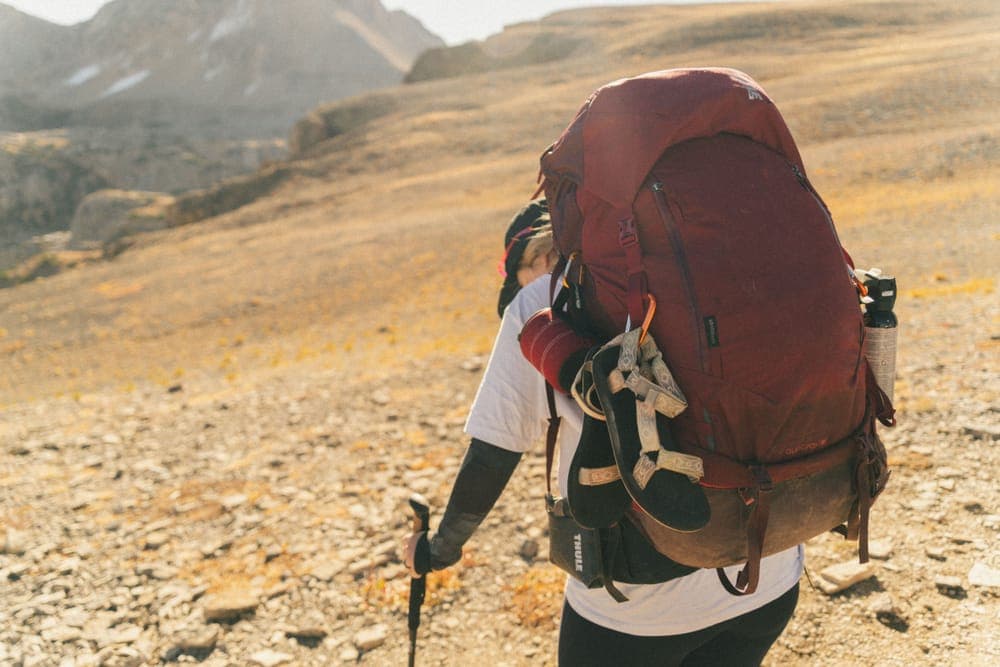
Cheapest sub-kilo frameless pack
3F UL Gear QiDian 40+16
850 g (1 lb 14.0 oz)$50–$100 band7.0 / 10A frameless pack that only makes sense once the rest of your base weight is down.
Check price · Amazon#ad · Price set by Amazon · Affiliate disclosure for the link to 3F UL Gear QiDian 40+16
Photos are illustrative, not the product. Scores are spec-derived.
How we scored this
Units we claim to have tested: 0
Most gear sites say they tested everything. We didn't, and we say so. What we did instead: took every weight and list price from the maker's own page, measured each product against a named mainstream reference, and computed grams saved per dollar. Every number links to where it came from.
The score is spec-derived: value and weight are computed from those numbers, and the rest are judgments from published specs, not test results. Commissions never set a score or decide a pick. The formula, weights and references are published.
Questions
Frequently asked
What is base weight in backpacking?
What is a good base weight for backpacking?
What is considered ultralight base weight?
Does base weight include my trekking poles?
How do I lower my base weight?
What's the difference between base weight and total pack weight?
Does base weight include my water bottle?
Why do gear reviews all cite base weight instead of total pack weight?
Receipts
Sources
- Wikipedia: Ultralight backpacking (checked 2026-09-22)
- 3F UL Gear: Lanshan 2 product page (checked 2026-09-22)
- Zenbivy: Core Quilt product page (checked 2026-09-22)
- 3F UL Gear: QiDian 40+16 product page (checked 2026-09-22)
We haven't tested the gear on this page and we don't pretend to. Weights, list prices and specs come from each maker's own pages (linked on every product), and performance figures such as boil times or flow rates are the maker's claims, labeled that way. Amazon sets its own prices and changes them often, so buy buttons link to the live listing. Where a figure isn't published, we say so. Read the full method.