Naturehike is a Chinese outdoor brand that sells direct and through Amazon, and it has become the default answer to “what tent should I buy if I do not want to spend mainstream money?”. The question behind the question is usually whether the gear is honest, so this page answers it the only way this site can: by looking at what Naturehike publishes about its own products and checking whether it holds up.
The short answer
What Naturehike actually publishes
On the Cloud Up pages, Naturehike prints the things that decide whether a tent works: inner length, width and peak height in centimeters; fly fabric and denier; the fly's PU rating; a separate rating for the ground sheet and for the included footprint; pole material; packed weight and packed dimensions; and the stake and guy-line count in the box.
That is more than you get from several household-name brands. It is also the reason Naturehike tents can be ranked on this site at all — every figure on a product card here has to come from the maker's own page, and a brand that publishes nothing cannot be ranked honestly whatever its reputation.
It also explains hydrostatic head properly on its own pages: a 3,000 mm rating means the fabric withstands a 3,000 mm column of water for over a minute before seepage. That is the explanation we lean on in best backpacking tents for rain.
Where it contradicts itself
The caveat that matters most. On the Cloud Up UL 2 page, the technical specification rates the 15D fly at PU 1500 mm+, while a feature blurb on the same page claims 4000 mm. Those cannot both be true.
Where a maker contradicts itself, this site uses the figure that does not flatter the product. So the Cloud Up UL 2 is treated as a PU 1500 mm+ fly at 1,220 g (2 lb 11.0 oz), which is why it is excluded from our rain-tent page while the Cloud Up Pro 2 is on it. If you only read the marketing line you would buy the UL expecting storm protection it does not claim in its own spec table.
The naming problem
Naturehike sells Cloud Up, Cloud Up Pro, Cloud Up UL and Cloud Up Base, in 1, 2, 3 and 4-person sizes, with 20D and 210T fabric variants of some of them, at overlapping prices. The names do not form a ladder:
- Cloud Up is the original, now a clearance line by Naturehike's own statement.
- Cloud Up Pro is the current model — wider, lighter packed, better equipped.
- Cloud Up UL is the lightest, achieved with a thinner fly at a lower waterproof rating.
- Cloud Up Base is the heavy-fabric budget version, which makes sense for car camping and not for carrying.
Pro is not simply better than UL, and UL is not simply better than Pro. The three-way comparison is in Cloud Up 2 vs Cloud Up Pro 2, and it is worth reading before buying anything with Cloud Up in the name.
Which Naturehike tents are worth it
Three Naturehike tents we would actually buy, each for a different reason. Every weight and coating figure is from Naturehike's own specification table.
Our picks for this
The Naturehike tents worth owning
Picked on published figures: current models, honest spec tables, and a weight that justifies the brand's whole premise.
Current budget 2P freestanding pick
Naturehike Cloud Up Pro 2
1,360 g (2 lb 16.0 oz)$150–$200 band5.5 / 10The one to buy: PU 3000 mm+ fly over a PU 5000 mm+ floor layer, 130 cm wide inside, freestanding, with a footprint and 14 stakes in the box.
$139.99Amazon#ad · Price as of November 3, 2026 · Affiliate disclosure for the link to Naturehike Cloud Up Pro 2
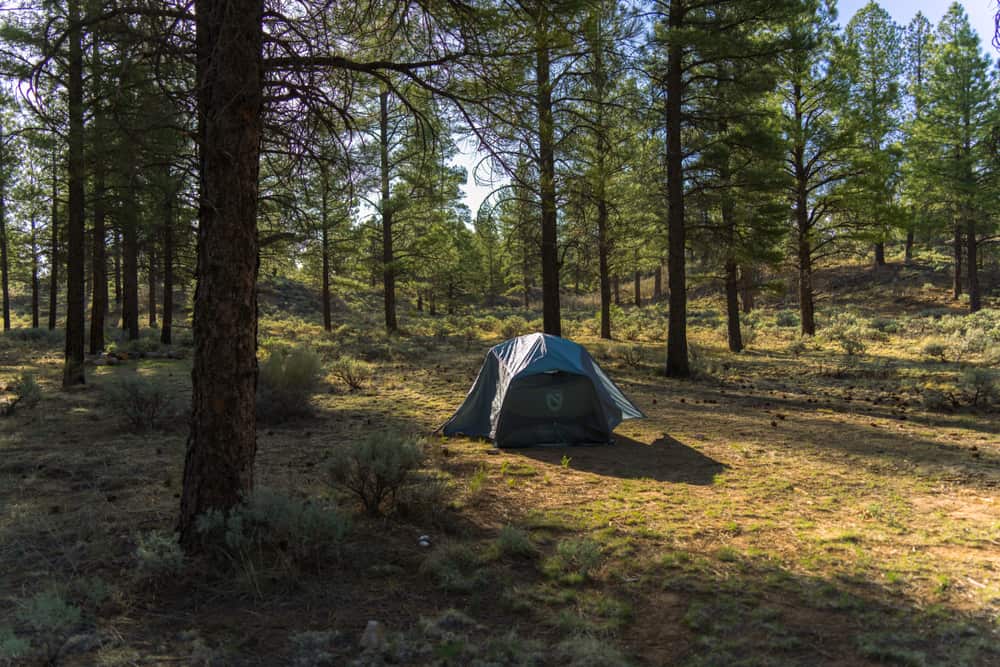
Lightest budget solo tent
Naturehike Cloud Up UL 1
1,060 g (2 lb 5.4 oz)$100–$150 band5.6 / 10The lightest budget solo freestanding tent we track at 1,060 g, for hikers who do not want to learn a trekking-pole pitch.
Check price · Amazon#ad · Price as of November 3, 2026 · Affiliate disclosure for the link to Naturehike Cloud Up UL 1
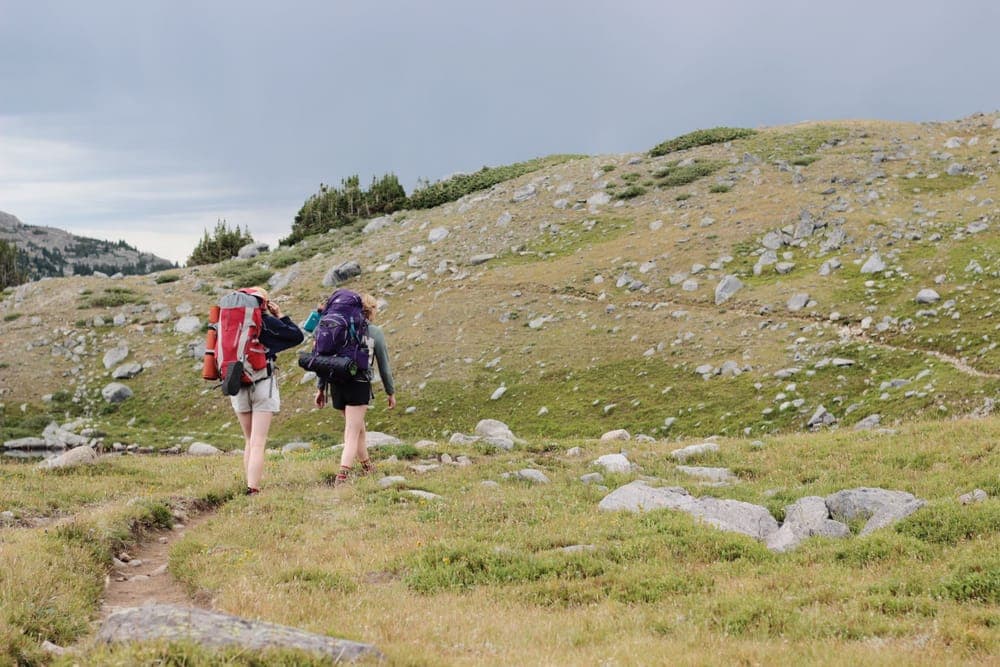
Best 3-person tent overall
Naturehike Cloud Up Pro 3
1,750 g (3 lb 13.7 oz)$150–$200 band7.7 / 10The best three-person tent on our math: 1,750 g for a freestanding shelter that sleeps three, which no mainstream brand matches at the price.
Check price · Amazon#ad · Price as of November 3, 2026 · Affiliate disclosure for the link to Naturehike Cloud Up Pro 3
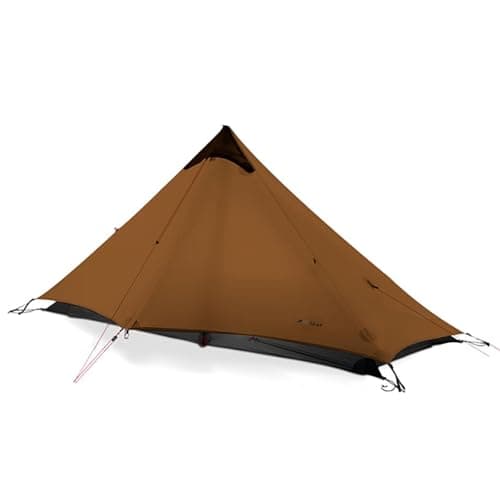
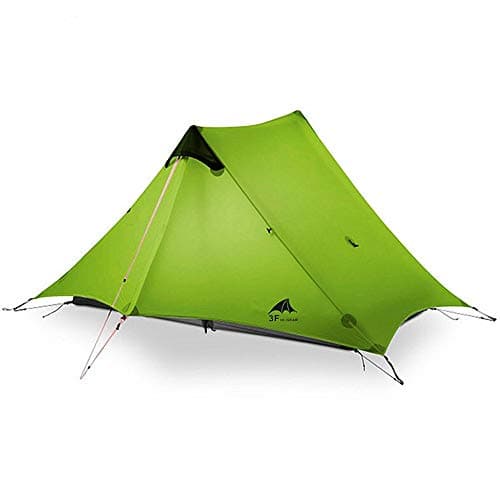
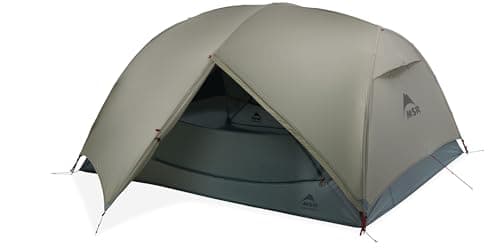
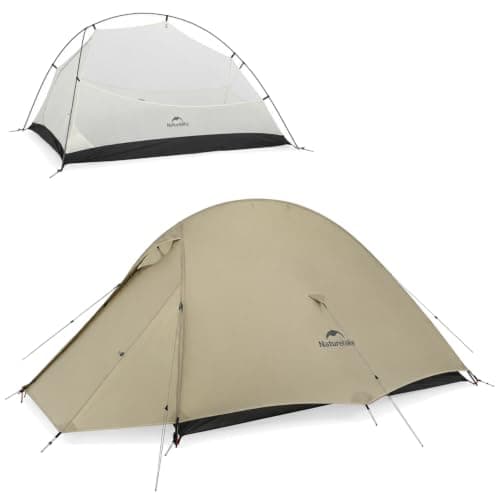
Photos are illustrative, not the product. Scores are spec-derived.
Naturehike also makes the hot tents we measure stove-jack shelters against — the Ranch Fire 4 at 4,490 g (9 lb 14.4 oz) is the reference on our stove-jack page — which is a good illustration of the brand's range and of where it stops being backpacking gear.
Naturehike against the mainstream brands
The comparison that matters is not Naturehike against cottage Dyneema. It is Naturehike against the tent most first-time buyers actually get.
| Tent | Weight | Published fly rating |
|---|---|---|
| Naturehike Cloud Up Pro 2 | 1,360 g | PU 3000 mm+ |
| Naturehike Cloud Up UL 2 | 1,220 g | PU 1500 mm+ (tech specs) |
| Kelty Late Start 2P (our reference) | 1,900 g | 1,200 mm |
| Big Agnes Copper Spur UL2 | 1,180 g | 1,500 mm |
Read that table carefully, because it is the whole argument. The Cloud Up Pro 2 publishes a higher fly rating than either US brand and saves 540 g (1 lb 3.0 oz) vs the Kelty Late Start 2P. The Big Agnes Copper Spur UL2 at 1,180 g (2 lb 9.6 oz) is only 140 g lighter than the Cloud Up Pro 2 for several times the list price, and publishes 1,500 mm against the Cloud Up's 3,000 mm+.
That does not make Big Agnes a worse tent. Coating thickness is not the only measure of a shelter: pole quality, seam execution, fabric tear strength, design refinement and the ability to get a replacement part in a week all matter and none of them appears in a spec table. It does mean that if you are buying on published numbers per dollar, Naturehike wins, which is exactly what this site measures.
The three caveats
- Read the spec table, not the feature copy. The Cloud Up UL 2's two conflicting fly ratings are the clearest example, and there is no reason to assume it is the only one. Trust the lower number.
- Expect to buy online and support by email. There is no shop, no local dealer and no over-the-counter warranty claim. For a tent you will use for years, that is a real difference from Osprey's or Big Agnes's service model, and it is worth something.
- Model availability changes without notice. The original Cloud Up 2 is on clearance by Naturehike's own statement. Buying a discontinued model means no spare poles, flies or inners later. Check the status line before you buy a bargain.
With those three in mind, Naturehike is a good brand for the buyer this site is written for: someone who wants most of the weight saving of expensive gear and refuses to pay cottage-brand prices for it. If you want the full budget field rather than one brand, start with best budget backpacking tents, and if you want to know why the expensive tents cost what they do, read why ultralight tents are so expensive.
How we scored this
How these picks were chosen
Every weight and list price here comes straight from the maker's own product page, measured against a named mainstream reference, then turned into one number: grams saved per dollar. Every figure links to the page it came from, so you can check any of it in a click.
Value and weight are computed from those published numbers; function, durability and ease are scored from the specs, manuals and standards each maker publishes. Commissions never set a score or decide a pick. The formula, weights and references are published.
What changed
- Published.
Questions
Frequently asked
Is Naturehike a good tent brand?
Are Naturehike tents actually waterproof?
Which Naturehike tent should I buy?
Is Naturehike better value than Big Agnes or MSR?
What is the difference between Cloud Up, Cloud Up Pro and Cloud Up UL?
Receipts
Sources
- Naturehike: Cloud Up Pro 2-Person product page (checked 2026-09-22)
- Naturehike: Cloud Up 2-Person product page, clearance statement (checked 2026-09-22)
- Naturehike: Cloud Up UL 2-Person product page, conflicting fly ratings (checked 2026-09-22)
- Naturehike: Cloud Up UL 1-Person product page (checked 2026-09-22)
- Kelty: Late Start 2P product page, 1,200 mm (checked 2026-09-22)
- Big Agnes: Copper Spur UL2 product page, 1,500 mm (checked 2026-09-22)
Weights, list prices and specs on this page come from each maker's own pages, linked on every product, and performance figures such as boil times or flow rates are the maker's claims, labeled that way, so you always know whose number you're reading. Amazon sets its own prices and changes them often, so buy buttons link to the live listing. Read the full method.