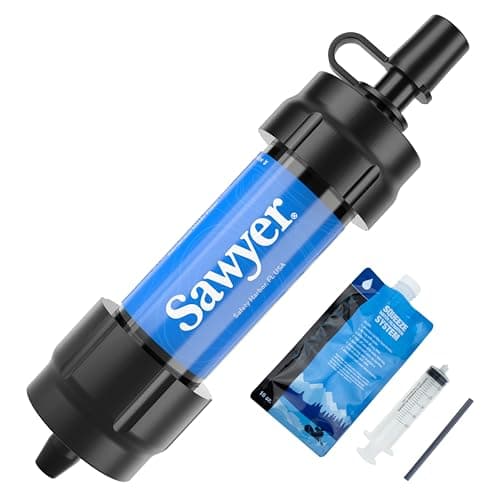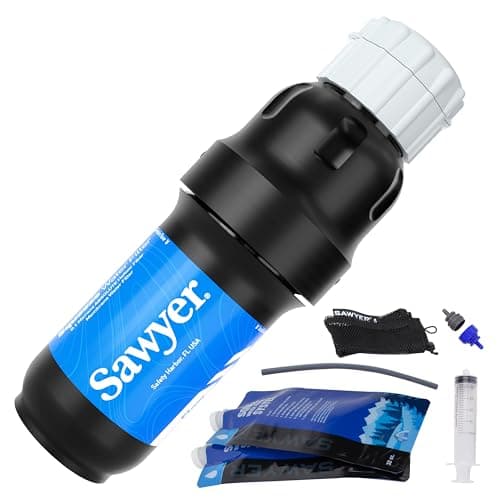
A water filter is the one piece of gear on your list where the cheap option is not a compromise. An 85 g hollow-fiber filter in a lower price band than most headlamps stops the same bacteria and protozoa as a pump that weighs four times as much. The money and the grams go on convenience, flow and the specific hazards your water carries — not on safety.
That makes this an easy decision to get right and a very easy decision to overthink. Four questions, in order.
The question that decides everything: what is in your water?
Filters and purifiers are not the same product, and the difference is viruses. A filter's hollow-fiber membrane physically blocks anything bigger than its pore size: bacteria and protozoa, including Giardia and Cryptosporidium. Viruses are smaller than those pores. Sawyer, Platypus, Katadyn and LifeStraw all publish bacteria and protozoa claims for their hollow-fiber filters, and Platypus, Katadyn and LifeStraw state outright that theirs are not effective against viruses (Platypus).
- Backcountry water in the US and Canada: a filter is the normal, accepted answer. Mountain streams, lakes and springs above human habitation carry protozoa and bacteria, which is exactly what these membranes are built for.
- Water downstream of towns, farms or heavy livestock, or anywhere with poor sanitation: a purifier, which adds a virus claim. GRAYL states 99.99% of viruses for the GeoPress and says it is independently tested to meet or exceed NSF/ANSI 42 and 53 and the EPA Guide Standard, while noting it is not certified by NSF, WQA or UL (GRAYL).
- Chemicals, metals, pesticides or salt: no hollow-fiber filter touches them. Sawyer lists metals, chemicals, pesticides, VOCs, hydrocarbons and salt as things its filters do not remove (Sawyer). If your water source is an agricultural ditch or a mine drainage, the answer is a different water source.
Get this one wrong in either direction and you pay for it: a filter where you needed a purifier is a health risk, and a purifier where a filter would do is several hundred extra grams and a cartridge that needs replacing far sooner. Our filter vs purifier guide goes through the published claims side by side, and filters vs purification tablets covers the chemical backup most people should carry anyway.
The five formats, and who each one is for
Once you know whether you need a filter or a purifier, the format is mostly a question of how you like to drink.
| Format | How it works | Best for |
|---|---|---|
| Squeeze (threaded) | Filter screws onto a soft pouch or a 28 mm bottle; you squeeze water through it | Almost everyone: lightest, cheapest, most flexible |
| Bottle or flask filter | Filter is built into its own soft flask; drink straight through it | Drinking on the move with no setup |
| Gravity | Hang a dirty bag above a clean one and let it run | Camp water, groups, big volumes |
| Pump | Hand pump draws water through a cartridge | Shallow, silty or hard-to-reach sources |
| Press purifier bottle | Inner cartridge presses down through the outer bottle | Travel and virus risk, one bottle at a time |
The squeeze filter is the default for a reason. A Sawyer Squeeze threads onto standard 28 mm bottles — the thread on a disposable water bottle — so the dirty-water container can be something you already own, and the kit adds gravity tubing and inline hydration adapters, which means one filter covers squeeze, gravity and inline setups (Sawyer). That versatility, at 85 g (3.0 oz), is why it is the benchmark everything else is measured against.
Straw filters — the ones you drink directly through, face down at the water — are the exception worth naming: cheap, light and only useful if you are willing to lie down at every source. We rank them separately in the best water filter straws.
Flow rate, and why it will drop
Flow is the number that decides whether you enjoy using your filter. The published figures are not all comparable, so read them carefully:
- Platypus QuickDraw: up to 3 L per minute squeezing, 1.75 L per minute in a gravity setup — the highest stated squeeze flow in our catalog.
- Katadyn BeFree 1.0L: up to 2 L per minute (Katadyn).
- Katadyn Hiker Pro pump: up to 1 L per minute, about 48 strokes per liter.
- Sawyer: publishes no flow figure at all. It ranks its own three pocket filters — Squeeze fastest, then Micro Squeeze, then Mini.
Every one of those numbers describes a brand-new filter in clean water. In the real world, flow drops as the membrane loads with sediment, and the rate it drops at depends entirely on your water. Clear snowmelt barely moves the needle for weeks; a silty desert tank can halve your flow in an afternoon. Pre-filter dirty water by letting it settle in a bottle, or pour it through a bandana, and your filter will stay fast for far longer.
Cleaning: the chore you are choosing
Cartridge life is the other half of this. Sawyer rates its membranes in the hundreds of thousands of gallons; Platypus rates the QuickDraw at 1,000 L and Katadyn the BeFree at up to 1,000 L. GRAYL rates the GeoPress cartridge at 350 cycles, which is 250 L, or three years after first use. For a weekend hiker that is years of trips. For a thru-hiker, a 250 L cartridge means carrying spares, and that changes the math completely. If you are planning a long trail, see the thru-hiking gear list.
The failure nobody warns you about
If you camp where nights go below freezing, this is the single most important thing on this page. The standard practice is to sleep with the filter inside your quilt or bag, and to carry chemical tablets as a backup for the morning you get it wrong. MSR is the exception: it says the Guardian is engineered to withstand freezing along with drops and heavy use, which is part of what its price buys. Shoulder-season and winter trips are where that matters most — see our cold-weather cooking picks for the rest of that kit.
Group size and camp water
Solo hikers filter a liter at a time and drink it. Groups need several liters at camp for dinner, breakfast and bottles, and squeezing that through a pocket filter by hand gets old fast.
The cheap fix is gravity: the Sawyer Squeeze kit includes gravity tubing, so the filter you already own hangs off a tree and fills a pot while you set up the tent. Platypus publishes a specific gravity figure for the QuickDraw — 1.75 L per minute — which is slower than squeezing and requires no hands at all. A dedicated pump is the other answer, and it is the right one when the water is shallow or muddy: Katadyn's Hiker Pro draws from sources a squeeze pouch cannot scoop from (Katadyn), at 310 g (10.9 oz) against the Squeeze's 85 g (3.0 oz).
The pump is also our reference product for this class: the Katadyn Hiker at 310 g (10.9 oz) is the traditional filter a first-time buyer carries before switching to a squeeze, and every filter we rank is measured against it.
Four filters across the range
One per approach: the all-round benchmark, the fastest-flowing squeeze, the compact option, and a true purifier. Every figure is the maker's own.
Our picks for this
A filter per approach
Not a ranking. These four show what each format actually gives you, and each is scored properly on the water filter roundup.
Best all-around squeeze filter
Sawyer Squeeze (SP129)
85 g (3.0 oz)$25–$50 band6.9 / 1085 g, a 0.1 micron membrane and a lifetime limited warranty. Threads onto 28 mm bottles and the kit covers squeeze, gravity and inline setups. No virus claim, and no published flow figure.
$45.95Amazon#ad · Price as of November 3, 2026 · Affiliate disclosure for the link to Sawyer Squeeze (SP129)
Best squeeze filter with integrity test
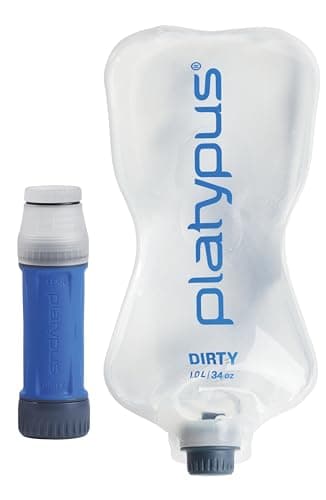
Platypus QuickDraw Filter
83 g (2.9 oz)$25–$50 band7.2 / 1083 g with the highest stated squeeze flow here (up to 3 L/min) and a user integrity test that shows whether a drop or freeze broke it. The reservoir is a separate kit.
$54.95Amazon#ad · Price as of November 3, 2026 · Affiliate disclosure for the link to Platypus QuickDraw Filter
Best compact squeeze filter
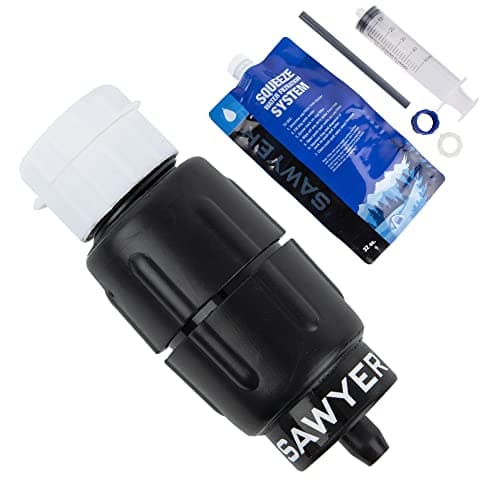
Sawyer Micro Squeeze (SP2129)
57 g (2.0 oz)$25–$50 band7.6 / 1057 g and half the Squeeze's length, with the same 0.1 micron membrane. Sawyer ranks its flow between the Mini and the Squeeze, so expect more backwashing.
$33.95Amazon#ad · Price as of November 3, 2026 · Affiliate disclosure for the link to Sawyer Micro Squeeze (SP2129)
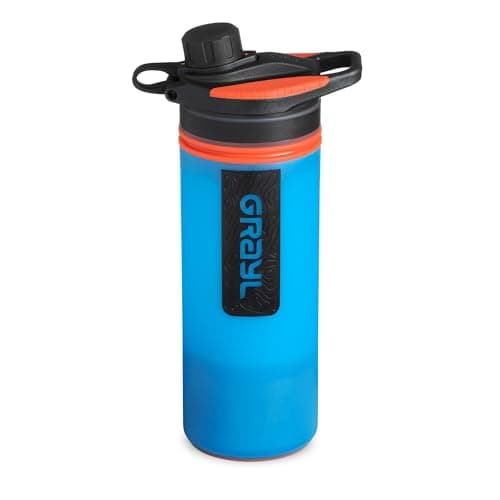
Best purifier bottle for travel
GRAYL GeoPress 24 oz Purifier
450 g (15.9 oz)$50–$100 band3.7 / 10A true purifier: 710 ml pressed in 8 seconds, with a 99.99% virus claim. It weighs 450 g and GRAYL rates the cartridge for 250 L, so it is a travel and virus-risk tool, not a thru-hiking one.
$99.95Amazon#ad · Price as of November 3, 2026 · Affiliate disclosure for the link to GRAYL GeoPress 24 oz Purifier
Photos are illustrative, not the product. Scores are spec-derived.
Where each of these lands on our grams-per-dollar math, and the full field including the LifeStraw Peak Squeeze and the Katadyn BeFree, is in the best backpacking water filters. The purifier side has its own ranking in the best backpacking water purifiers.
Buy the bottle with the filter
A squeeze filter is half a system. What you thread it onto decides how pleasant it is to use, and the choices are not equivalent.
- Standard 28 mm plastic bottles. Sawyer and Platypus both fit them. A disposable bottle is free, weighs almost nothing, and is easy to replace when it splits. This is what most long-distance hikers actually use.
- The included soft pouches. Sawyer ships two collapsible pouches with the Squeeze. They pack small and scoop from shallow water better than a rigid bottle.
- A dedicated flask. Katadyn's BeFree threads onto its own HydraPak SoftFlask and Katadyn lists no standard 28 mm bottle fit, so you are buying into one system. The upside is the fastest hands-free drinking of any format here.
Whichever you pick, keep the dirty container and the clean container clearly distinguishable, and never let the clean threads touch the water you are filtering. That is the actual mechanism by which most people make themselves ill with a working filter in their hand.
Four mistakes
1. Buying a purifier for the Rockies. It is several hundred extra grams, a shorter cartridge life and a higher price for a hazard your water almost certainly does not carry. Buy the filter.
2. Letting it freeze. See above. It is the one failure mode that does not announce itself.
3. Filtering silt straight into the membrane. Let murky water settle, or pre-filter it through cloth. Flow is the thing you will notice losing, and sediment is what takes it.
4. Buying the smallest filter available. Sawyer's own guidance is that the full Squeeze flows faster and needs backwashing less often than the Micro or the Mini, for about an ounce more (Sawyer). An ounce is not worth a filter you resent using. The same logic applies across a kit: pick the places to save grams deliberately, which is what lowering your base weight is about, and spend the savings where they buy the most — a lighter shelter, for instance, in our freestanding tent ranking, or a lighter pack, as in Exos 58 vs Atmos AG 65.
How we scored this
How these picks were chosen
Every weight and list price here comes straight from the maker's own product page, measured against a named mainstream reference, then turned into one number: grams saved per dollar. Every figure links to the page it came from, so you can check any of it in a click.
Value and weight are computed from those published numbers; function, durability and ease are scored from the specs, manuals and standards each maker publishes. Commissions never set a score or decide a pick. The formula, weights and references are published.
What changed
- Published.
Questions
Frequently asked
Do I need a water filter or a water purifier for backpacking?
What micron rating do I need for a backpacking water filter?
What happens if my water filter freezes?
How often do I need to backflush a squeeze filter?
What is the best water filter for a group?
How much should a backpacking water filter cost?
Receipts
Sources
- Sawyer: Squeeze Water Filtration System (SP129CL) product page (checked 2026-09-22)
- Sawyer Help Center: Squeeze Filter FAQs, including freezing guidance (checked 2026-09-22)
- Sawyer: Micro Squeeze Water Filtration System (SP2129) product page (checked 2026-09-22)
- Sawyer Help Center: Water Filters FAQs, filter flow ranking (checked 2026-09-22)
- Platypus (Cascade Designs): QuickDraw Filter product page (checked 2026-09-22)
- Katadyn: BeFree 1.0L USA product page (checked 2026-09-22)
- Katadyn: Hiker Pro USA product page (checked 2026-09-22)
- GRAYL: GeoPress 24 oz purifier product page and FAQ (checked 2026-09-22)
Weights, list prices and specs on this page come from each maker's own pages, linked on every product, and performance figures such as boil times or flow rates are the maker's claims, labeled that way, so you always know whose number you're reading. Amazon sets its own prices and changes them often, so buy buttons link to the live listing. Read the full method.