Base weight is everything in and on your pack except food, water and fuel — the consumables that change daily. If that definition is new, start with what is base weight, because the number only means anything if you are counting the same things everyone else is.
Ten pounds is the threshold where “lightweight” becomes “ultralight” by common convention. It is also an arbitrary number in a different unit from the one gear is sold in, which is why so many sub-10 lists do not add up. In grams it is 4,536 g, and that is the figure to budget against.
The arithmetic of 10 pounds
The gram budget, by category
| Category | Budget | What that buys |
|---|---|---|
| Pack | 700-900 g | A frameless or minimally-framed 40-55 L pack rated to about 25 lb |
| Shelter | 600-800 g | A solo trekking-pole tent, or a tarp and bivy |
| Quilt or bag | 550-750 g | A 20°F quilt, or a 30°F quilt if your nights allow |
| Sleeping pad | 350-450 g | An R 4-4.5 air pad, or foam if you can sleep on it |
| Insulation and rain | 700-900 g | A light puffy and a rain shell, nothing spare |
| Other clothing | 300-400 g | Sleep socks, hat, gloves, one spare pair of socks |
| Kitchen | 200-250 g | Canister stove, 550 ml titanium pot, lighter, long spoon |
| Water | 150-200 g | A squeeze filter and two disposable bottles |
| Electronics | 200-300 g | Headlamp, battery bank, one cable |
| Everything else | 300-400 g | First aid, repair, hygiene, trowel, sunscreen, cord |
Add the top of every range and you are over 10 lb. Add the bottom of every range and you are near 4 kg. The work of building a sub-10 list is deciding which two or three categories get the top of their range and which get the bottom.
The big four, at the light end
Here is the budget made concrete with the lightest practical options we track, using the makers' own published weights:
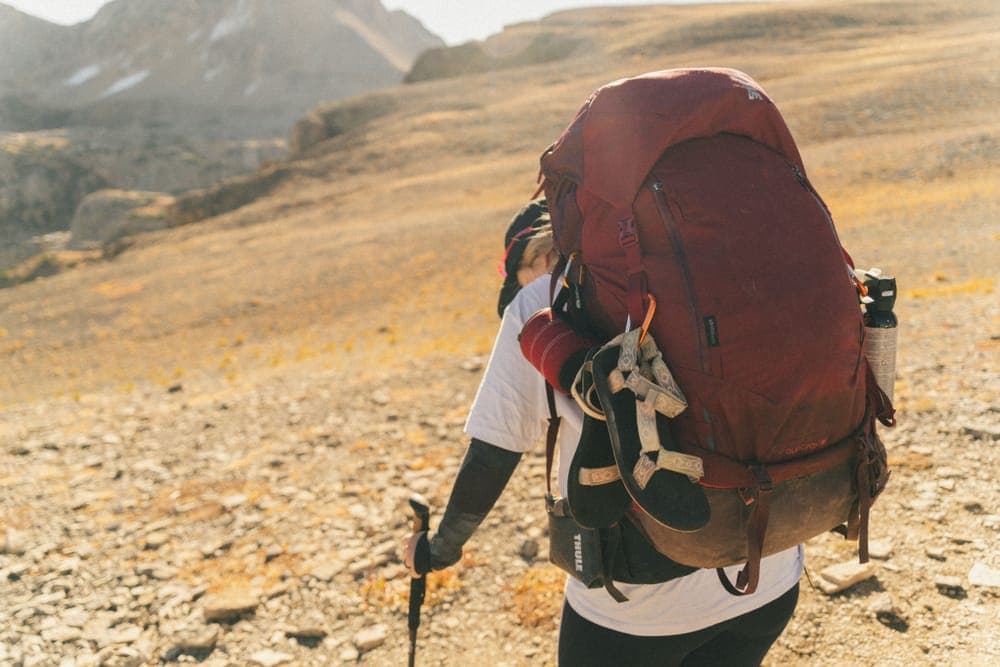
- Pack: 3F UL Gear QiDian Pro at 880 g (1 lb 15.0 oz).
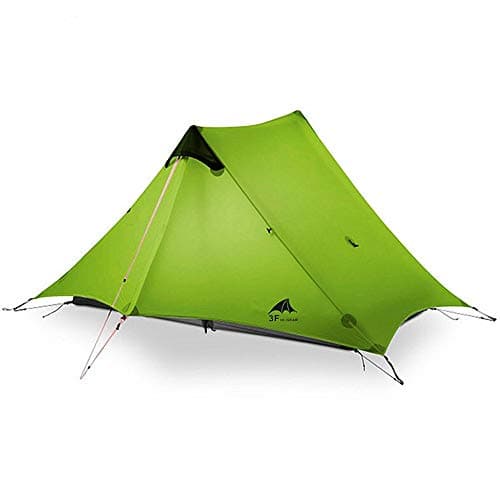
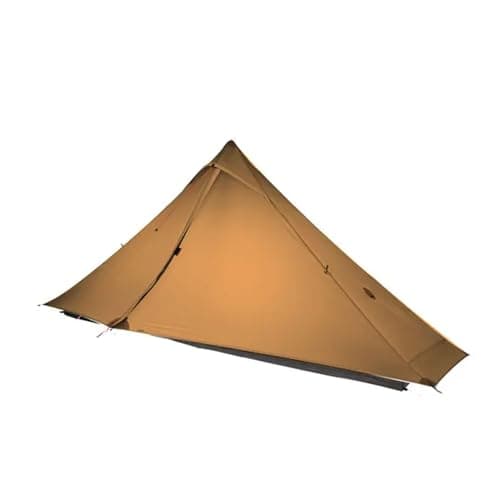
- Shelter: 3F UL Gear Lanshan 1 Pro at 690 g (1 lb 8.3 oz).
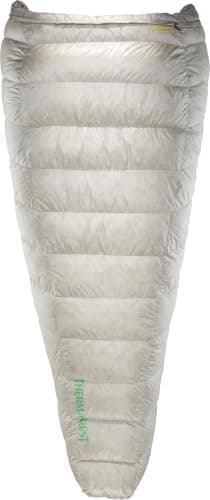
- Quilt: Therm-a-Rest Vesper 20 at 550 g (1 lb 3.4 oz), EN limit 20°F.
- Pad: Therm-a-Rest NeoAir XLite NXT at 370 g (13.1 oz), R 4.5.
That is 2,490 g (5 lb 7.8 oz) for the big four, leaving about 2,046 g (4 lb 8.2 oz) for clothing, kitchen, water, electronics and the miscellaneous bag. That is tight but achievable, and it is the shape of nearly every genuine sub-10 list.
Swap any one of those for a mainstream equivalent and the maths breaks. A framed 65 L pack is around 1,700 g on its own, which is two-thirds of the entire big-four budget.
What the big four weigh
Our picks for this
The big four for a sub-10 kit
The lightest practical option we track in each slot, at a price a value hunter can defend. Every weight is the maker's own published figure.
Best value frameless pack
3F UL Gear QiDian Pro
880 g (1 lb 15.0 oz)$50–$100 band7.0 / 10880 g, frameless, and the cheapest route under a kilo. The catch is the load rating: a frameless pack needs the rest of this list to be light.
Check price · Amazon#ad · Price as of November 3, 2026 · Affiliate disclosure for the link to 3F UL Gear QiDian Pro
Lightest budget solo shelter
3F UL Gear Lanshan 1 Pro
690 g (1 lb 8.3 oz)$150–$200 band7.0 / 10690 g for a double-wall solo shelter that pitches on one trekking pole. You have to carry poles, and the seams need sealing before first use.
$199.99Amazon#ad · Price as of November 3, 2026 · Affiliate disclosure for the link to 3F UL Gear Lanshan 1 Pro
Lightest EN-rated 20°F quilt
Therm-a-Rest Vesper 20F/-6C Down Quilt
550 g (1 lb 3.4 oz)$400–$500 band7.4 / 10550 g at an EN-tested 20F limit: the single biggest weight saving available in a sleep system, because it deletes the hood, the zip and the underside.
$459.95Amazon#ad · Price as of November 3, 2026 · Affiliate disclosure for the link to Therm-a-Rest Vesper 20F/-6C Down Quilt
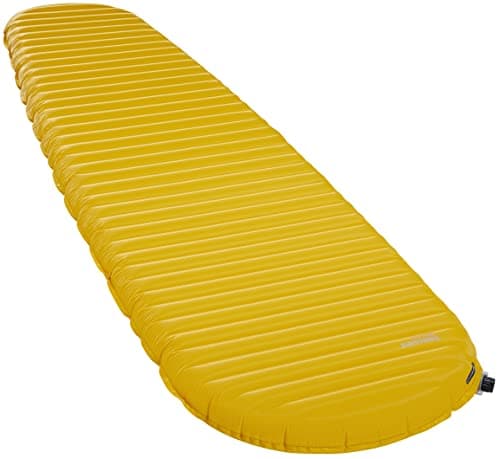
Lightest all-season air pad
Therm-a-Rest NeoAir XLite NXT (Regular)
370 g (13.1 oz)$200–$300 band6.1 / 10370 g at R 4.5, which is enough pad for a 20F quilt. Going lighter than this means foam, and foam at R 2.0 caps how cold you can go.
$173.07Amazon#ad · Price as of November 3, 2026 · Affiliate disclosure for the link to Therm-a-Rest NeoAir XLite NXT (Regular)
Photos are illustrative, not the product. Scores are spec-derived.
The three decisions that do the work
You do not reach sub-10 by buying lighter versions of everything. You reach it by making three structural choices and then leaving the small stuff alone.
- Frameless pack. Deleting the frame saves 600-900 g against a framed pack, which is the single largest saving on the list. It also sets a hard ceiling: Granite Gear rates its frameless pack to 25 lb, and a frameless pack over its rating is miserable. This is why the pack decision is made last in practice and listed first in theory — see frameless vs framed.
- Trekking-pole shelter. Removing the tent poles and using poles you already carry saves roughly 400-600 g against a freestanding tent of the same size. The costs are a pitch you have to learn, a site that needs stakeable ground, and in the budget brands a seam-sealing job before first use. Our trekking-pole vs freestanding guide covers it, and do you need trekking poles covers the dependency.
- Quilt instead of a sleeping bag. Roughly 400-550 g against a comparable bag, by deleting the hood, the full zip and the compressed insulation under you. The cost is drafts if you are restless and a warmer pad requirement. See quilt vs sleeping bag.
Those three together are about 1.5 kg — a third of your entire budget — and they cost less than people assume, because the lightest trekking-pole shelters and frameless packs we track are budget-brand products rather than cottage ones. That is the whole premise of the $1,000 kit.
Spending the remaining 2,000 g
Most failed sub-10 lists have a reasonable big four and a bloated everything-else. Three habits fix that.
The practical method for this, item by item, is how to lower your base weight. The full-kit version, with every slot filled, is our ultralight gear list.
What sub-10 actually costs you
Three honest trade-offs, because a gear list that pretends there are none is a sales pitch.
- A carrying ceiling. A frameless pack rated to 25 lb plus five days of food at 700-900 g a day is at its limit on day one. Long food carries and sub-10 kits are in tension.
- Less margin in bad weather. One puffy, one shell and a 20°F quilt is enough until it rains for three days. The kit works; it does not forgive.
- More skill required. A trekking-pole shelter pitched badly is a worse night than a freestanding tent pitched carelessly. Sub-10 assumes you have practiced.
If that reads as a warning rather than a target, a 12-14 lb base weight gets you most of the benefit with none of the fragility, and it is where most experienced hikers actually live. The comparison is in ultralight vs traditional backpacking.
How we scored this
How these picks were chosen
Every weight and list price here comes straight from the maker's own product page, measured against a named mainstream reference, then turned into one number: grams saved per dollar. Every figure links to the page it came from, so you can check any of it in a click.
Value and weight are computed from those published numbers; function, durability and ease are scored from the specs, manuals and standards each maker publishes. Commissions never set a score or decide a pick. The formula, weights and references are published.
What changed
- Published.
Questions
Frequently asked
What is a sub-10-pound base weight?
Is a sub-10 base weight realistic on a budget?
What should the big four weigh for a sub-10 kit?
Do I need trekking poles for a sub-10 base weight?
Can I get under 10 lb with a sleeping bag instead of a quilt?
Receipts
Sources
- 3F UL Gear: QiDian Pro backpack product page (checked 2026-09-22)
- 3F UL Gear: Lanshan 1 Pro product page (checked 2026-09-22)
- Therm-a-Rest: Vesper 20F/-6C Down Quilt product page (checked 2026-09-22)
- Therm-a-Rest: NeoAir XLite NXT product page, R 4.5 (checked 2026-09-22)
- TOAKS: Ultralight Titanium 550 ml Pot product page (checked 2026-09-22)
- BRS: BRS-3000T stove product page (checked 2026-09-22)
- Sawyer: Squeeze Water Filter System product page (checked 2026-09-22)
Weights, list prices and specs on this page come from each maker's own pages, linked on every product, and performance figures such as boil times or flow rates are the maker's claims, labeled that way, so you always know whose number you're reading. Amazon sets its own prices and changes them often, so buy buttons link to the live listing. Read the full method.