The contenders
Side by side
 Illustrative photo
The traditional two-person tent
Kelty Late Start 2P
3.2 / 10A freestanding double-wall tent that pitches itself and needs no trekking poles, at the cost of being the heaviest shelter in this comparison.
Check price · Amazon#ad · Price set by Amazon · Affiliate disclosure for the link to Kelty Late Start 2P
- Illustrative photo
The ultralight two-person tent
3F UL Gear Lanshan 2
7.0 / 10A double-wall trekking-pole tent that undercuts the traditional tent on both weight and list price, if you already own or are willing to buy the poles it needs.
Check price · Amazon#ad · Price set by Amazon · Affiliate disclosure for the link to 3F UL Gear Lanshan 2
 Illustrative photo
The traditional framed pack
Osprey Rook 65
3.3 / 10A framed pack built for comfort under load, with a raincover and repair guarantee included, at roughly double the weight of the lighter pick here.
Check price · Amazon#ad · Price set by Amazon · Affiliate disclosure for the link to Osprey Rook 65
 Illustrative photo
The ultralight framed pack
Durston Kakwa 55
6.0 / 10A UHMWPE-fabric pack that keeps a real aluminum frame at a fraction of the weight, sold direct rather than through the usual retailer.
See it at Durston GearSold direct by the maker, not on Amazon. Plain link: we don't earn on it.
 Illustrative photo
The traditional sleeping bag
Kelty Cosmic Down 20 Sleeping Bag
4.0 / 10A full-zip, hooded 20-degree down bag for sleepers who want a bag that also unzips flat, not a system built around shedding grams.
Check price · Amazon#ad · Price set by Amazon · Affiliate disclosure for the link to Kelty Cosmic Down 20 Sleeping Bag
 Illustrative photo
The ultralight quilt
Paria Thermodown 15 Down Quilt
6.0 / 10A quilt built around a sleeping pad strap instead of a zipper, with a maker-stated rating rather than an independently tested one.
Check price · Amazon#ad · Price set by Amazon · Affiliate disclosure for the link to Paria Thermodown 15 Down Quilt
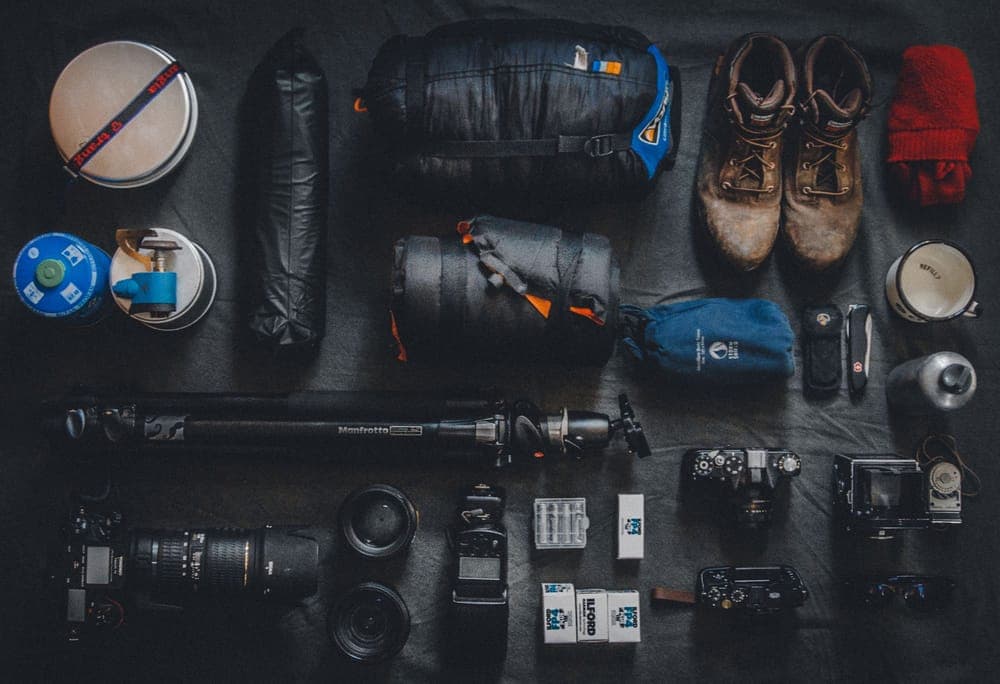
“Ultralight” isn't one purchase. It's a series of swaps, each with its own gram count and its own price tag, and some of those swaps are much better deals than others. This page lines up three of the biggest base-weight items, mainstream pick against budget ultralight pick, using only the weights and list prices each maker publishes. If you want the full rundown of what base weight even means before you read this, start with what is base weight. If you want to see all three swaps built into one packing list at a real budget, our $500 ultralight build does exactly that.
The gap at a glance
Three categories, three pairs, each measured against the same rule: the maker's own published weight and list price, nothing estimated. Every figure below links to its source.
Shelter: freestanding vs trekking-pole tent
The Kelty Late Start 2P is this site's two-person weight baseline for a reason: it's a mainstream, entry-level, big-box-adjacent tent, and it's exactly the tent a lot of budget buyers already own. It pitches with its own two aluminum poles, needs nothing else in your pack to stand up, and lists at $150–$200 MSRP band. The 3F UL Gear Lanshan 2 is a double-wall trekking-pole tent with two doors and factory-taped seams, and it lists at $150–$200 MSRP band, close to the same price. It also weighs 840 g (1 lb 13.6 oz) less.
| Published spec | Kelty Late Start 2P | 3F UL Gear Lanshan 2 |
|---|---|---|
| Weight | 1,900 g (4 lb 3.0 oz) | 1,060 g (2 lb 5.4 oz) |
| List price | $150–$200 band | $150–$200 band |
| Value | No grams saved vs the reference | Value 7.7/10 |
| Floor | 89 x 54 in (226 x 137 cm); 30.6 sq ft (2.8 m²) | 220 x 110 x 125 cm (86.6 x 43 x 49 in), length x width x peak height |
| Doors / vestibules | 1 / 1; vestibule area 7.4 sq ft (0.69 m²) | 2 / 2 |
| Fabric | 68D polyester fly and floor, 1200 mm, PFAS-free DWR; no-see-um mesh walls | Fly 15D silicone/PU nylon, 5,000 mm; floor 15D PU nylon, 6,000 mm; 11 cm (4.3 in) bathtub |
| Pitch | 2 aluminum poles, pre-bent; Quick Corners setup | Two trekking poles (sold separately); 8 stakes included |
| Score | 3.2 / 10 | 7.0 / 10 |
That's the closest thing to a free lunch in this comparison: less weight for close to the same money. The real cost is hidden off this spec sheet. The Lanshan 2 pitches on two trekking poles, sold separately, and Kelty already includes the poles the Late Start needs. If you don't already carry trekking poles, add their cost before you compare these two on price; our best budget trekking poles roundup ranks the cheapest pairs that reach the Lanshan's pitch height. You also trade a fully freestanding pitch for one that needs taut stakes and reasonably firm ground, and a thinner 15D fly against the Kelty's far heavier 68D fabric.
Packs: framed traditional vs framed ultralight
The Osprey Rook 65 is Osprey's entry-level framed pack: an integrated raincover, a sleeping-bag compartment and Osprey's any-reason repair guarantee, all for $200–$300 MSRP band. The Durston Kakwa 55 keeps a real aluminum frame rated to carry more weight than the Rook, in a UHMWPE-blend fabric, for $200–$300 MSRP band, sold direct rather than through the usual retailer. It weighs 783 g (1 lb 11.6 oz) less.
| Published spec | Osprey Rook 65 | Durston Kakwa 55 |
|---|---|---|
| Weight | 1,678 g (3 lb 11.2 oz) | 895 g (1 lb 15.6 oz) |
| List price | $200–$300 band | $200–$300 band |
| Value | No grams saved vs the reference | Value 2.8/10 |
| Capacity | 62 L (3,783 cu in) listed for the one size, despite the 65 in the name | Medium: 55 L internal + 15 L external = 70 L (Small 53/68 L, Large 57/72 L) |
| Frame | 4.0 mm LightWire peripheral frame; AirSpeed tensioned mesh back panel | Hollow aluminum inverted-U frame (removable) |
| Max load | — | 45 lb |
| Fabric | Recycled 600D polyester main and bottom; recycled 210D nylon lining | Ultra 200X (dominantly UHMWPE) or UltraGrid (210D nylon with UHMWPE ripstop) |
| Score | 3.3 / 10 | 6.0 / 10 |
This is the pair where ultralight actually costs more: the Kakwa is the same MSRP band for that weight saving. It also drops from Osprey's lifetime any-reason guarantee to a one-year warranty against defects. For a value hunter, that's the honest trade: real money for real grams, backed by a shorter promise from the maker. If you'd rather keep the framed pack's comfort and durability and cut weight elsewhere first, our frameless vs framed backpacks guide walks through when a frame is worth keeping.
Sleep system: full-zip bag vs quilt
The Kelty Cosmic Down 20 is a mainstream 20-degree down bag with a full zipper, hood and draft collar, listing at $150–$200 MSRP band. The Paria Thermodown 15 is a quilt built around a sleeping-pad strap instead of a zipper, using higher-fill-power down, and it lists at $200–$300 MSRP band. It weighs 170 g (6.0 oz) less.
| Published spec | Kelty Cosmic Down 20 Sleeping Bag | Paria Thermodown 15 Down Quilt |
|---|---|---|
| Weight | 1,106 g (2 lb 7.0 oz) | 936 g (2 lb 1.0 oz) |
| List price | $150–$200 band | $200–$300 band |
| Value | Value 3.0/10 | Value 5.2/10 |
| Rating | 20°F (-7°C) (Kelty rating; no ISO/EN values listed on the product page) (as stated) | 15°F (Paria rating from measured loft of about 3 in; Paria states it does not have EN/ISO testing) (as stated) |
| Fill | 550 fill down, 16.4 oz (464 g) fill (Regular) | RDS-certified 800 fill-power duck down, 20 oz fill (Regular) |
| Fabric | Recycled 20D nylon taffeta shell, recycled 50D polyester taffeta liner, PFAS-free DWR | 20D ripstop nylon shell and lining, PFC-free DWR |
| Score | 4.0 / 10 | 6.0 / 10 |
This is the swap that most undercuts the “ultralight is always the better deal” story. The weight saving here is the smallest of the three pairs, the quilt costs a lower MSRP band, and Paria states its own temperature rating is based on measured loft rather than an independent EN or ISO test, which the Kelty bag's rating also lacks, so neither side of this pair has third-party-tested numbers to compare. A quilt also has no full zipper or hood to seal out drafts the way a mummy bag does; some sleepers manage that fine with a pad strap and a snugged footbox, others don't. That's a comfort question this spec sheet can't answer for you.
What the whole switch buys you
At the register, the picture is mixed rather than uniformly more expensive. The tent is close to a wash. The pack costs a real premium. The quilt costs a smaller one. Add it up and you're not paying dramatically more for the full set, but you are buying a materially lighter one, and the money isn't spread evenly: most of it goes to the pack. That matches the buyer this site is built for: someone who wants most of the weight saving without the cottage-brand price tag on every single item, and who's willing to spend more on the one piece (the pack) where the weight-for-dollar trade is real.
Which upgrade earns its keep
This site scores every product on grams saved per dollar spent against its category reference, and that number lines up with the plain-English read above. The Lanshan 2's value figure is Value 7.7/10, the best of the three ultralight picks here, because it saves real weight while costing about the same as the tent it replaces. The Durston Kakwa 55 posts Value 2.8/10: strong, but lower than the tent, because you're paying more to get there. The Paria Thermodown 15 quilt posts the lowest of the three at Value 5.2/10, the numeric version of what the sleep section above already told you: this is the smallest win of the three swaps.
None of that means skip the pack or the quilt. It means rank your upgrades if your budget is limited: on this page's numbers, the tent swap pays for itself first, the pack swap is the next best use of extra money, and the quilt is the one worth waiting on if funds are tight. Our methodology page explains how this figure is calculated and why a heavier product than its reference scores zero rather than a negative number.
The real cost of going ultralight
List prices only tell part of the story. Three costs don't show up on a spec sheet:
- Trekking poles. The Lanshan 2 needs two, sold separately. If you don't already hike with poles, that's an added purchase before the tent's cheaper list price actually saves you anything.
- Shorter warranties. Osprey backs the Rook 65 for any reason, for as long as you own it. Durston backs the Kakwa 55 for one year against defects. That's a real difference in what happens if something breaks on trip forty.
- Thinner fabrics. The Lanshan's 15D fly and the quilt's single-wall design both trade some durability margin for weight. Neither maker hides this; it shows up directly in the denier and construction specs above.
None of these costs is fabricated or invented. They're read directly off the same product pages the weights and prices above come from; we're just naming them together instead of letting the discount speak for itself.
Durability, comfort and skill: what you give up
Beyond warranty length and fabric weight, three practical skills separate the traditional side of this comparison from the ultralight side:
- Pitching skill. A freestanding tent stands up before you stake it. A trekking-pole tent needs taut, evenly staked guylines to hold its shape, which takes a few tries to get consistent, especially on sand, gravel or hard ground where stakes don't bite well.
- Load carrying. Osprey's AirSpeed mesh back panel and internal frame are built to carry weight comfortably against your back. A lighter frame, or no frame at all, puts more of that job on how you pack and how much you're carrying in the first place.
- Sleeping without a zipper. A quilt relies on a snug pad strap and a cinched footbox to keep drafts out. Restless sleepers and side sleepers sometimes fight a quilt's open back more than a mummy bag's zipper and hood.
None of these are dealbreakers. They're the honest reasons a mainstream, heavier design still sells well, and they're the reasons this page doesn't tell you to swap all three blindly.
Is ultralight backpacking worth it for you?
The tent swap is worth it for almost everyone who already owns, or is willing to buy, trekking poles. You give up a freestanding pitch and some fabric toughness for less weight at close to the same price.
The pack swap is worth it if the weight matters more than the guarantee. Long-trip hikers and gram-counters get real grams for real money. If you'd rather keep a lifetime repair promise and don't mind the extra weight, the traditional framed pack is a defensible choice, not a mistake.
The sleep swap is the one to think hardest about. The weight saving here is the smallest of the three, the price difference is real, and you're trading a tested feature set (zipper, hood, draft collar) for a lighter, cheaper-to-ship design with a maker-stated rating. If you run cold or sleep restlessly, the traditional bag may simply suit you better, budget or not.
For the full case on shrinking the rest of your kit once you've made these three calls, see how to lower your base weight.
What we can't tell you
- How the Lanshan 2 pitches in your hands. Trekking-pole tents pitch differently depending on ground and guyline tension; we don't field-test, so we can't rate how quickly you'd get a taut pitch.
- Whether a quilt keeps you as warm as a bag at the same rating. Neither the Kelty bag nor the Paria quilt carries an independent EN/ISO temperature test, so the two ratings aren't directly comparable on lab terms, only on what each maker states.
- How the Kakwa's one-year warranty plays out over years of use against the Rook's lifetime any-reason guarantee. That's a maker policy, not a spec, and it only gets tested by time.
In detail
The contenders, in full
Illustrative photoThe traditional two-person tent
Kelty Late Start 2P
A freestanding double-wall tent that pitches itself and needs no trekking poles, at the cost of being the heaviest shelter in this comparison.
Published specsFrom the maker · not tested by us
| Weight | 1,900 g (4 lb 3.0 oz) (minimum weight (Kelty lists 4 lbs 5 oz / 1.9 kg; the 1.9 kg metric figure is used, same as the reference)) |
|---|---|
| List price | $150–$200 MSRP band (per kelty.com, checked Sep 2026) |
| Value | No grams saved vs the referencevs the reference Kelty Late Start 2P at 1,900 g (4 lb 3.0 oz) |
| Floor | 89 x 54 in (226 x 137 cm); 30.6 sq ft (2.8 m²) |
| Height | 42.5 in (108 cm), from Kelty's L x W x H dimensions |
| Doors / vestibules | 1 / 1; vestibule area 7.4 sq ft (0.69 m²) |
| Fabric | 68D polyester fly and floor, 1200 mm, PFAS-free DWR; no-see-um mesh walls |
| Poles | 2 aluminum poles, pre-bent; Quick Corners setup |
| Packed | Packaged weight 4 lbs 12 oz (2.1 kg); 16 x 6.5 x 6.5 in |
| Footprint | Sold separately (Late Start 2P Footprint) |
How the 3.2 score breaks down
- Grams per dollar (35%, computed)
- 0.0
- Weight (20%, computed)
- 0.0
- Space & weather protection (25%)
- 6.5
- Materials & durability (10%)
- 7.5
- Ease & versatility (10%)
- 8.0
What the specs support
- 68D polyester fly and floor, more than three times the denier of the 20D budget-UL fabrics
- Largest floor of the budget two-person tents here (30.6 sq ft)
- Quick Corners and pre-bent poles keep setup simple
Where it falls short
- At 1,900 g it is the heaviest two-person tent in this group
- One door and one vestibule
- Fly and floor listed at 1200 mm
Skip it if…
Skip it if you carry the tent solo on long trips: its 1,900 g minimum weight is 520 g or more above every Naturehike Cloud Up 2-person model.
#ad · Price set by Amazon · Affiliate disclosure for the link to Kelty Late Start 2P
Illustrative photoThe ultralight two-person tent
3F UL Gear Lanshan 2
A double-wall trekking-pole tent that undercuts the traditional tent on both weight and list price, if you already own or are willing to buy the poles it needs.
Published specsFrom the maker · not tested by us
| Weight | 1,060 g (2 lb 5.4 oz) (shelter weight, fly + 3-season mesh inner, trekking poles not included. 3F prints 1,060 g ('ultralight weight') in the feature list and 1,023 g ('tent body weight', 3-season) in the spec table; the heavier figure is used) |
|---|---|
| List price | $150–$200 MSRP band (per 3fulgear.com, checked Sep 2026) |
| Value | Value 7.7/10vs the reference Kelty Late Start 2P at 1,900 g (4 lb 3.0 oz) |
| Inner dimensions | 220 x 110 x 125 cm (86.6 x 43 x 49 in), length x width x peak height |
| Fabric | Fly 15D silicone/PU nylon, 5,000 mm; floor 15D PU nylon, 6,000 mm; 11 cm (4.3 in) bathtub |
| Construction | Double wall, dual apex; 3-season inner in 15D mesh nylon (4-season solid nylon inner also sold) |
| Doors / vestibules | 2 / 2 |
| Pitch | Two trekking poles (sold separately); 8 stakes included |
| Seams | Factory taped with waterproof PU tape; no seam sealing needed |
| Weight figures printed by 3F | 1,060 g 'ultralight weight'; 1,023 g tent body (3-season); 1,152 g 'trail weight' (with stakes, sacks and guylines) |
How the 7.0 score breaks down
- Grams per dollar (35%, computed)
- 7.7
- Weight (20%, computed)
- 6.2
- Space & weather protection (25%)
- 7.5
- Materials & durability (10%)
- 6.0
- Ease & versatility (10%)
- 6.0
What the specs support
- A true double wall (separate fly and mesh inner) at the lowest list price of any two-person tent in this group
- Seams are factory taped, so there is no DIY sealing (unlike the Lanshan 2 Pro)
- Two doors and two vestibules: neither sleeper climbs over the other
Where it falls short
- At 1,060 g (37.4 oz) it is heavier than the Lanshan 2 Pro, X-Mid 2 and Duplex
- Inner is 110 cm (43 in) wide, 22 cm narrower than the X-Mid 2's floor
- Thin 15D fly: 3F lists 12-15 N tear resistance, against 40-45 N for the Pro's 20D silnylon
Skip it if…
Skip it if two of you both sleep on wide pads: the inner is only 110 cm (43 in) across, 22 cm narrower than the X-Mid 2's floor.
#ad · Price set by Amazon · Affiliate disclosure for the link to 3F UL Gear Lanshan 2
Illustrative photoThe traditional framed pack
Osprey Rook 65
A framed pack built for comfort under load, with a raincover and repair guarantee included, at roughly double the weight of the lighter pick here.
Published specsFrom the maker · not tested by us
| Weight | 1,678 g (3 lb 11.2 oz) (listed weight, one size (O/S): 3.7 lb / 1.67832 kg) |
|---|---|
| List price | $200–$300 MSRP band (per osprey.com, checked Sep 2026) |
| Value | No grams saved vs the referencevs the reference Osprey Rook 65 at 1,678 g (3 lb 11.2 oz) |
| Volume | 62 L (3,783 cu in) listed for the one size, despite the 65 in the name |
| Size | One size (O/S) with 4 in of torso adjustment |
| Frame | 4.0 mm LightWire peripheral frame; AirSpeed tensioned mesh back panel |
| Fabric | Recycled 600D polyester main and bottom; recycled 210D nylon lining |
| Features | Fixed top lid, zippered hipbelt pockets, sleeping bag compartment, integrated removable raincover, internal hydration sleeve |
| Warranty | All Mighty Guarantee: Osprey repairs any damage or defect for any reason, or replaces the pack |
How the 3.3 score breaks down
- Grams per dollar (35%, computed)
- 0.0
- Weight (20%, computed)
- 0.0
- Carry, capacity & load (25%)
- 7.0
- Materials & durability (10%)
- 8.0
- Ease & versatility (10%)
- 7.5
What the specs support
- Integrated raincover and sleeping-bag compartment included
- Zippered hipbelt pockets and a hydration sleeve
- Osprey's any-reason repair guarantee
Where it falls short
- 1,678 g: the frameless picks here weigh about half as much
- One size only, and the product page publishes no load range
Skip it if…
Skip it if cutting weight is the goal: at 1,678 g it is the baseline here, and the QiDian Pro saves about 800 g against it.
#ad · Price set by Amazon · Affiliate disclosure for the link to Osprey Rook 65
Illustrative photoThe ultralight framed pack
Durston Kakwa 55
A UHMWPE-fabric pack that keeps a real aluminum frame at a fraction of the weight, sold direct rather than through the usual retailer.
Published specsFrom the maker · not tested by us
| Weight | 895 g (1 lb 15.6 oz) (complete pack, Medium, Ultra 200X fabric (frame 90 g and backpad 15 g included; both removable)) |
|---|---|
| List price | $200–$300 MSRP band (per durstongear.com, checked Sep 2026) |
| Value | Value 2.8/10vs the reference Osprey Rook 65 at 1,678 g (3 lb 11.2 oz) |
| Volume | Medium: 55 L internal + 15 L external = 70 L (Small 53/68 L, Large 57/72 L) |
| Weight by size | Ultra 200X: S 855 g, M 895 g, L 920 g; UltraGrid: S 830 g, M 870 g, L 890 g |
| Frame | Hollow aluminum inverted-U frame (removable) |
| Max load | 45 lb |
| Fit | Torso S 15-18 in, M 17-20 in, L 19-22 in; hipbelt S/M 29-38 in, M/L 33-42 in |
| Fabric | Ultra 200X (dominantly UHMWPE) or UltraGrid (210D nylon with UHMWPE ripstop) |
| Pockets | Dual hipbelt pockets, shoulder strap pockets, low-stretch knit front pocket; hydration port |
| Warranty | 1 year against defects |
How the 6.0 score breaks down
- Grams per dollar (35%, computed)
- 2.8
- Weight (20%, computed)
- 6.4
- Carry, capacity & load (25%)
- 9.0
- Materials & durability (10%)
- 7.5
- Ease & versatility (10%)
- 7.0
What the specs support
- 45 lb max load, the highest rating of any sub-1 kg pack here
- UHMWPE-based Ultra 200X fabric
- 70 L total volume (Medium) including 15 L of outside pockets
Where it falls short
- Not sold on Amazon: Durston sells it direct
- 1-year warranty is short next to Granite Gear's and Osprey's lifetime coverage
- Hipbelts top out at 42 in
Skip it if…
Skip it if your waist or hips measure over 42 in: Durston's largest listed hipbelt (M/L) is 33-42 in.
Sold direct by the maker, not on Amazon. Plain link: we don't earn on it.
Illustrative photoThe traditional sleeping bag
Kelty Cosmic Down 20 Sleeping Bag
A full-zip, hooded 20-degree down bag for sleepers who want a bag that also unzips flat, not a system built around shedding grams.
Published specsFrom the maker · not tested by us
| Weight | 1,106 g (2 lb 7.0 oz) (listed weight, Regular (2 lb 7 oz, converted)) |
|---|---|
| List price | $150–$200 MSRP band (per kelty.com, checked Sep 2026) |
| Value | Value 3.0/10vs the reference Kelty Cosmic Synthetic 20 at 1,276 g (2 lb 13.0 oz) |
| Temperature rating | 20°F (-7°C) (Kelty rating; no ISO/EN values listed on the product page)As stated |
| Fill | 550 fill down, 16.4 oz (464 g) fill (Regular) |
| Shell / liner | Recycled 20D nylon taffeta shell, recycled 50D polyester taffeta liner, PFAS-free DWR |
| Size (Regular) | 78 in long; 62 in shoulder, 58 in hip, 46 in foot circumference; fits to 6 ft |
| Zipper | Quad-stitch anti-snag zipper, dual locking sliders, full draft tube and collar |
| Stuff sack | 8 x 13 in (Regular), included |
How the 4.0 score breaks down
- Grams per dollar (35%, computed)
- 3.0
- Weight (20%, computed)
- 2.3
- Warmth for the weight (25%)
- 5.0
- Materials & durability (10%)
- 6.0
- Ease & versatility (10%)
- 6.0
What the specs support
- Full zipper, hood and draft collar for sleepers who don't want a quilt
- Three lengths, fitting from 5'6" to 6'6"
- Trapezoidal baffles and an expanded footbox
Where it falls short
- 550-fill down is the lowest fill power in this group
- At 1,106 g (39.0 oz) it is heavier than every quilt here
- 20°F is Kelty's own rating; no ISO figures are listed
Skip it if…
Skip it if weight is why you're shopping: it saves only about 170 g over Kelty's synthetic Cosmic 20, and Paria's Thermodown 15 quilt is about 170 g lighter still.
#ad · Price set by Amazon · Affiliate disclosure for the link to Kelty Cosmic Down 20 Sleeping Bag
Illustrative photoThe ultralight quilt
Paria Thermodown 15 Down Quilt
A quilt built around a sleeping pad strap instead of a zipper, with a maker-stated rating rather than an independently tested one.
Published specsFrom the maker · not tested by us
| Weight | 936 g (2 lb 1.0 oz) (listed weight, Regular, without compression sack (33 oz, converted)) |
|---|---|
| List price | $200–$300 MSRP band (per pariaoutdoorproducts.com, checked Sep 2026) |
| Value | Value 5.2/10vs the reference Kelty Cosmic Synthetic 20 at 1,276 g (2 lb 13.0 oz) |
| Temperature rating | 15°F (Paria rating from measured loft of about 3 in; Paria states it does not have EN/ISO testing)As stated |
| Fill | RDS-certified 800 fill-power duck down, 20 oz fill (Regular) |
| Shell / lining | 20D ripstop nylon shell and lining, PFC-free DWR |
| Size (Regular) | 78 in long, 58 in wide tapering to 42 in at the feet; Regular is sized up to 5'10" |
| Footbox / attachment | Cinchable footbox with draw cords; sleeping pad strap system (one strap plus a spare) |
| Packed size | 9 x 6 in; compression sack adds 1.9 oz |
| Warranty | Limited lifetime warranty against manufacturer defects |
How the 6.0 score breaks down
- Grams per dollar (35%, computed)
- 5.2
- Weight (20%, computed)
- 4.7
- Warmth for the weight (25%)
- 7.5
- Materials & durability (10%)
- 7.0
- Ease & versatility (10%)
- 7.0
What the specs support
- 800-fill RDS-certified down at a lower list price than any other cold-rated quilt here except the 650-fill Zenbivy Core
- Opens flat as a blanket on warm nights and cinches closed at the foot when it turns cold
- 20D shell and lining are twice the denier of the 10D fabrics on the premium quilts here
- Lifetime warranty against manufacturer defects
Where it falls short
- About 300 g heavier than the Enlightened Equipment Revelation 20
- The 15°F figure is Paria's loft-based estimate, not an ISO/EN test
- The Amazon listing text seen on 2026-09-22 still describes the earlier 700-fill version, so confirm the listing specs before buying
Skip it if…
Skip it if you're taller than 5'10": Paria sizes the Regular up to 5'10", and the Long adds 2 oz and a higher price.
#ad · Price set by Amazon · Affiliate disclosure for the link to Paria Thermodown 15 Down Quilt
How we scored this
Units we claim to have tested: 0
Most gear sites say they tested everything. We didn't, and we say so. What we did instead: took every weight and list price from the maker's own page, measured each product against a named mainstream reference, and computed grams saved per dollar. Every number links to where it came from.
The score is spec-derived: value and weight are computed from those numbers, and the rest are judgments from published specs, not test results. Commissions never set a score or decide a pick. The formula, weights and references are published.
Questions
Frequently asked
Is ultralight backpacking worth it?
What's the real difference between ultralight and traditional backpacking gear?
Is ultralight gear more expensive than traditional gear?
Do I need trekking poles for ultralight backpacking?
What do you give up going ultralight on a budget?
How much lighter is ultralight gear than traditional gear?
Receipts
Sources
- Kelty: Late Start 2P Tent product page (checked 2026-09-22)
- 3F UL Gear: Lanshan 2 product page (checked 2026-09-22)
- Osprey: Rook 65L product page, Specifications (checked 2026-09-22)
- Durston Gear: Kakwa 55 product page (checked 2026-09-22)
- Kelty: Cosmic Down 20 Sleeping Bag product page (checked 2026-09-22)
- Paria Outdoor Products: Thermodown 15 Down Quilt product page (checked 2026-09-22)
- Paria Outdoor Products: Gear FAQ, Temperature Ratings (checked 2026-09-22)
We haven't tested the gear on this page and we don't pretend to. Weights, list prices and specs come from each maker's own pages (linked on every product), and performance figures such as boil times or flow rates are the maker's claims, labeled that way. Amazon sets its own prices and changes them often, so buy buttons link to the live listing. Where a figure isn't published, we say so. Read the full method.