The honest answer to “how much does backpacking gear cost” is that the floor is lower than most outdoor shops imply and the ceiling is higher than anyone needs. This site exists for the gap in between, so the three numbers below are not invented tiers — they are the budgets of three complete builds on this site, each one priced from the makers' own published list prices.
The three tiers, and what each buys
| Budget | What you get | What you give up |
|---|---|---|
| Around $500 | Everything you need to sleep out safely for a weekend: framed or frameless pack, freestanding tent, mild-weather bag, air pad, canister stove, squeeze filter, headlamp, rain shell | Weight. Expect a base weight in the high teens to low twenties of pounds |
| Around $1,000 | The same kit at roughly half the weight: sub-kilo pack, trekking-pole shelter, down quilt, R 4+ air pad, titanium kitchen | Durability margin and some convenience; more skill required to pitch and pack |
| Around $2,000 | Premium brands with lifetime warranties, tested temperature ratings and lab-rated fabrics | Little in function. The last tier buys certainty and service, not capability |
Each of those is a real build you can read line by line, with every item's list price sourced: the $500 kit, the $1,000 kit and the $2,000 kit.
What a whole kit contains
Costing a kit means knowing what is in it. For one person, three seasons, in rough order of spend:
- The big three: pack, shelter, sleep system (bag or quilt plus pad). Typically 60-70% of the total. See the big three.
- Clothing: rain shell, insulated jacket, hiking layers, socks, hat, gloves. The most commonly under-budgeted category, and the one where you may already own most of it.
- Kitchen: stove, pot, lighter, spoon. Can be genuinely cheap.
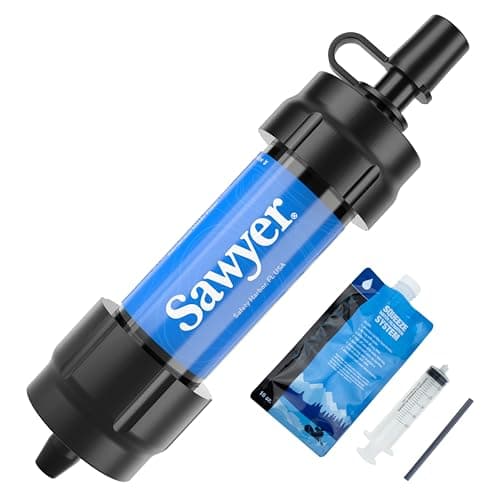
- Water: filter and bottles. One of the best value purchases in the whole kit.
- Electronics: headlamp, battery bank, cable.
- The small bag: first aid, repair kit, trowel, sunscreen, toothbrush, cord. Individually trivial, collectively a real line item.
- Footwear: excluded from every budget above, because it is personal, it wears out, and it is not optional. Budget for it separately.
The full item-by-item list, with nothing missing, is our backpacking checklist. For a first-timer, the shortest path is beginner backpacking gear.
The cheap end, item by item
To make the bottom tier concrete, here are four of the lowest-list-price items we track that are still real gear rather than toys. Every price is the maker's own published list price, read on its own page.
Our picks for this
What the entry tier actually looks like
These are the cheapest items in their categories that we are willing to put on a page. All four are heavy; none of them is unsafe.
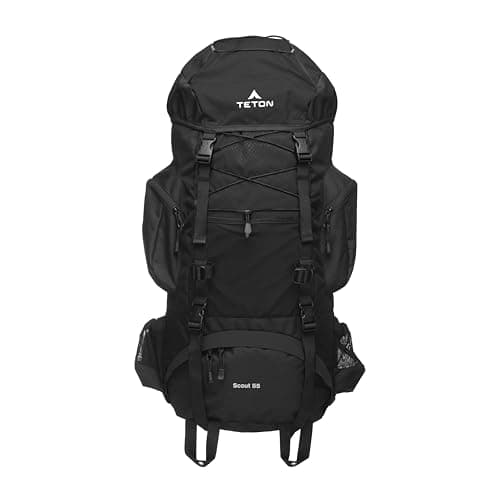
Cheapest framed pack for short torsos
Teton Scout 55L
2,041 g (4 lb 8.0 oz)$50–$100 band2.7 / 10The lowest list price of any framed pack we track, with a rain cover included and a fit built for shorter torsos. At 2,041 g it saves no grams at all.
$99.99Amazon#ad · Price as of November 3, 2026 · Affiliate disclosure for the link to Teton Scout 55L
Cheapest solo freestanding tent
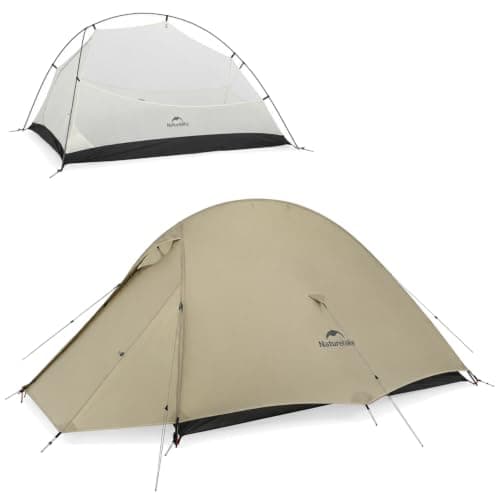
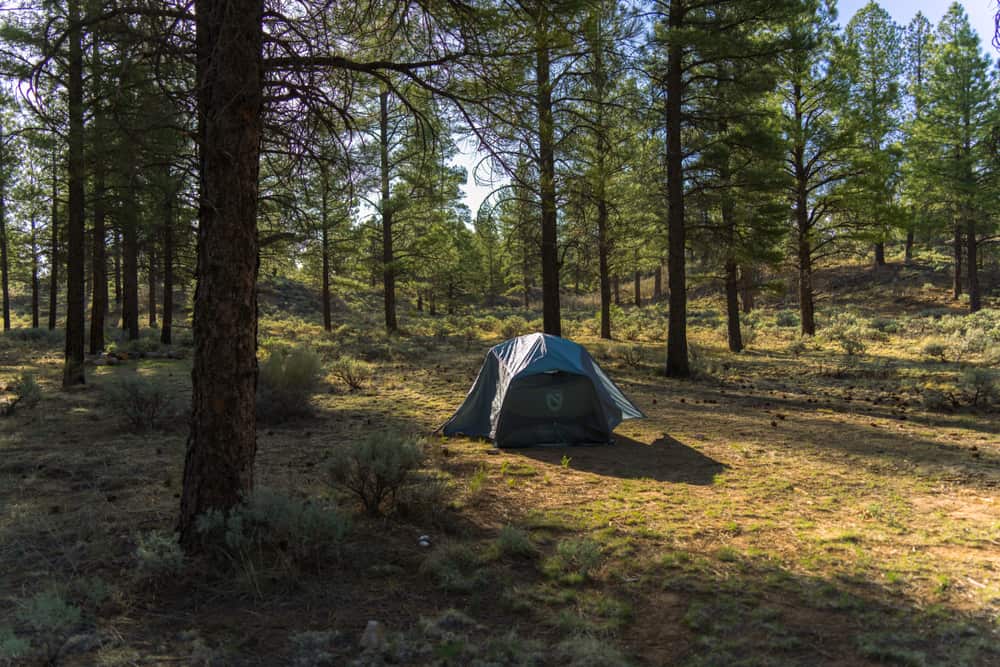
Clostnature Crux 1-Person Tent
1,350 g (2 lb 15.6 oz)$50–$100 band4.8 / 10A freestanding solo tent at the lowest tent list price here, with PU 5000 fly and floor and 14 stakes in the box. Heavy 210T polyester is the trade.
Check price · Amazon#ad · Price as of November 3, 2026 · Affiliate disclosure for the link to Clostnature Crux 1-Person Tent
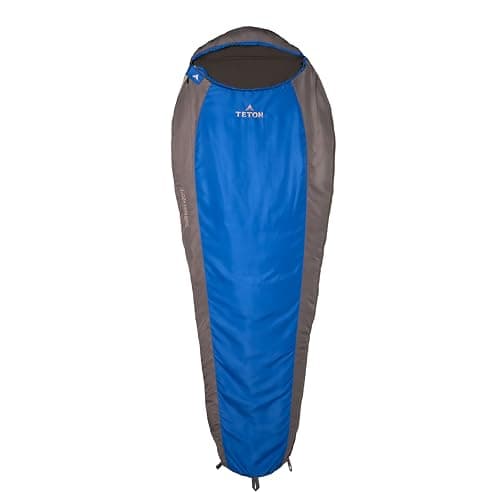
Cheapest bag for mild-weather trips
Teton Sports TrailHead 20˚F Mummy Sleeping Bag
1,579 g (3 lb 7.7 oz)$50–$100 band1.7 / 10The cheapest bag here, but read the rating: Teton publishes a 45-50F comfort range for a bag labeled 20F, so treat it as a mild-weather bag.
$64.99Amazon#ad · Price as of November 3, 2026 · Affiliate disclosure for the link to Teton Sports TrailHead 20˚F Mummy Sleeping Bag
Cheapest air pad for summer trips
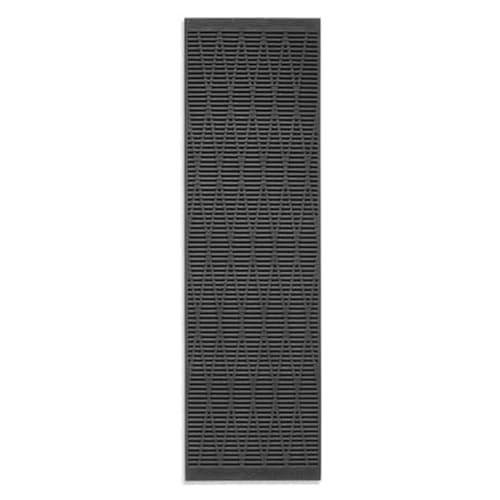
Klymit Static V Base
530 g (1 lb 2.7 oz)$25–$50 band5.0 / 10The cheapest air pad we track at 530 g. Summer only; for freezing nights you need an insulated pad instead.
Check price · Amazon#ad · Price as of November 3, 2026 · Affiliate disclosure for the link to Klymit Static V Base
Photos are illustrative, not the product. Scores are spec-derived.
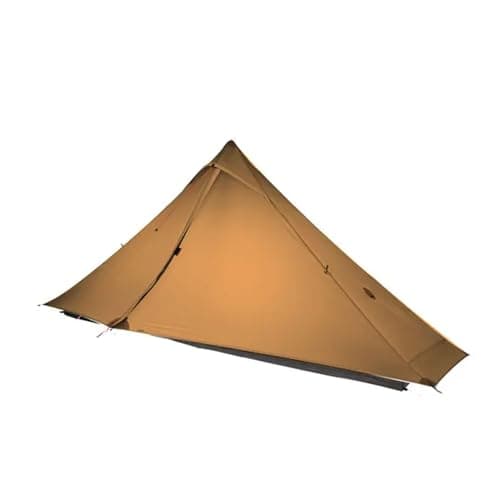
Spending a little more at the same tier changes the weight more than the comfort. A 3F UL Gear Lanshan 1 at 775 g (1 lb 11.3 oz) replaces the Clostnature tent for a modest step up in list price, and a QiDian Pro at 880 g (1 lb 15.0 oz) replaces the Teton pack and saves more than a kilo. That is the whole argument of the $1,000 build.
The four purchases worth spending on
- Your sleep system. A bad night ruins the next day, and the pad matters as much as the quilt. This is the category where the price difference buys the most real comfort. Start with R-value explained.
- Your shelter. Weight, weather protection and a pitch you trust. It is also the item you will keep longest.
- Your rain shell. The one piece of clothing where cheap genuinely underperforms over days of use. See best budget rain jackets.
- Your pack — last. Buy it after everything else, because its size and load rating depend on what you are putting in it. Buying the pack first is the commonest expensive mistake in this hobby.
The four worth buying cheap
- Stove. A sub-30 g canister stove boils water as well as a premium one. The ranking is on best budget backpacking stoves.
- Water bottles. Disposable plastic bottles are lighter than hard bottles, free with a drink, and thread onto every squeeze filter we track.
- Pillow. A stuff sack of clothing costs nothing. If you want a real one, the cheap ones score well — see best backpacking pillows.
- Trowel, spoon, repair kit, cord. Collectively a few tens of grams and almost no money. Nothing is gained by upgrading any of them.
The costs nobody budgets for
- Footwear. Excluded from every kit price on this site, and it wears out annually if you hike often.
- Fuel and food. Consumable, per-trip, and over a season they add up to a significant fraction of a gear budget. Our fuel canister guide helps you buy the right size.
- Permits, parking and travel. Often more than the gear amortised over a year.
- The second-purchase tax. Buying cheap then replacing it costs more than buying once properly. This is the real argument for the middle tier.
- Consumables you forget: fuel canisters, water treatment cartridges, batteries, seam sealer for the budget trekking-pole shelters that ship unsealed.
How to spread the spend
You do not have to buy a kit at once, and you should not. A sensible order:
- Borrow or rent for the first trip. You will learn more about what you want from one night out than from a month of reading, including this page.
- Buy the sleep system first. Pad and bag or quilt. It is personal, it is the hardest thing to borrow comfortably, and it decides whether you want to go again.
- Then the shelter. Now that you know whether you hike alone or with someone, and in what weather.
- Then the kitchen and water. Cheap, light, and quick to get right.
- Buy the pack last. With everything else on the floor in front of you, you can measure the volume you actually need and the weight it has to carry. See the backpack sizing guide.
Done in that order, a kit that would be painful as one purchase becomes four manageable ones, and you stop paying the second-purchase tax on items you bought before you knew what you needed.
How we scored this
How these picks were chosen
Every weight and list price here comes straight from the maker's own product page, measured against a named mainstream reference, then turned into one number: grams saved per dollar. Every figure links to the page it came from, so you can check any of it in a click.
Value and weight are computed from those published numbers; function, durability and ease are scored from the specs, manuals and standards each maker publishes. Commissions never set a score or decide a pick. The formula, weights and references are published.
What changed
- Published.
Questions
Frequently asked
How much does a full backpacking kit cost?
Can you start backpacking cheaply?
What should I spend the most on?
Is expensive backpacking gear worth it?
Does the cost include boots and clothing?
How much is the cheapest usable tent and bag?
Receipts
Sources
- Teton Sports: Scout 55L product page and list price (checked 2026-09-22)
- Teton Sports: TrailHead 20F Mummy Sleeping Bag product page, comfort range (checked 2026-09-22)
- Clostnature: 1 Person Lightweight Backpacking Tent (Crux) product page (checked 2026-09-22)
- Klymit: Static V Base sleeping pad product page (checked 2026-09-22)
- 3F UL Gear: QiDian Pro backpack product page (checked 2026-09-22)
- 3F UL Gear: Lanshan 1 product page (checked 2026-09-22)
Weights, list prices and specs on this page come from each maker's own pages, linked on every product, and performance figures such as boil times or flow rates are the maker's claims, labeled that way, so you always know whose number you're reading. Amazon sets its own prices and changes them often, so buy buttons link to the live listing. Read the full method.