The kit
Every item, every gram
- Base weight
- 3,002 g (6 lb 9.9 oz)
- List-price total
- Fits the $2,000 budget (MSRP basis)
- Items
- 10
| Slot | Pick | Weight | List price | Buy |
|---|---|---|---|---|
| Shelter | 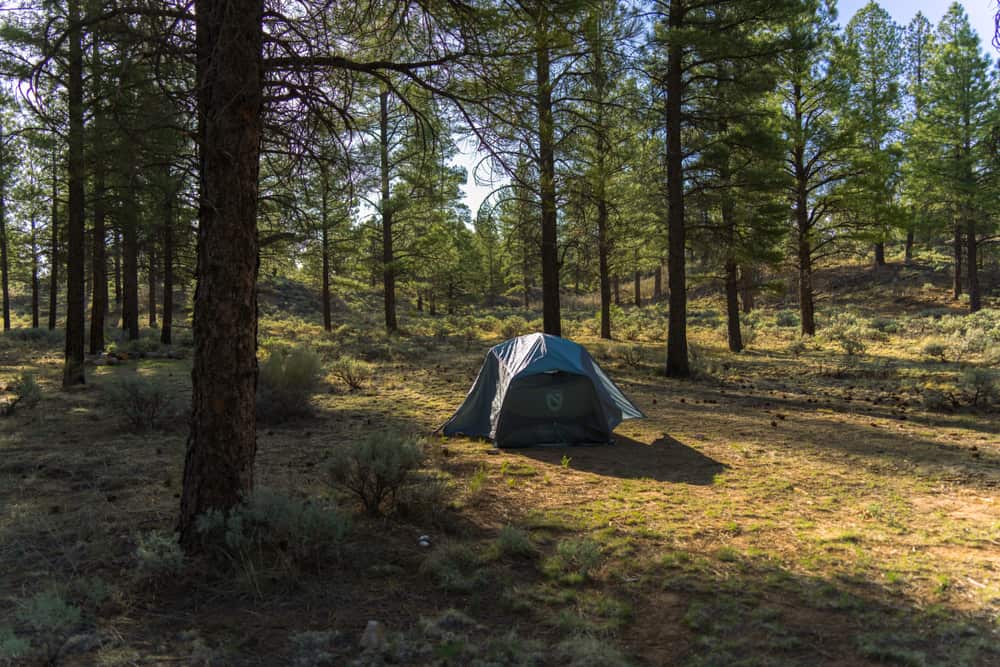 Durston X-Mid 1 The only solo tent here with two doors and two vestibules, plus factory-waterproofed seams — a livability upgrade, not primarily a weight one. Where it's ranked → | 745 g (1 lb 10.3 oz) | $200–$300 band | See it at Durston Gear Sold direct by the maker, not on Amazon. Plain link: we don't earn on it. |
| Trekking polesCarried, not in base weight |  Gossamer Gear LT5 Three Piece Carbon Trekking Poles The lightest adjustable pair tracked, marked for trekking-pole tents; carried in hand, so it sits outside the base-weight total. Where it's ranked → | 278 g (9.8 oz) | $150–$200 band | See it at Gossamer Gear Sold direct by the maker, not on Amazon. Plain link: we don't earn on it. |
| Sleep insulation |  Therm-a-Rest Vesper 20F/-6C Down Quilt An EN-lab-tested 20°F quilt, the coldest and lightest-per-degree rating in this build's whole lineup. Where it's ranked → | 550 g (1 lb 3.4 oz) | $400–$500 band | |
| Sleeping pad | 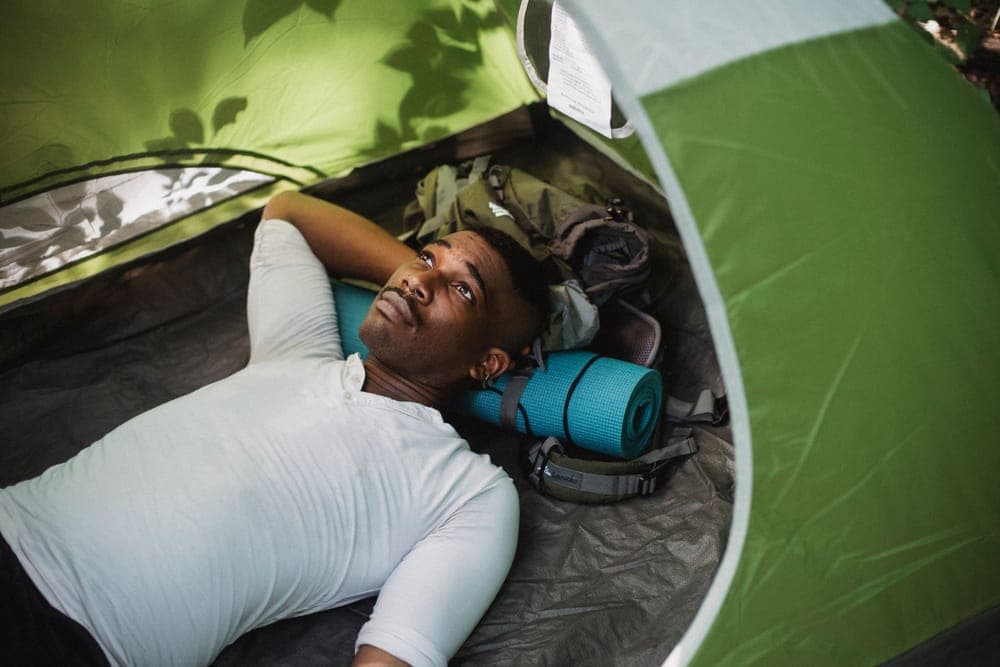 Therm-a-Rest NeoAir XLite NXT (Regular) The lightest all-season air pad tracked, R 4.5, still short of true winter warmth but plenty for three seasons. Where it's ranked → | 370 g (13.1 oz) | $200–$300 band | |
| Pack | 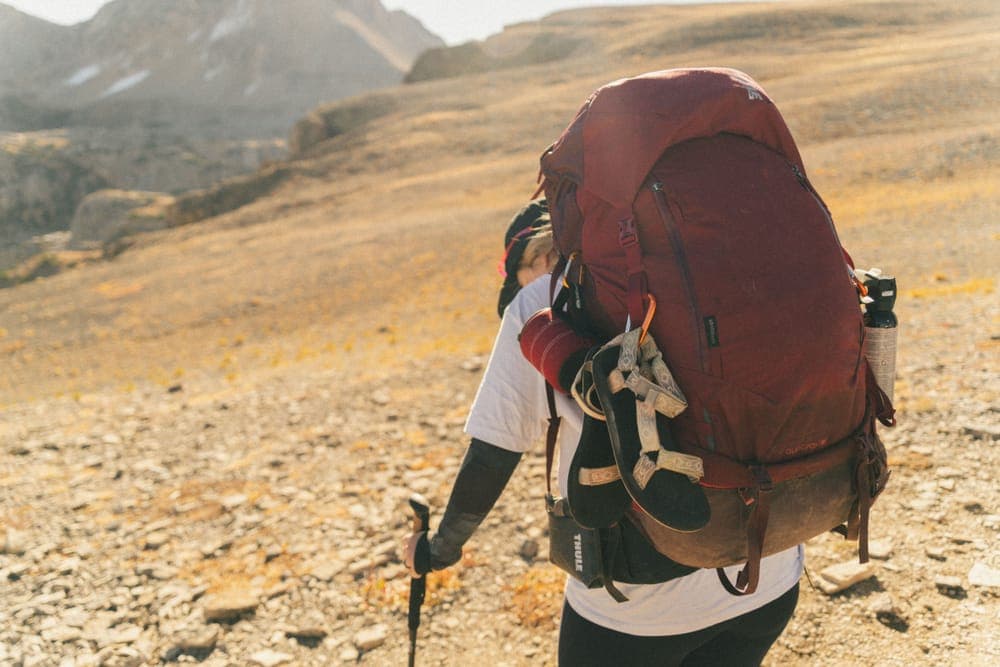 Durston Kakwa 55 The highest load rating of any pack under a kilogram tracked, for trips where food and water push the loaded weight up. Where it's ranked → | 895 g (1 lb 15.6 oz) | $200–$300 band | See it at Durston Gear Sold direct by the maker, not on Amazon. Plain link: we don't earn on it. |
| Stove | 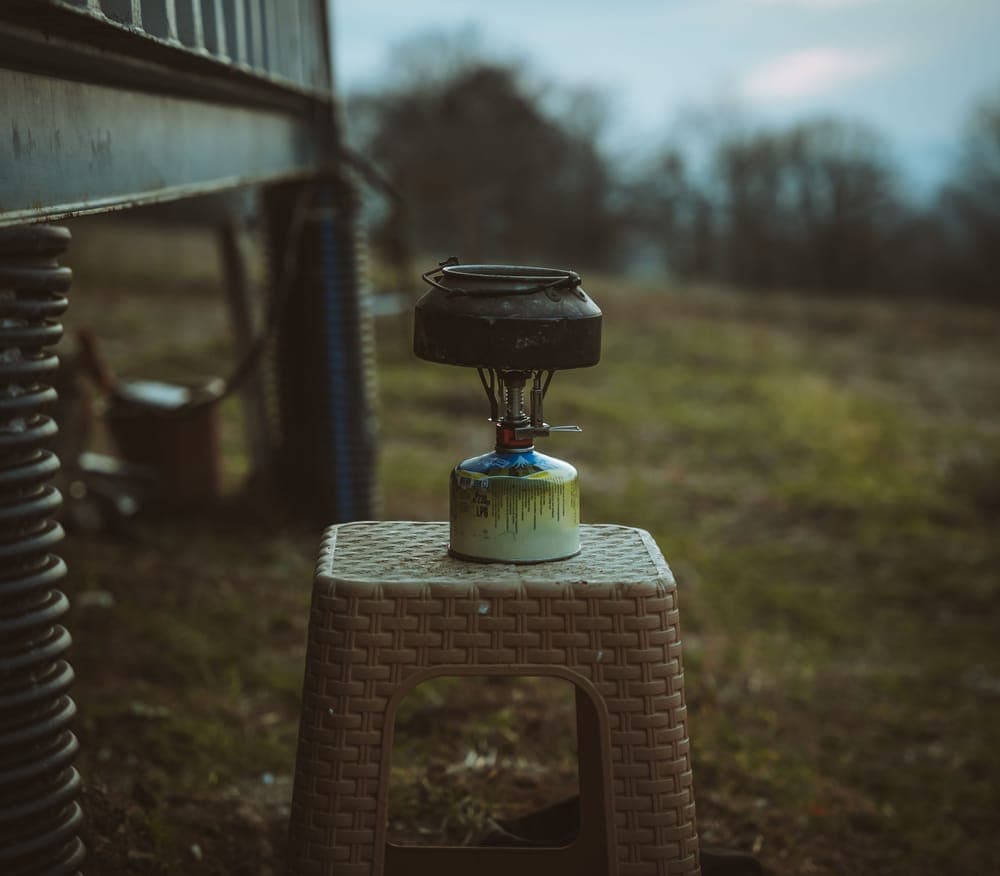 Fire Maple FMS-300T Unchanged from the two cheaper tiers: it's already among the lightest, cheapest stoves tracked, so more money buys nothing here. Where it's ranked → | 45 g (1.6 oz) | $25–$50 band | |
| Pot | 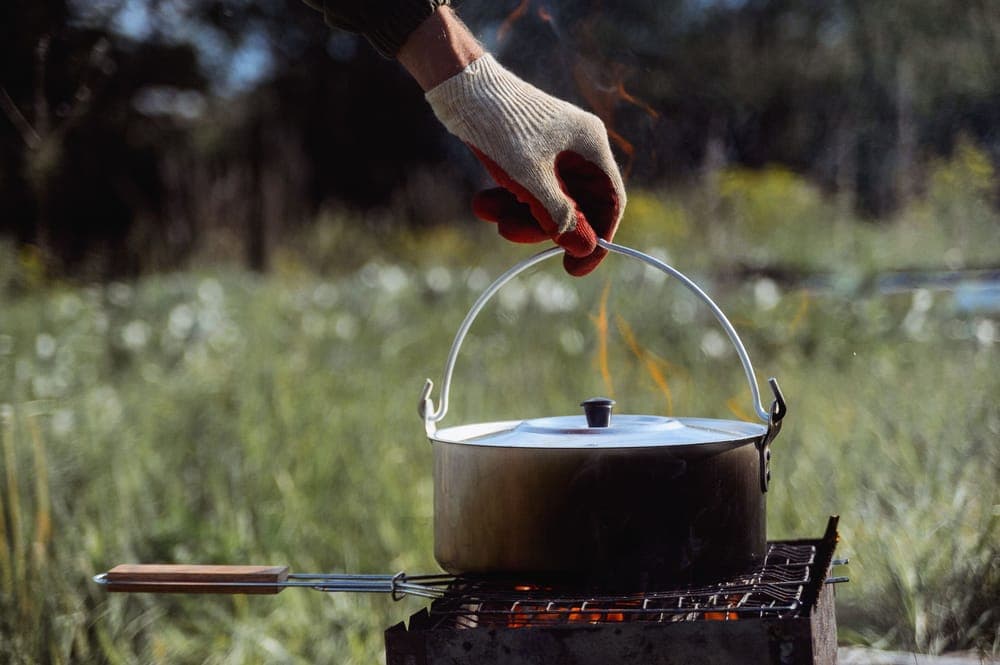 TOAKS Titanium 750ml Pot (POT-750) Unchanged from the two cheaper tiers for the same reason: it ties for the best titanium pot on the list regardless of budget. Where it's ranked → | 103 g (3.6 oz) | $25–$50 band | |
| Water filter |  Sawyer Squeeze (SP129) Unchanged from the $1,000 build: Sawyer's fastest-flowing pocket filter is already the right pick at any budget above the tightest one. Where it's ranked → | 85 g (3.0 oz) | $25–$50 band | |
| Headlamp |  Nitecore NU25 MCT UL Unchanged from the $1,000 build: the best ultralight headlamp tracked doesn't get meaningfully better for more money. Where it's ranked → | 47 g (1.7 oz) | $25–$50 band | |
| Rain protection |  Outdoor Research Men's Helium UL Jacket The lightest rain jacket tracked, at the cost of a thinner 15D shell and no pit zips — the one place this tier's spending is purely a weight play. Where it's ranked → | 162 g (5.7 oz) | $200–$300 band | |
| Totals | Base weight counts everything packed; 278 g (9.8 oz) of carried items is listed separately. | 3,002 g (6 lb 9.9 oz) | Within budget | #ad · Disclosure |
Weights and list prices are the makers' own published figures (each linked on the product's card and ranking page). The total uses list prices, not Amazon's, which change daily: check each listing. Photos are illustrative.
This is the top of this site's three-tier ladder, and it keeps the same ten-line structure as the $1,000 build: shelter, poles, sleep insulation, pad, pack, stove, pot, filter, headlamp and rain layer. Four slots change again from that tier. Three don't change at all, for the same reason they didn't change between the first two tiers: they're already close to the best pick in their category, and no amount of extra budget improves on that. Every figure below comes straight from the registry behind our published methodology.
The total comes in well under the $2,000 ceiling, with real money left unspent. That's deliberate, not a failure to spend: past a certain point, more money buys livability and durability, not grams, and this page names exactly where that line falls.
Every figure below is pulled from the same registry that ranks every roundup on this site, compared against one named, currently-sold reference product per category — never a cherry-picked worst case and never typed by hand into this page. That consistency is what makes the gram-for-gram comparisons across all three builds mean something rather than reading as marketing copy.
How this kit is built
Same ranking rule as every tier: grams saved per dollar against a named reference product, published in full on the methodology page. At this budget the rule stops pointing at cheaper-but-heavier trade-offs and starts pointing at genuinely premium picks — an EN-tested quilt, a two-door double-wall tent, a pad rated for genuine three-season cold. What it does not point at is the most expensive gear in any category, and that distinction matters for this tier especially.
The shelter and poles
The Durston X-Mid 1 is the only solo shelter in this whole three-tier lineup with two doors and two vestibules, plus seams Durston waterproofs at the factory. It weighs 745 g (1 lb 10.3 oz), which is actually 55 g (1.9 oz) heavier than the $1,000 build's 3F UL Gear Lanshan 1 Pro, for a higher MSRP band more. This is the build's clearest example of money buying something other than grams: a second door and factory-taped seams, not a lighter shelter.
The Gossamer Gear LT5 Three Piece Carbon Trekking Poles pitch it: 278 g (9.8 oz), the lightest adjustable pair tracked and 181 g (6.4 oz) lighter than the $1,000 build's carbon pair, for a higher MSRP band more. Carried in hand, they don't count toward the base-weight total. Full field at best budget trekking poles.
These poles use twist locks rather than the lever locks on the cheaper tiers' picks — a small daily trade for the weight. Twist locks take a beat longer to adjust mid-trail and can slip if over-tightened past the maker's recommendation, where a lever lock simply flips shut. The tent's second door does change one practical thing worth planning around: pitch it with the door away from the wind on one side and you still have full access from the other, which a single-door design never offers regardless of how you orient it.
The sleep system
The Therm-a-Rest Vesper 20F/-6C Down Quilt carries an EN-lab-tested rating, the only lab-tested quilt in this build's three tiers, at a limit of 20°F. Against the $1,000 build's Zenbivy Core Quilt 25°F Down it's 187 g (6.6 oz) lighter and five degrees colder-rated, for a higher MSRP band more — the steepest single price jump in this build, and also the biggest single gram swing. It saves 726 g (1 lb 9.6 oz) vs the Kelty Cosmic Synthetic 20, value figure Value 5.3/10. Full field at best budget backpacking quilts.
Under it, the Therm-a-Rest NeoAir XLite NXT (Regular) is R 4.5, the lightest pad here with genuine year-round-leaning warmth, at 45 g (1.6 oz) lighter than the $1,000 build's pad for a higher MSRP band more. It saves 310 g (10.9 oz) vs the Therm-a-Rest Trail Scout (Regular). That's real warmth for real weight savings, which is why it's the one sleep-system upgrade in this build that's a clean grams argument rather than a comfort one. The closest premium alternative on the market is compared spec by spec in NEMO Tensor vs NeoAir XLite. Full field at best budget sleeping pads.
Neither the quilt nor the pad in this build is rated for true winter camping, and neither claims to be — the maker's own EN limit for the quilt is 20°F, and the pad's R 4.5 sits well short of the R 6-plus pads built for snow. This build stops at “confident three-season,” not “four-season.” A hiker planning routine sub-freezing nights needs a colder system than any of the three tiers on this site provide, and should say so plainly rather than stretch a maker's stated rating past what it claims.
Unlike the $1,000 build's quilt, this one uses 900-fill hydrophobic goose down with a treatment the maker says resists wetting out, at a higher fill power than either cheaper tier's quilt. That's a genuine quality step, not just a colder number on the label, and it's the one place in the sleep system where the price gap buys better materials as well as a better rating.
The pack
The Durston Kakwa 55 carries the highest max-load rating of any pack under a kilogram tracked, at 895 g (1 lb 15.6 oz). Against the $1,000 build's Granite Gear Virga3 55 it's actually 133 g (4.7 oz) heavier, for a higher MSRP band more — another case of this tier spending on capability rather than grams, this time for hikers whose food-and-water load routinely pushes the pack past what a 25-pound-rated frame can carry comfortably. It's sold direct from Durston, not on Amazon. The alternative with the most exterior pocket storage, the Gossamer Gear Mariposa 60, is weighed against it spec by spec in Gossamer Gear Mariposa vs Durston Kakwa 55. Full field at best budget ultralight backpacks.
The removable aluminum frame is the practical reason this pack carries more comfortably loaded: it transfers weight to the hipbelt the way the frameless packs in the two cheaper tiers can't, no matter how well they're packed. Pull the frame out on a trip where the load is already light and the pack drops toward frameless territory again — one pack, two modes, depending on what you're actually carrying that week.
One honest downside: Durston covers it for one year against defects, shorter than the lifetime warranty Granite Gear backs the $1,000 build's pack with. That's worth weighing against the load-rating gain if durability over many seasons matters more to you than carrying capacity on any single trip.
Cooking, water and light
Three slots carry straight over from the $1,000 build unchanged: the Fire Maple FMS-300T, the TOAKS Titanium 750ml Pot (POT-750), the Sawyer Squeeze (SP129) and the Nitecore NU25 MCT UL. None of them gets meaningfully lighter or better for more money — they were already the right picks two tiers ago, and a bigger budget doesn't change that. Full fields at best budget backpacking stoves, best titanium backpacking pots, best backpacking water filters and the ultralight backpacking gear list.
Rain protection
The Outdoor Research Men's Helium UL Jacket is the lightest rain jacket tracked, at 162 g (5.7 oz), and 87 g (3.1 oz) lighter than the two cheaper tiers' jacket for a higher MSRP band more. This one is a pure weight play: a 15D shell with no pit zips, so it trades venting and abrasion resistance for the lightest number on the rack. Full field at best budget rain jackets.
A 15D face fabric snags on brush and scrambling rock in a way a heavier jacket shrugs off, and there's no chest pocket beyond the one that doubles as its own stuff sack. Treat it the way its maker intends: a jacket you put on to keep moving through weather, not one you wear all day bushwhacking off-trail.
The gates every pick had to clear
The same function floors apply here as at every tier, and this build clears them with the most margin of the three: a factory-waterproofed double-wall tent instead of a single-wall pyramid, an EN-lab-tested quilt instead of a maker's own loft estimate, and a pad rated well past the R 2 floor the $500 build's pad only just meets. What this tier does not do is chase a spec past what a three-season kit needs — the quilt stops at 20°F, not a colder rating meant for snow, and the pad stops at R 4.5, not the R 7-plus pads built for frozen ground. Every gram spent here goes toward a genuinely three-season kit, not toward specs this build's stated season doesn't call for.
What's not in this kit
As with every tier here, this is a strict base-weight total: food, the water actually in your bottles at any moment, fuel and the clothes worn on your body are excluded, by the same definition used across the whole site. A $2,000 ceiling has room for genuine extras a tighter budget doesn't — a pillow, a packable camp chair, a warm layer for camp — but none of those are counted in the total above, because they're optional, not core to the nine-plus-poles function list every build here fills.
Why this isn't a Dyneema build
With headroom left in a $2,000 ceiling, it would be easy to fill the shelter slot with a Dyneema tent instead and call it the top tier. This build deliberately doesn't. The lightest Dyneema solo shelter tracked, the Zpacks Plex Solo, is 396 g (14.0 oz) lighter than this build's tent, for a higher MSRP band more — real money for real grams, but it turns one line item into most of the whole budget. Dyneema and silicone-coated fabrics are compared honestly in silnylon vs silpoly vs Dyneema, and it's worth reading before deciding that trade is right for you. This build stays with polyester and silnylon fabrics on purpose: it's built for the value hunter this whole site is written for, not the buyer chasing the last few hundred grams at any price.
Where the spending stops paying off
Line up the three builds and the pattern is plain: base weight drops fastest between the $500 and $1,000 tiers, where a colder quilt and a lighter tent are both available for a modest jump in price. It drops far more slowly between $1,000 and this tier, where the remaining upgrades either cost a lot for a little (the quilt), or buy something other than weight entirely (the tent's second door, the pack's load rating). That's not a flaw in this build — it's the honest shape of the market. Past a certain point, backpacking gear stops getting proportionally lighter for proportionally more money, and this page is the proof, priced out line by line instead of asserted.
Who this kit suits
This tier makes sense for someone who backpacks often enough that the tent's second door and the pack's higher load rating get used most trips, not once a season — comfort and durability upgrades pay off with mileage. If your trips are occasional, the $1,000 build gets you most of this kit's weight for a lot less money, and that gap is worth sitting with before spending the difference.
It also suits someone who has already outgrown a $1,000 kit's pack on a specific trip — a resupply gap that ran long, a winter-adjacent shoulder-season trip that needed a few extra pounds of layers — rather than someone shopping for the biggest number a budget allows. The honest read of this whole three-tier ladder is that the first two tiers do almost all of the real work; this one exists for the buyer who has a specific, named reason to want more, not a vague sense that more expensive always means better. For the full logic behind every tier's trade-offs, see how to lower your base weight and the big three backpacking gear.
How we scored this
Units we claim to have tested: 0
Most gear sites say they tested everything. We didn't, and we say so. What we did instead: took every weight and list price from the maker's own page, measured each product against a named mainstream reference, and computed grams saved per dollar. Every number links to where it came from.
The score is spec-derived: value and weight are computed from those numbers, and the rest are judgments from published specs, not test results. Commissions never set a score or decide a pick. The formula, weights and references are published.
Questions
Frequently asked
Is a $2,000 ultralight backpacking kit actually worth it?
What is considered ultralight base weight?
Why doesn't this build use a Dyneema tent?
What's the difference between the $1,000 and $2,000 backpacking builds?
How much does a full set of backpacking gear cost?
Is this build warm enough for winter backpacking?
Should I buy the Durston Kakwa 55 or the Gossamer Gear Mariposa 60?
Receipts
Sources
- Durston Gear: X-Mid 1 product page (checked 2026-09-22)
- 3F UL Gear: Lanshan 1 Pro product page (checked 2026-09-22)
- Zpacks: Plex Solo Classic Tent product page (checked 2026-09-22)
- Gossamer Gear: LT5 Three Piece Carbon Trekking Poles product page (checked 2026-09-22)
- Therm-a-Rest: Vesper 20F/-6C Down Quilt product page (checked 2026-09-22)
- Zenbivy: Core Quilt product page (checked 2026-09-22)
- Therm-a-Rest (Cascade Designs): NeoAir XLite NXT product page (checked 2026-09-22)
- Sea to Summit: Ultralight XR Insulated product page (checked 2026-09-22)
- Durston Gear: Kakwa 55 product page (checked 2026-09-22)
- Granite Gear: Virga3 55 Unisex product page (checked 2026-09-22)
- Fire Maple: FMS-300T Titanium Backpacking Stove product page (checked 2026-09-22)
- TOAKS: Titanium 750ml Pot (POT-750) product page (checked 2026-09-22)
- Sawyer: Squeeze Water Filtration System (SP129CL) product page (checked 2026-09-22)
- Nitecore: NU25 MCT UL user manual PDF (checked 2026-09-22)
- Outdoor Research: Men's Helium UL Jacket product page (checked 2026-09-22)
We haven't tested the gear on this page and we don't pretend to. Weights, list prices and specs come from each maker's own pages (linked on every product), and performance figures such as boil times or flow rates are the maker's claims, labeled that way. Amazon sets its own prices and changes them often, so buy buttons link to the live listing. Where a figure isn't published, we say so. Read the full method.