Quick picks
The picks at a glance
| # | Product | Best for | Score | Price |
|---|---|---|---|---|
| 1 | 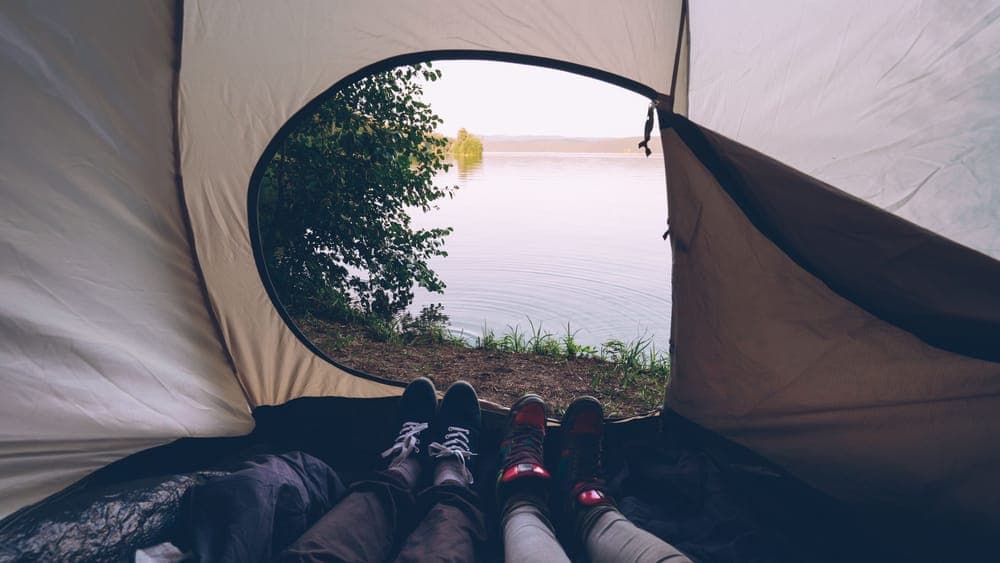 Naturehike Cloud Up Pro 2 Freestanding, so it pitches on packed dirt, a platform or rock where stakes won't bite. Naturehike's Cloud Up UL 2 scores a little higher on our rubric, but its fly is rated half the PU rating of this one, and a first tent should forgive a rushed pitch in the rain. | Best beginner tent1,360 g (2 lb 16.0 oz)$150–$200 band | 5.5 / 10Value 4.9/10 | Check price · Amazon #ad · Disclosure |
| 2 | 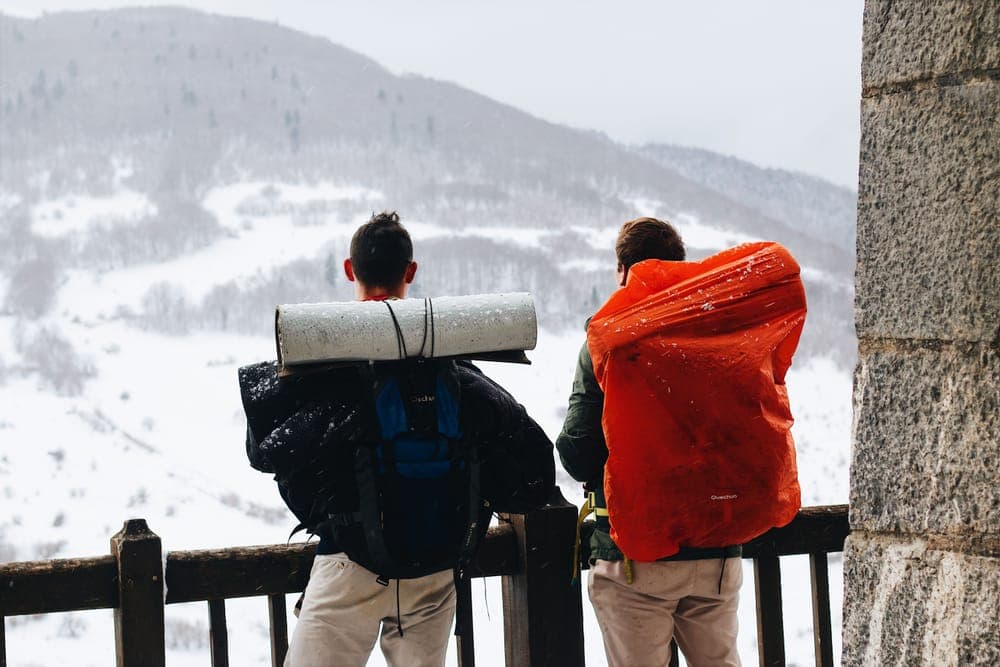 Kelty Asher 55 A padded hipbelt and a real frame carry a heavier, less-dialed-in first load better than a frameless ultralight pack ever will. It ties the pricier Osprey Atmos AG 65 on our score at a fraction of the cost, and it's lighter too. | Best beginner pack1,420 g (3 lb 2.1 oz)$150–$200 band | 4.0 / 10Value 1.5/10 | Check price · Amazon #ad · Disclosure |
| 3 | 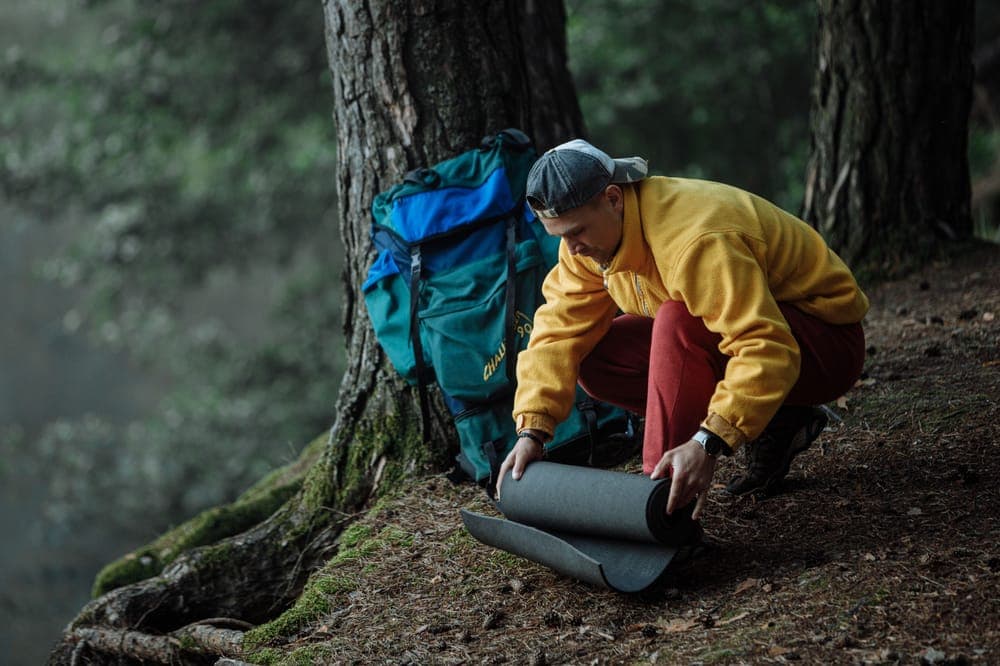 NEMO Switchback (Regular) Closed-cell foam can't puncture, needs no valve and no repair kit, and at 0.9 in it's the thickest foam pad this site ranks. The RidgeRest Classic scores higher and costs less, but at 1.5 in thick it makes for a harder first night on the ground. | Best beginner pad415 g (14.6 oz)$50–$100 band | 6.8 / 10Value 7.4/10 | Check price · Amazon #ad · Disclosure |
| 4 | 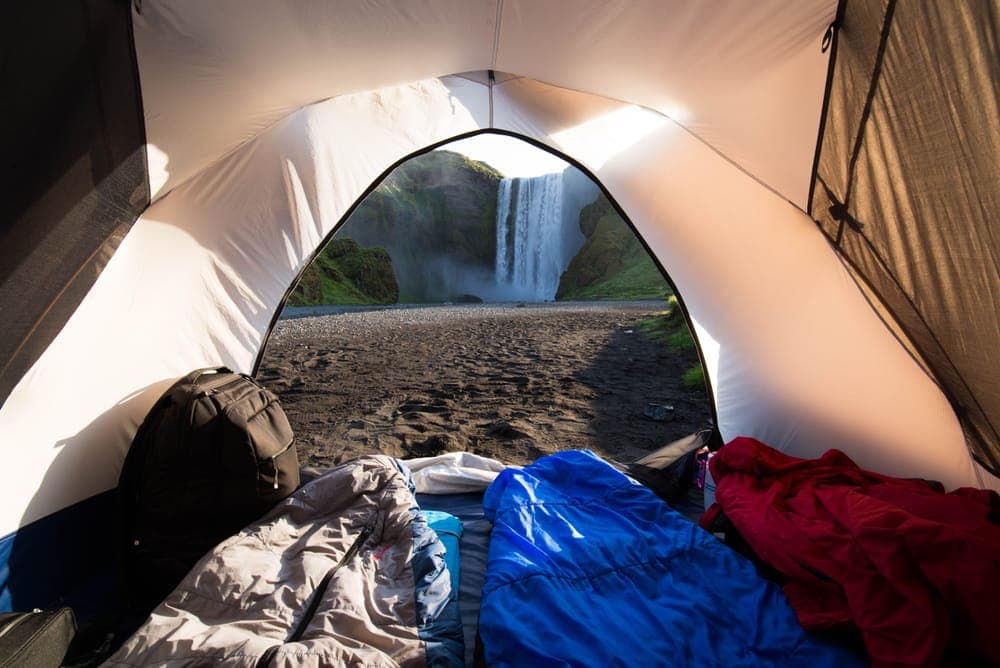 Paria Thermodown 15 Sleeping Bag A full zip, a hood and a draft collar work the way a first-timer already expects a sleeping bag to work, with none of the strap-and-clip learning curve of a quilt. It weighs more than Paria's own quilt of the same rating, which is exactly the trade for the familiar shape. | Best beginner sleeping bag1,134 g (2 lb 8.0 oz)$150–$200 band | 4.2 / 10Value 2.5/10 | Check price · Amazon #ad · Disclosure |
| 5 |  Sawyer Squeeze (SP129) Screw it onto a bottle, squeeze, drink: there's no pump handle, no chemical dosing and no cartridge to track. Sawyer backs it with a lifetime limited warranty, which matters most in the year you're still learning to care for gear. | Best beginner filter85 g (3.0 oz)$25–$50 band | 6.9 / 10Value 4.9/10 | Check price · Amazon #ad · Disclosure |
#ad · Amazon sets its own prices and changes them often, so buttons link to the live listing. Weights and list prices are the maker's own figures; scores are spec-derived, not hands-on tests. Photos are illustrative. Tap a row for the full write-up.
Why this list isn't the lightest gear on the site
Most of this site ranks gear on grams saved per dollar, because most of our readers already know what they're doing and want to shed weight without shedding their budget. This page is different on purpose. If you've never slept in a tent you pitched yourself, never filtered your own water, and never carried everything you need on your back, the thing that will ruin your first trip isn't an extra 300 g. It's a tent you can't figure out how to stake in the dark, a pad that pops on night one, or a pack that dumps its load because the frame doesn't fit.
So every pick here is chosen for being hard to get wrong: freestanding over trekking-pole (no poles to learn, no guyline tension to dial in), a real frame over frameless, foam over anything with a valve that can fail, and a filter you screw onto a bottle rather than pump or dose. None of these are the lightest option in their category, and that's the point. Once you've done a few trips and know what you actually need, our guide to lowering your base weight and the category roundups linked below will get you lighter.
How we picked
We started from this site's computed overall score in each category (weight, function, durability and ease, on top of value; the formula is on our methodology page) and then applied one filter on top: a beginner function gate. Where the highest-scoring product in a category wasn't the most forgiving one, we picked the more forgiving product instead and said so, on the spec, in the card below.
Two picks here deviate from the raw score for exactly that reason. The Naturehike Cloud Up UL 2 weighs 140 g (4.9 oz) less than the Cloud Up Pro 2 we picked and scores higher on our rubric, but its fly is rated PU 1,500 mm+ against the Pro 2's PU 3,000 mm+, and a thinner, lower-rated fly is a worse bet for someone who hasn't yet learned to pick a sheltered campsite. The Therm-a-Rest RidgeRest Classic scores higher than the NEMO Switchback we picked, but at 0.63 in thick it's the thinnest pad this site ranks, against the Switchback's 0.9 in, and a first night on the ground is a hard enough sell without the thinnest pad we carry.
The tent and pack picks are sized for two, on purpose: most first trips happen with a partner, a friend or a kid, and a 2-person tent and a framed pack built for real loads both have more margin for a rookie mistake than their solo, ultralight equivalents.
The numbers side by side
Weight, price and score aren't directly comparable across five different gear categories, but every figure here traces to the maker's own page.
| Published spec | Naturehike Cloud Up Pro 2 | Kelty Asher 55 | NEMO Switchback (Regular) | Paria Thermodown 15 Sleeping Bag | Sawyer Squeeze (SP129) |
|---|---|---|---|---|---|
| Weight | 1,360 g (2 lb 16.0 oz) | 1,420 g (3 lb 2.1 oz) | 415 g (14.6 oz) | 1,134 g (2 lb 8.0 oz) | 85 g (3.0 oz) |
| List price | $150–$200 band | $150–$200 band | $50–$100 band | $150–$200 band | $25–$50 band |
| Score | 5.5 / 10 | 4.0 / 10 | 6.8 / 10 | 4.2 / 10 | 6.9 / 10 |
The five picks
1. Tent: Naturehike Cloud Up Pro 2
A freestanding, single-pole two-person tent that pitches the same way every time: unfold the pole, clip the inner to it, stake the fly if you can, weight the corners with rocks if you can't. Naturehike lists it at 1,360 g (2 lb 16.0 oz) for $150–$200 MSRP band, and includes a footprint, so there's nothing extra to buy before your first trip. Its fly is rated PU 3,000 mm+, double the Cloud Up UL 2's PU 1,500 mm+ rating, which matters more on a night you didn't choose a perfectly sheltered site.
The trade for that forgiveness: one front door for two people, and Naturehike doesn't publish a door or vestibule count on this model's page. Whoever sleeps on the far side climbs over the other to get out at 2 a.m. Buy it if this is your first tent and you want it to just work. Skip it if you already know you want a trekking-pole tent; start at our best trekking-pole tents instead, and read trekking-pole tent vs freestanding tent first.
For scale, the popular budget trekking-pole tent this site ranks, the 3F UL Gear Lanshan 2, weighs 1,060 g (2 lb 5.4 oz), about 300 g (10.6 oz) less than the Cloud Up Pro 2. That gap is real, and it's exactly what freestanding forgiveness costs in grams. Once you've pitched a tent a few times and know how to pick and tension a site, that trade is worth revisiting.
2. Pack: Kelty Asher 55
A first pack is almost always heavier than it should be, because you haven't yet learned what to leave home. The Asher 55 is built for that: a perimeter frame and an adjustable torso (15.5-21 in) carry Kelty's stated 25-45 lb comfortably, at 1,420 g (3 lb 2.1 oz). It ties the Osprey Atmos AG 65 on our overall score, and the Atmos costs a good deal more and weighs 672 g (1 lb 7.7 oz) more besides, so the Asher wins the tiebreak for a first buy.
It has one hipbelt pocket, not two, so small essentials (snacks, a headlamp, a phone) need a plan. Its 55 L main compartment is plenty for a first weekend but will feel tight on a longer trip once you own more gear. Buy it if you don't yet know your base weight and want a frame that carries the extra forgivingly. Skip it if your kit is already light; a frameless pack from our best budget ultralight backpacks will save real weight once you know what you're carrying.
Kelty lists five exterior pockets in total, plus a sleeping-bag compartment and a hydration sleeve, which matters more for a beginner than it sounds. A first-timer's gear is rarely organized yet, and separate pockets for a rain jacket, snacks and a water filter mean less digging through one giant compartment at a rest stop while your group waits.
3. Sleeping pad: NEMO Switchback
Closed-cell foam, full stop: nothing to inflate, nothing to patch at 10 p.m. by headlamp. At 415 g (14.6 oz) it saves 265 g (9.3 oz) vs the Therm-a-Rest Trail Scout (Regular), and its hexagonal node pattern gives it a little more give than a flat foam pad. NEMO backs it with a lifetime Adventure Forever Guarantee.
R 2 is a warm-weather rating on its own, so a shoulder-season or cold-ground trip needs a warmer bag or a second pad underneath. It folds to a block that rides outside most packs rather than inside, and it lists at $50–$100 MSRP band, the same price as the thinner Therm-a-Rest RidgeRest Classic, which weighs 400 g (14.1 oz). Buy it if you'd rather never think about a puncture. Skip it if you already sleep cold; an insulated air pad from our best budget sleeping pads rates warmer.
4. Sleeping bag: Paria Thermodown 15
This is a mummy bag in the shape you already picture: unzip, climb in, zip up, pull the hood cord. Paria rates it to 15°F, fills it with 700-fill down and lists it at 1,134 g (2 lb 8.0 oz). The two-way YKK zipper vents from the top or the bottom on a warm night, and it comes in three lengths.
It weighs more than Paria's own Thermodown 15 quilt of the same rating, which is the price of the familiar full-zip shape over a strap-and-clip system that takes a trip or two to get used to. Kelty's Cosmic Down 20 is the other mainstream option here, at 1,106 g (2 lb 7.0 oz) for a 20°F rating; Paria's bag is both colder-rated and lighter. Buy it if you want a bag that zips shut like every bag you've ever seen in a store. Skip it if you're ready to save real weight; see quilt vs sleeping bag before your next buy.
5. Water filter: Sawyer Squeeze
Fill the pouch, screw on the filter, squeeze into your bottle. That's the whole skill. Sawyer lists it at 85 g (3.0 oz) and backs it with a lifetime limited warranty, and it threads onto any standard 28 mm bottle if the included pouch ever fails. It stops bacteria and protozoa, by Sawyer's own claim; it does not remove viruses, which is rarely the concern on a US trail but is worth knowing before you go.
It costs a little more than the Sawyer Mini, and weighs a bit more too, but Sawyer ranks its flow faster and it's threaded on both ends, which matters when you're still learning to fill a pouch one-handed. Buy it if this is your first filter and you want the version with the fewest quirks. Skip it if you're packing solo and ultralight; the 57 g (2.0 oz) Sawyer Mini in our best backpacking water filters saves a little more weight.
In detail
The picks, in full
Best beginner tent
Naturehike Cloud Up Pro 2
Freestanding, so it pitches on packed dirt, a platform or rock where stakes won't bite. Naturehike's Cloud Up UL 2 scores a little higher on our rubric, but its fly is rated half the PU rating of this one, and a first tent should forgive a rushed pitch in the rain.
Published specsFrom the maker · not tested by us
| Weight | 1,360 g (2 lb 16.0 oz) (minimum weight (approx. 1.36 kg / 2.99 lbs as listed)) |
|---|---|
| List price | $150–$200 MSRP band (per naturehike.com, checked Sep 2026) |
| Value | Value 4.9/10vs the reference Kelty Late Start 2P at 1,900 g (4 lb 3.0 oz) |
| Inner size | 210 x 130 x 105 cm (82.7 x 51.2 x 41.3 in), length x width x peak height |
| Door | Taller door design (Naturehike does not list a door or vestibule count) |
| Fly | 20D nylon ripstop, silicone coated, PU 3000 mm+ |
| Floor | Ground sheet 20D silicone-coated nylon ripstop (PU 3000 mm+); 210T polyester ripstop floor layer (PU 5000 mm+) |
| Pitch | Freestanding; Yuksom lightweight aluminum alloy pole |
| Packed | Packed weight approx. 1.53 kg (3.37 lbs); 13 x 40 cm |
| Included | Footprint, 14 stakes, 5 guy lines; PFC-free DWR version also sold |
How the 5.5 score breaks down
- Grams per dollar (35%, computed)
- 4.9
- Weight (20%, computed)
- 4.0
- Space & weather protection (25%)
- 6.5
- Materials & durability (10%)
- 6.0
- Ease & versatility (10%)
- 8.0
What the specs support
- Packed weight of 1,530 g (3.37 lbs), versus 1,800 g for the Cloud Up 2 it replaces
- 130 cm wide inner, 5 cm wider than the Cloud Up 2
- Footprint included in the box
Where it falls short
- Naturehike publishes no door or vestibule count
- Ground sheet is listed at PU 3000 mm+, below the older Cloud Up 2's PU 4000 mm+
Skip it if…
Skip it if you need two doors and two vestibules: Naturehike describes one taller door, while the Hubba Hubba LT 2 and Copper Spur UL2 list two of each.
#ad · Price set by Amazon · Affiliate disclosure for the link to Naturehike Cloud Up Pro 2
Best beginner pack
Kelty Asher 55
A padded hipbelt and a real frame carry a heavier, less-dialed-in first load better than a frameless ultralight pack ever will. It ties the pricier Osprey Atmos AG 65 on our score at a fraction of the cost, and it's lighter too.
Published specsFrom the maker · not tested by us
| Weight | 1,420 g (3 lb 2.1 oz) (listed weight (3 lb 2 oz / 1.42 kg); no sizes offered, colors only) |
|---|---|
| List price | $150–$200 MSRP band (per kelty.com, checked Sep 2026) |
| Value | Value 1.5/10vs the reference Osprey Rook 65 at 1,678 g (3 lb 11.2 oz) |
| Volume | 55 L (3,356 cu in) |
| Frame | Advanced perimeter frame; FIT-Pro torso adjustment; AMP-Flow ventilated back panel |
| Optimal carry weight | 25-45 lb (11.5-20.5 kg) |
| Fit | Torso 15.5-21 in (39-53 cm); waist belt 28-50 in (71-127 cm) |
| Fabric | 600D polyester oxford |
| Pockets | 5 exterior, including 1 mesh hipbelt pocket (right side); sleeping bag compartment; hydration compatible |
| Warranty | Lifetime of the product against manufacturing defects (original purchaser, authorized sellers) |
How the 4.0 score breaks down
- Grams per dollar (35%, computed)
- 1.5
- Weight (20%, computed)
- 2.1
- Carry, capacity & load (25%)
- 6.5
- Materials & durability (10%)
- 7.0
- Ease & versatility (10%)
- 7.0
What the specs support
- Lighter than the Rook 65 reference at a lower list price
- Perimeter frame with a 25-45 lb optimal carry range
- Adjustable torso (15.5-21 in) and a 28-50 in belt
Where it falls short
- Saves only about 260 g against the reference; the frameless picks save roughly 800-900 g
- Just one hipbelt pocket
Skip it if…
Skip it if you want two hipbelt pockets or more than 55 L: Kelty lists one hipbelt pocket (right side) and 3,356 cu in.
#ad · Price set by Amazon · Affiliate disclosure for the link to Kelty Asher 55
Best beginner pad
NEMO Switchback (Regular)
Closed-cell foam can't puncture, needs no valve and no repair kit, and at 0.9 in it's the thickest foam pad this site ranks. The RidgeRest Classic scores higher and costs less, but at 1.5 in thick it makes for a harder first night on the ground.
Published specsFrom the maker · not tested by us
| Weight | 415 g (14.6 oz) (listed minimum weight, Regular (14.5 oz / 415 g)) |
|---|---|
| List price | $50–$100 MSRP band (per nemoequipment.com, checked Sep 2026) |
| Value | Value 7.4/10vs the reference Therm-a-Rest Trail Scout (Regular) at 680 g (1 lb 8.0 oz) |
| R-value | 2 (product page does not name the standard; NEMO's journal says all its pads are tested to ASTM F3340) |
| Dimensions | 72 x 20 in (183 x 51 cm), 0.9 in thick |
| Packed size | 20.0 x 5.0 x 5.5 in (51 x 13 x 14 cm), folded |
| Material | Dual-density closed-cell PE foam, hexagonal nesting node pattern |
| ASTM note | NEMO states all of its pads are tested to ASTM F3340 and it publishes all R-values |
| Warranty | Lifetime warranty against defects (Adventure Forever Guarantee) |
How the 6.8 score breaks down
- Grams per dollar (35%, computed)
- 7.4
- Weight (20%, computed)
- 6.2
- Warmth (R-value) & comfort (25%)
- 5.5
- Materials & durability (10%)
- 9.0
- Ease & versatility (10%)
- 6.5
What the specs support
- Nothing to inflate or puncture
- 0.9 in thick, a little more cushion than the 0.75 in Z Lite SOL
- Saves 265 g over the Trail Scout at a foam-pad list price
Where it falls short
- R 2 is a warm-weather rating on its own
- Bulky 20 x 5 x 5.5 in fold rides outside most packs
Skip it if…
Skip it if your pack has no outside straps or mesh: a folded 20 x 5 x 5.5 in block rarely fits inside a small ultralight pack.
#ad · Price set by Amazon · Affiliate disclosure for the link to NEMO Switchback (Regular)
Best beginner sleeping bag
Paria Thermodown 15 Sleeping Bag
A full zip, a hood and a draft collar work the way a first-timer already expects a sleeping bag to work, with none of the strap-and-clip learning curve of a quilt. It weighs more than Paria's own quilt of the same rating, which is exactly the trade for the familiar shape.
Published specsFrom the maker · not tested by us
| Weight | 1,134 g (2 lb 8.0 oz) (listed weight, Regular (2 lb 8 oz, converted)) |
|---|---|
| List price | $150–$200 MSRP band (per pariaoutdoorproducts.com, checked Sep 2026) |
| Value | Value 2.5/10vs the reference Kelty Cosmic Synthetic 20 at 1,276 g (2 lb 13.0 oz) |
| Temperature rating | 15°F (-10°C) (Paria rating; Paria states it does not have EN/ISO testing)As stated |
| Fill | RDS-certified 700 fill-power duck down, 25.8 oz fill (Regular) |
| Shell / lining | 20D ripstop nylon shell and lining, PFC-free DWR |
| Size (Regular) | 82.5 x 31.5 in; Regular is sized up to 6 ft |
| Zipper | Large two-way YKK zipper that opens from top and bottom, wide zipper guard |
| Packed size | 10 x 6 in |
How the 4.2 score breaks down
- Grams per dollar (35%, computed)
- 2.5
- Weight (20%, computed)
- 2.0
- Warmth for the weight (25%)
- 6.5
- Materials & durability (10%)
- 7.0
- Ease & versatility (10%)
- 6.0
What the specs support
- Full-length two-way zipper vents from the top or the bottom
- Three sizes: Short to 5'6", Regular to 6 ft, and Long
- 20D shell and lining, same as Paria's quilts
Where it falls short
- About 200 g heavier than Paria's own Thermodown 15 quilt
- The 15°F rating is Paria's own, not an ISO/EN test
- 700-fill down, a step below the 800-fill Thermodown quilts
Skip it if…
Skip it if you sleep on an insulated pad and don't need a hood: Paria's Thermodown 15 quilt costs a little more but is about 200 g lighter.
#ad · Price set by Amazon · Affiliate disclosure for the link to Paria Thermodown 15 Sleeping Bag
Best beginner filter
Sawyer Squeeze (SP129)
Screw it onto a bottle, squeeze, drink: there's no pump handle, no chemical dosing and no cartridge to track. Sawyer backs it with a lifetime limited warranty, which matters most in the year you're still learning to care for gear.
Published specsFrom the maker · not tested by us
How the 6.9 score breaks down
- Grams per dollar (35%, computed)
- 4.9
- Weight (20%, computed)
- 9.0
- Protection & flow (25%)
- 7.5
- Materials & durability (10%)
- 7.0
- Ease & versatility (10%)
- 8.0
What the specs support
- Threads straight onto standard 28 mm bottles, so a disposable water bottle can be your dirty-water container.
- The kit adds gravity tubing and inline hydration adapters, so one filter covers squeeze, gravity and inline setups.
- Sawyer ranks its flow fastest of its three pocket filters (Squeeze, Micro, Mini).
- Backed by a lifetime limited warranty.
Where it falls short
- No virus claim: Sawyer lists bacteria, protozoa and microplastics only.
- Sawyer publishes no flow-rate figure, and slowing flow means backwashing with the plunger.
- About 1 oz heavier than the Micro Squeeze and Mini, by Sawyer's own figures.
Skip it if…
Skip it if you hike in sub-freezing nights and can't keep it in your sleeping bag: Sawyer gives no warranty for a frozen filter and says to replace one you suspect has frozen.
#ad · Price set by Amazon · Affiliate disclosure for the link to Sawyer Squeeze (SP129)
What to decide before you buy your first kit
- Freestanding first, trekking-pole later. A freestanding tent pitches the same way on any ground. A trekking-pole tent is lighter and cheaper, but it asks you to already own poles, tension a fly correctly and pick a stakeable site, three things a first trip shouldn't hinge on.
- A frame if you don't know your base weight yet. Frameless ultralight packs reward a kit that's already dialed in light. A first kit rarely is, and a hipbelt with a real frame carries the extra weight on your hips instead of your shoulders.
- Foam if you don't want to think about a repair kit. An air pad is lighter and more comfortable once you trust it. A foam pad simply cannot fail at 2 a.m.
- A full-zip bag if a quilt feels like one more thing to learn. A quilt saves real weight once you're used to clipping it to a pad and managing drafts. A bag with a hood and a zipper needs no adjustment period.
- A squeeze filter over a pump or drops. A pump has more moving parts to break, and chemical treatment means timing and taste you have to learn to tolerate. A squeeze filter is fill, screw, squeeze.
What else a first trip needs
This page covers the big five. Before you go, check our full backpacking checklist for everything else (a stove, a headlamp, rain gear, a first-aid kit) and read what base weight actually means so the numbers on gear pages make sense. If you want a complete kit assembled and priced for you rather than five separate decisions, our $500 ultralight backpacking kit does exactly that, though it leans lighter and more trekking-pole-forward than this beginner-first list.
If I were advising a first-time buyer, I'd say this: don't buy all five items new if you can help it. A tent and a pack are the two easiest things to borrow from a friend or rent from a local outfitter for one trip, and trying someone else's gear for a weekend tells you more about what you actually want than any spec sheet does. Buy the sleeping bag and the filter, since those are the two items you'll want to own outright for hygiene and fit reasons, and decide on the tent and pack after you know how you actually camp.
Why fit matters more than the spec sheet for a first kit
None of the five picks above come in one universal size, and getting the size wrong costs you more comfort than any of the weight differences on this page. The Kelty Asher 55's torso adjustment runs 15.5-21 in; outside that range, no amount of tightening the hipbelt fixes a frame that doesn't match your back. Paria sells the Thermodown 15 in three lengths (Short to 5'6", Regular to 6 ft, and Long), and a bag that's too short leaves your feet pressed against cold fabric all night. If a store near you carries any of these brands, try the pack loaded and the bag zipped before you buy online.
Mistakes first-time buyers make
- Buying the lightest version of everything. Ultralight gear rewards experience: it's often less forgiving of a rushed pitch, a hard fall or an untrimmed guyline. Learn on gear with more margin, then go light once you know what actually matters to you.
- Skipping the practice pitch. Set the tent up in the backyard before the trip. A first pitch in a parking lot at dusk, in the wind, is a bad place to learn where the poles go.
- Not trying the pack loaded before you leave. Load it with everything you're bringing and walk around the block. A pack that felt fine empty in the store can pull strangely once it's full.
- Assuming any filter removes everything. Read the "skip it if" on any filter you buy; none of the squeeze filters here claim to remove viruses.
- Buying everything at once from one brand. None of the five picks here are required to match each other. Mixing a Naturehike tent with a Kelty pack and a Paria bag is completely normal; pick each item on its own merits rather than assuming a matched set is somehow better.
How we scored this
Units we claim to have tested: 0
Most gear sites say they tested everything. We didn't, and we say so. What we did instead: took every weight and list price from the maker's own page, measured each product against a named mainstream reference, and computed grams saved per dollar. Every number links to where it came from.
The score is spec-derived: value and weight are computed from those numbers, and the rest are judgments from published specs, not test results. Commissions never set a score or decide a pick. The formula, weights and references are published.
Questions
Frequently asked
What gear does a beginner backpacker actually need?
Should a beginner buy a freestanding tent or a trekking-pole tent?
Should a beginner buy a quilt or a sleeping bag?
How heavy should a beginner's pack be?
Is ultralight gear too advanced for a first backpacking trip?
How much does it cost to start backpacking as a beginner?
Receipts
Sources
- Naturehike: Cloud Up Pro 2-Person Ultralight Backpacking Tent product page (checked 2026-09-22)
- Naturehike: Cloud Up UL 2-Person Ultralight Backpacking Tent product page (checked 2026-09-22)
- 3F UL Gear: Lanshan 2 Classic product page, trekking-pole tent comparison (checked 2026-09-22)
- Kelty: Asher 55 product page (checked 2026-09-22)
- Osprey: Atmos AG 65 product page (checked 2026-09-22)
- NEMO Equipment: Switchback Ultralight Sleeping Pad product page (checked 2026-09-22)
- Cascade Designs (Therm-a-Rest): RidgeRest Classic product page (checked 2026-09-22)
- Paria Outdoor Products: Thermodown 15 Backpacking Sleeping Bag product page (checked 2026-09-22)
- Kelty: Cosmic Down 20 Sleeping Bag product page (checked 2026-09-22)
- Sawyer: Squeeze Water Filtration System (SP129CL) product page (checked 2026-09-22)
- Sawyer Help Center: Squeeze Filter FAQs (checked 2026-09-22)
We haven't tested the gear on this page and we don't pretend to. Weights, list prices and specs come from each maker's own pages (linked on every product), and performance figures such as boil times or flow rates are the maker's claims, labeled that way. Amazon sets its own prices and changes them often, so buy buttons link to the live listing. Where a figure isn't published, we say so. Read the full method.