A gear list is only useful once it has your numbers in it. This one is built to be printed, filled in with a kitchen scale, and then typed into the calculator below — which is the part that tells you something you did not already know: not what your kit weighs, but which category is costing you the most and what a light version of it weighs.
If you want the picks rather than the worksheet, the ultralight gear list names one value pick per category, and the $500 build is the whole thing costed as a kit.
Print it, or take the files
Three formats, same list. No email address, no account, no newsletter: the links are the files.
The PDF is the checklist on one page, branded and with this page's address on it so you can find your way back. The CSV opens in Excel, Numbers, Google Sheets or anything else: it has a row per category with the typical and light weights already filled in and an empty column for yours, so the total adds itself up.
The base-weight calculator
Base weight is everything you carry except what you eat, drink or burn. It is the number worth tracking, because it is the only part of your pack weight that does not change during the trip — the full definition is in what is base weight.
The tool
Base-weight calculator
Type the weight of each item in grams. The figures it starts with are the mainstream reference products this site measures everything against, so the first number you see is roughly what a kit from a big-box shop weighs. Nothing is saved, sent or stored — it all runs in your browser.
- Base weight
- 6,833 g
- 15 lb 1.0 oz
- Big three
- 5,534 g
- 81% of base weight
- Carried, not packed
- 510 g
- poles in hand
Where your grams are
The three categories furthest from a light option, biggest first. The target is the weight that earns full marks on our weight score, not the lightest thing money can buy.
- 1.Shelter (2-person tent)1,900 g now, 550 g target — 1,350 g on the table
- 2.Backpack1,678 g now, 450 g target — 1,228 g on the table
- 3.Sleeping bag or quilt1,276 g now, 550 g target — 726 g on the table
Our picks for those categories
Shelter (2-person tent)
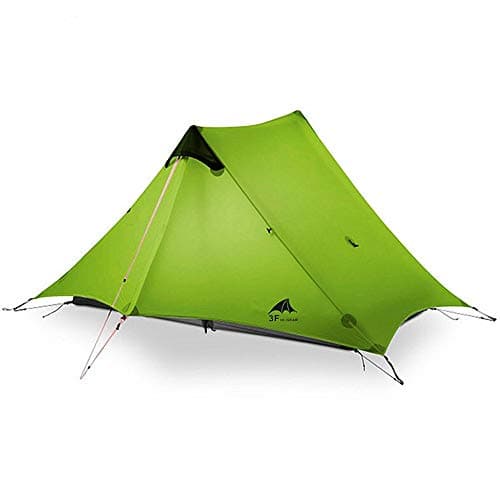
3F UL Gear Lanshan 2
1,060 g (2 lb 5.4 oz) · scores 9.5 / 10
A true double wall with factory-taped seams at the best grams-per-dollar figure of any tent we track.
#ad · Price as of November 12, 2026 · Affiliate disclosure for the link to 3F UL Gear Lanshan 2
Sleeping bag or quilt
Zenbivy Core Quilt 25°F Down
737 g (1 lb 10.0 oz) · scores 9.5 / 10
A quilt instead of a bag: no crushed insulation under you, and a sheet that keeps the draughts out.
#ad · Price as of November 12, 2026 · Affiliate disclosure for the link to Zenbivy Core Quilt 25°F Down
Sleeping pad
NEMO Tensor Trail (Regular)
395 g (13.9 oz) · scores 9.2 / 10
3.5 in thick for 395 g, which is the thickness side sleepers notice and the weight a thru-hiker accepts.
#ad · Price as of November 12, 2026 · Affiliate disclosure for the link to NEMO Tensor Trail (Regular)
Backpack
3F UL Gear QiDian Pro
880 g (1 lb 15.0 oz) · scores 9.5 / 10
A roll-top frameless pack at a fraction of the weight of a shop-bought 65 L, once your kit is light enough to suit it.
#ad · Price as of November 12, 2026 · Affiliate disclosure for the link to 3F UL Gear QiDian Pro
Stove
BRS-3000T
25 g (0.9 oz) · scores 9.4 / 10
25 g of titanium. Nothing else on this site cuts stove weight so far for so little.
#ad · Price as of November 12, 2026 · Affiliate disclosure for the link to BRS-3000T
Pot
TOAKS Titanium 750ml Pot (POT-750)
103 g (3.6 oz) · scores 9.6 / 10
750 ml of titanium: one pot for one person, sized to nest a small canister.
#ad · Price as of November 12, 2026 · Affiliate disclosure for the link to TOAKS Titanium 750ml Pot (POT-750)
Water filter
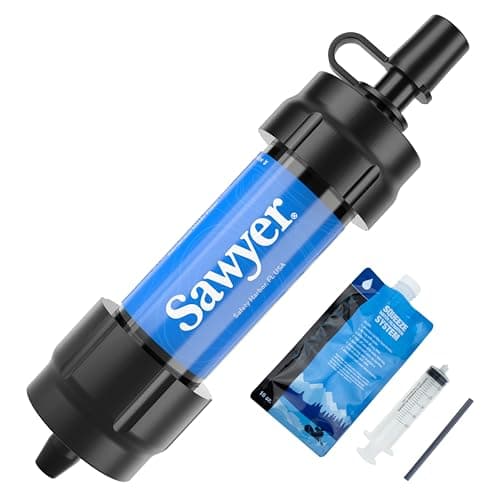
Sawyer Squeeze (SP129)
85 g (3.0 oz) · scores 9.5 / 10
0.1 micron, a lifetime limited warranty and a thread that fits almost any bottle on trail.
#ad · Price as of November 12, 2026 · Affiliate disclosure for the link to Sawyer Squeeze (SP129)
Rain jacket
Frogg Toggs Ultra-Lite2 Rain Jacket (men's)
249 g (8.8 oz) · scores 9.2 / 10
The cheapest real way to cut shell weight, as long as you accept it is not built for bushwhacking.
#ad · Price as of November 12, 2026 · Affiliate disclosure for the link to Frogg Toggs Ultra-Lite2 Rain Jacket (men's)
Headlamp
Nitecore NU25 MCT UL
47 g (1.7 oz) · scores 9.7 / 10
47 g with the headband and 400 lumens, with every figure cited to the ANSI/PLATO standard.
#ad · Price as of November 12, 2026 · Affiliate disclosure for the link to Nitecore NU25 MCT UL
The checklist, by category
Print this. Typical is the published weight of the mainstream reference product this site measures that category against — roughly what you own if you have not shopped on weight. Light is the weight that earns full marks on our weight score. Neither is a number we made up; both are on how we rank, and the typical figures come from the makers' own spec pages.
| Item | Typical | Light | Your weight |
|---|---|---|---|
| Shelter (2-person tent)vs Kelty Late Start 2P | 1,900 g (4 lb 3.0 oz) | 550 g (1 lb 3.4 oz) | __________ |
| Sleeping bag or quiltvs Kelty Cosmic Synthetic 20 | 1,276 g (2 lb 13.0 oz) | 550 g (1 lb 3.4 oz) | __________ |
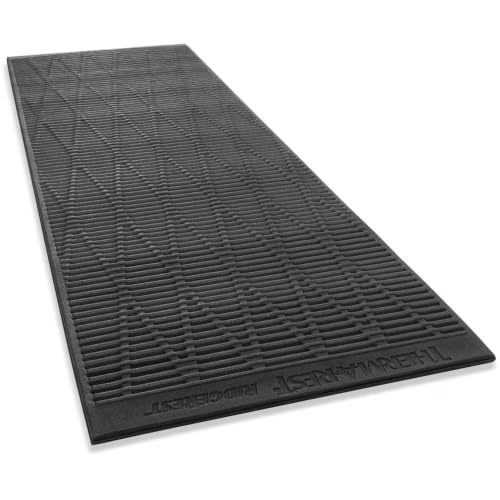
| Sleeping padvs Therm-a-Rest Trail Scout (Regular) | 680 g (1 lb 8.0 oz) | 250 g (8.8 oz) | __________ |
| Backpackvs Osprey Rook 65 | 1,678 g (3 lb 11.2 oz) | 450 g (15.9 oz) | __________ |
| Stovevs MSR PocketRocket 2 | 73 g (2.6 oz) | 25 g (0.9 oz) | __________ |
| Potvs MSR Trail Lite 1.3 L Pot | 200 g (7.1 oz) | 90 g (3.2 oz) | __________ |
| Water filtervs Katadyn Hiker | 310 g (10.9 oz) | 60 g (2.1 oz) | __________ |
| Rain jacketvs Marmot Men's PreCip Eco Rain Jacket | 305 g (10.8 oz) | 150 g (5.3 oz) | __________ |
| Headlampvs Black Diamond Spot 400 | 86 g (3.0 oz) | 30 g (1.1 oz) | __________ |
| Pillowvs Therm-a-Rest Compressible Pillow Cinch (Regular) | 325 g (11.5 oz) | 45 g (1.6 oz) | __________ |
| Trekking polescarried, not base weightvs LEKI Journey Lite | 510 g (1 lb 2.0 oz) | 250 g (8.8 oz) | __________ |
Printable backpacking gear list — Ounce & Outlook — ounceandoutlook.com/builds/ultralight-backpacking-gear-list-printable
How to use it in four steps
- Print the checklist, or take the PDF or the spreadsheet.
- Weigh every item in grams, including the stuff sack if you carry it. Write it in the "your weight" column.
- Type the numbers into the calculator. It adds your base weight, your big three, and the poles separately — poles are carried in hand, so by the usual convention they are not base weight.
- Cut the biggest number first. The calculator ranks the three categories furthest from a light option. That ordering matters more than it sounds: most people upgrade the thing they most want to buy rather than the thing with the most grams on the table.
The big-three figure is there because shelter, sleep system and pack are usually over half a base weight. If yours is not, you have an unusual kit and the interesting weight is somewhere else — the big three explains why that is where almost everyone should start, and how to lower your base weight works through the order to do it in.
Where the target weights come from
Every number in the Typical column is a real, currently sold product's published weight: the reference product this site measures its whole category against. The 2-person tent column, for example, is the Kelty Late Start 2P at 1,900 g (4 lb 3.0 oz), read from Kelty's own spec page. The sleeping bag column is the Kelty Cosmic Synthetic 20 at 1,276 g (2 lb 13.0 oz).
Every number in the Light column is that category's full-marks weight — the figure a product has to beat to score 10 out of 10 on the weight metric. They are set once per category from the spread of real products in it, and the whole table of them is published on how we rank. A light 2-person tent is 550 g (1 lb 3.4 oz); a light pack is 450 g (15.9 oz).
That is deliberately not "the lightest thing on the market". A Dyneema shelter beats the tent figure comfortably and costs four times as much. The Light column is the weight at which you have stopped paying a weight penalty, which is a target most people can actually reach.
What a base weight leaves out
Food, water and fuel — the consumables. They are excluded by convention because they shrink as you walk, so including them would make your pack weight a different number every morning. They are still weight on your back, and for a long carry they are the biggest number of all: two liters of water is 2,000 g, which is more than most of the categories in the checklist above.
Worn clothing and anything in your hands are also out. That is why trekking poles sit in their own line in the calculator rather than in the base-weight total.
If you want the packing side rather than the weighing side, the backpacking checklist is the don't-forget-it list, and how to pack a backpack covers where each of these actually goes.
How we scored this
How these picks were chosen
Every weight and list price here comes straight from the maker's own product page, measured against a named mainstream reference, then turned into one number: grams saved per dollar. Every figure links to the page it came from, so you can check any of it in a click.
Value and weight are computed from those published numbers; function, durability and ease are scored from the specs, manuals and standards each maker publishes. Commissions never set a score or decide a pick. The formula, weights and references are published.
What changed
- Published.
Questions
Frequently asked
What is a good base weight for backpacking?
Does the calculator store or send my numbers?
Do trekking poles count toward base weight?
Is the printable gear list really free?
What weight should I write down for a tent, the minimum or the packed weight?
Can I use the spreadsheet for a gear list with more rows?
Receipts
Sources
- Ounce & Outlook: how we rank, with the reference product and full-marks weight for every category
- Kelty: Late Start 2P product page, the 2-person tent reference weight (checked 2026-09-22)
- Kelty: Cosmic Synthetic 20 product page, the cold sleeping bag reference weight (checked 2026-09-22)
- Osprey: Rook 65L product page, the backpack reference weight (checked 2026-09-22)
Weights, list prices and specs on this page come from each maker's own pages, linked on every product, and performance figures such as boil times or flow rates are the maker's claims, labeled that way, so you always know whose number you're reading. Amazon sets its own prices and changes them often, so buy buttons link to the live listing. Read the full method.