Two hikers carrying the same 30 pounds can have completely different days, and the difference is usually not fitness. A load packed badly sits away from your back, levers your shoulders backwards and makes you walk with a forward lean that your lower back pays for by mile eight. A load packed well sits against your spine, over your hips, and you stop noticing it.
This is free. It costs no money and no grams, and it is the highest-return thing a new backpacker can learn.
Why placement matters more than weight
The three zones
Every pack, framed or frameless, loads in the same three bands.
| Zone | What goes there | Why |
|---|---|---|
| Bottom | Sleeping bag or quilt, sleep clothes, camp shoes | Light and compressible; forms a stable base and fills the lumbar curve |
| Middle, against your back | Food bag, water reservoir, stove and pot, bear canister | The densest items, as close to your spine as they will go |
| Middle, away from your back | Tent body, insulation layers, spare clothes | Bulk that stops the heavy items shifting outward |
| Top | Puffy jacket, rain shell, first aid, headlamp | Light, and the things you grab without unpacking |
One structural note: the sleeping bag going in first is not about weight, it is about shape. A compressed bag at the base is what stops the rest of the load sagging into the bottom of the pack and pulling away from your back.
Where the heavy things go, exactly
“In the middle” is too vague to be useful. The precise answer is: against the back panel, between your shoulder blades and your waist. Picture the food bag touching the inside of the fabric that touches your back, sitting roughly level with your lower ribs.
- Food is almost always your heaviest single item at the start of a trip. It goes directly against the back panel.
- Water is 1 kg per litre and is the second heaviest. A reservoir in the internal sleeve is ideal because it sits flat against your spine. Bottles in side pockets are fine and more convenient; just keep them even, left and right.
- A bear canister is the awkward one. It goes horizontally in the middle of the pack, not vertically at the top and not strapped on the outside. See the checklist for what belongs inside it.
- Stove, fuel and cookware nest together and go in the middle band, alongside the food rather than on top of it.
One exception: on steep, technical or off-trail ground, drop the heavy items slightly lower. A lower centre of gravity is more stable on scrambles even though it is less efficient on a graded trail.
Pockets and the outside of the pack
The rule for the outside is that it carries things that are light, wet, or needed without stopping. Everything else goes inside.
- Hipbelt pockets: snacks, phone, lip balm. Granite Gear lists two on the Crown3 60 and two on the Virga3 55.
- Side pockets: water bottles and a tent that went away wet. Keep the two sides balanced within a bottle's weight of each other.
- Front stretch pocket: rain shell, map, wet socks, rubbish. It is the right place for anything you want to grab in ten seconds.
- Strapped to the outside: as little as possible. A sleeping pad or a foam sit-pad is fine. A swinging pot or a dangling pair of shoes changes your balance with every step and snags on brush.
A frameless pack is packed differently
If you carry a frameless pack such as the Granite Gear Virga3 55 at 762 g (1 lb 10.9 oz), the pack has no structure of its own. You build the frame when you pack it.
Granite Gear is explicit about this: the Virga3's frameless suspension takes a sleeping pad slid into interior panels for support. That folded pad or rolled foam mat against the back panel is the only thing stopping the load becoming a sack of lumps against your spine.
And respect the ceiling. Granite Gear rates the Virga3 55 at 25 lbs. A frameless pack past its rating is not a weight saving; it is the load on your shoulders for the whole trip. See frameless vs framed backpacks.
Packs that reward good packing
Three packs that illustrate the three cases: a framed pack you can strip, a frameless pack that needs the technique above, and a cheap adjustable pack for a first trip. All figures are the makers' own.
Our picks for this
Framed, frameless, or first pack
Not a ranking. These three cover the packing cases described above, and each is ranked properly on its own roundup.
Most configurable lightweight pack
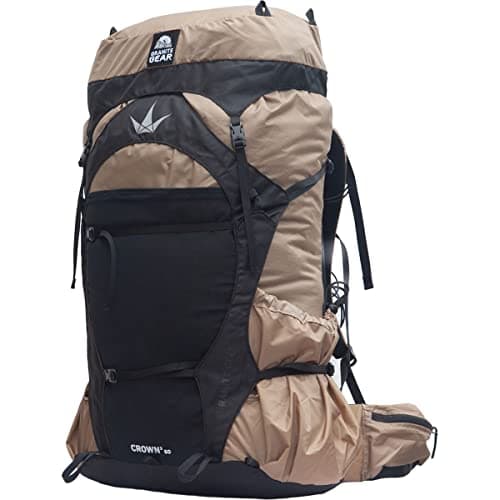
Granite Gear Crown3 60
1,080 g (2 lb 6.1 oz)$200–$300 band5.2 / 10A removable framesheet rated to 35 lbs, so it carries a badly packed load and rewards a well packed one. 1,080 g.
Check price · Amazon#ad · Price as of November 3, 2026 · Affiliate disclosure for the link to Granite Gear Crown3 60
Lightest pack with torso sizing
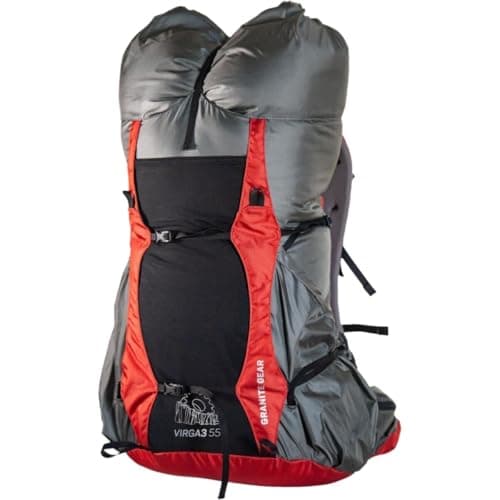
Granite Gear Virga3 55
762 g (1 lb 10.9 oz)$150–$200 band6.2 / 10Frameless at 762 g: the pad is the frame, so the packing order above is not optional. 25 lb ceiling.
$199.95Amazon#ad · Price as of November 3, 2026 · Affiliate disclosure for the link to Granite Gear Virga3 55
Cheapest framed pack for short torsos
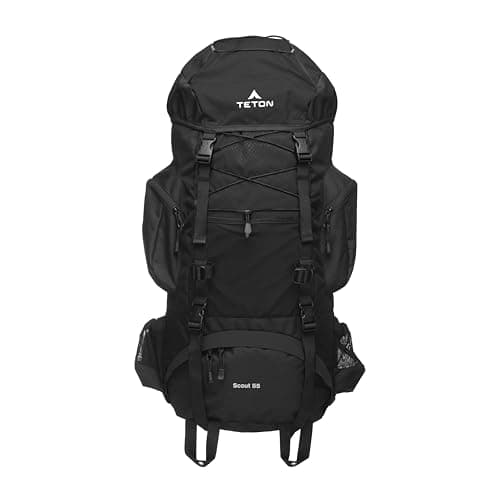
Teton Scout 55L
2,041 g (4 lb 8.0 oz)$50–$100 band2.7 / 10A 3/4 frame, a 15-19.5 in adjustable torso and the lowest list price here. The pack to learn on before you know your numbers.
$99.99Amazon#ad · Price as of November 3, 2026 · Affiliate disclosure for the link to Teton Scout 55L
Photos are illustrative, not the product. Scores are spec-derived.
The strap sequence
Order matters, and most people do it backwards by starting with the shoulder straps. Loosen everything first, then:
- Hipbelt. Lift the pack with a knee or a rock, settle the belt so its padding wraps your iliac crest — the top of the belt roughly level with the top of your hip bones — and cinch it firmly. This carries the load.
- Shoulder straps. Snug, not tight. They stabilise; they should not be bearing the weight. You should be able to slide a finger under them.
- Load lifters. The small straps from the top of the shoulder straps to the frame. Pull until they sit at roughly 45 degrees. These pull the top of the pack in toward your back and are the most-ignored straps on any pack.
- Sternum strap. Last, and lightly. It stops the shoulder straps splaying; cranked tight it restricts your breathing.
- Re-check the hipbelt after a hundred metres of walking. The load settles and the belt always needs another pull.
Osprey publishes torso ranges in its owner's manuals for exactly this reason: load lifters only work if the frame is the right length for you. If yours sit flat or point downwards, the pack is too long. Our sizing guide has the measuring method.
Compression, and the half-empty pack problem
A 60 L pack carrying a 35 L kit is not a lighter pack, it is a floppy one. Use the compression straps to pull the load inward rather than just downward, cinch the side pockets, and roll the top closure down past the point where it looks tidy.
If the pack is routinely half empty, you are carrying volume you do not need — read what size backpack for backpacking. A correctly-sized pack packs firm, and a firm pack carries.
Five mistakes that cost you comfort
Heavy items in the lid. The lid is the furthest point from your centre of gravity. Put a litre of water up there and you will feel it pulling you backwards on every climb.
Unbalanced side pockets. A full bottle on one side and nothing on the other is a kilogram of asymmetric load, all day.
Voids. Air gaps let the load shift as you walk. Stuff socks and clothing into the spaces between hard items rather than packing in neat blocks.
Everything inside a single dry bag. One big waterproof sack makes the load a solid cylinder you cannot shape to your back. Line the pack instead, or use a few smaller bags.
Packing the same way regardless of pack. Framed and frameless want different load placement, as above. If you change packs and the carry feels worse, the packing method is the first thing to change — not the pack.
How we scored this
How these picks were chosen
Every weight and list price here comes straight from the maker's own product page, measured against a named mainstream reference, then turned into one number: grams saved per dollar. Every figure links to the page it came from, so you can check any of it in a click.
Value and weight are computed from those published numbers; function, durability and ease are scored from the specs, manuals and standards each maker publishes. Commissions never set a score or decide a pick. The formula, weights and references are published.
What changed
- Published.
Questions
Frequently asked
Where should the heaviest items go in a backpacking pack?
Does the sleeping bag go at the bottom of the pack?
How do you pack a frameless backpack?
In what order should I tighten backpack straps?
Receipts
Sources
- Granite Gear: Crown3 60 Unisex product page (checked 2026-09-22)
- Granite Gear: Virga3 55 Unisex product page (checked 2026-09-22)
- Teton: Scout 55L Hiking Backpacks product page (checked 2026-09-22)
- Osprey: Exos/Eja series owner's manual, S22 (PDF, checked 2026-09-22)
Weights, list prices and specs on this page come from each maker's own pages, linked on every product, and performance figures such as boil times or flow rates are the maker's claims, labeled that way, so you always know whose number you're reading. Amazon sets its own prices and changes them often, so buy buttons link to the live listing. Read the full method.