A quilt rating is not a promise, and it is the single most over-interpreted number in a sleep system. Two quilts both labeled 20°F can be twelve degrees apart in practice, because one number came out of a laboratory and the other came off a loft chart. So the useful question is not “which rating is best” but “what does my coldest night actually demand, and how much margin am I buying?”
The method, in four steps
- Find your coldest realistic night. Not the coldest night you can imagine — the coldest night you have actually camped, or will. Look up overnight lows for the elevations and months you hike, then take the lowest one you would still go out in.
- Subtract about 10°F. That covers the gap between a limit rating and a comfort rating, an untested maker estimate, a wet or windy pitch, and being tired and underfed on day four.
- Buy the rating that covers the result. If your answer is 28°F, you want a 20°F quilt. If it is 42°F, a 30°F quilt has plenty of margin.
- Check the pad under it. A quilt has no insulation beneath you at all, so its real-world rating is capped by the pad's R-value. More on that below.
What the rating actually describes
The practical consequence: a tested limit rating needs roughly 10 degrees of margin for a cold sleeper, and an untested rating needs that plus however much you discount the maker. Our temperature ratings guide works through the standards in full.
The three bands, and who each suits
| Rating | Realistic comfortable range | Who it suits |
|---|---|---|
| 40°F and warmer | Nights in the 50s | Summer desert and low-elevation trips, or a liner-and-layers approach |
| 30°F | Nights in the 40s, upper 30s if you sleep warm | Summer in the mountains, three-season in the south, and anyone adding a second quilt later |
| 20°F | Nights in the 30s, upper 20s if you sleep warm | The default three-season choice for most of the lower 48, including shoulder seasons |
| 15°F and colder | Nights in the 20s | Late autumn, early spring, high elevation, or people who sleep genuinely cold |
If you are buying one quilt and you do not know yet what your trips look like, buy 20°F. It is the band with the deepest field, you can vent it on a warm night, and you cannot add fifteen degrees to a summer quilt in October.
A quilt at each rating
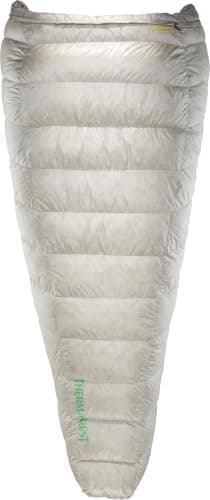
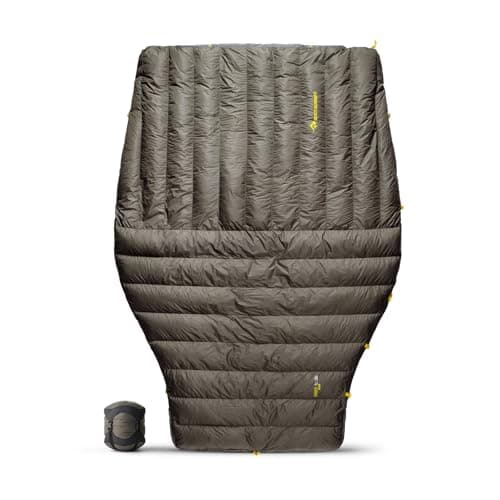
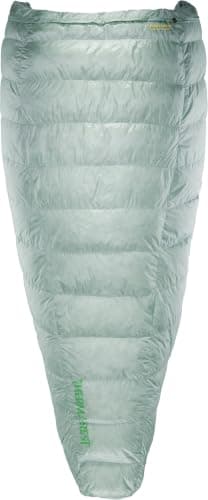
Four quilts across the three bands, so you can see what each rating costs in grams and money. Every weight and rating here is the maker's own figure, linked in the sources.
Our picks for this
One quilt per temperature band
Picked to show the span, not as a ranking. The Thermodown 15 and Core Quilt 25 are ranked on our 20-degree page; the Vesper 32 and Thermodown 30 on the summer page.
Best budget three-season quilt
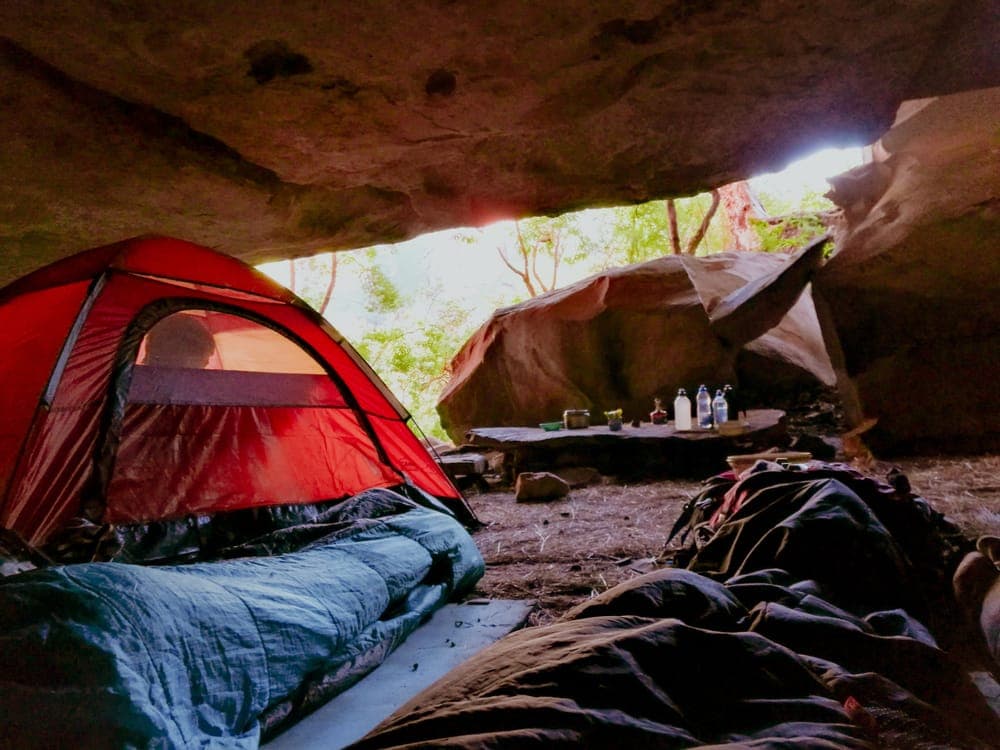
Paria Thermodown 15 Down Quilt
936 g (2 lb 1.0 oz)$200–$300 band6.0 / 10The coldest rating here, at 15F from measured loft, with 20 oz of 800-fill down. Paria states openly that it has no EN/ISO testing, so treat 15F as the maker's figure.
Check price · Amazon#ad · Price as of November 3, 2026 · Affiliate disclosure for the link to Paria Thermodown 15 Down Quilt
Best value 25°F quilt
Zenbivy Core Quilt 25°F Down
737 g (1 lb 10.0 oz)$200–$300 band7.2 / 10A 25F limit with a 35F comfort figure, which is the honest middle of the three-season band. It clips to a Zenbivy sheet sold separately, so price the system.
Check price · Amazon#ad · Price as of November 3, 2026 · Affiliate disclosure for the link to Zenbivy Core Quilt 25°F Down
Lightest summer quilt
Therm-a-Rest Vesper 32F/0C Down Quilt
440 g (15.5 oz)$300–$400 band6.9 / 10An EN limit of 32F and an EN comfort of 41F, tested, at 440 g. The clearest example on the site of what a lab-rated summer quilt looks like.
$399.95Amazon#ad · Price as of November 3, 2026 · Affiliate disclosure for the link to Therm-a-Rest Vesper 32F/0C Down Quilt
Best budget summer quilt
Paria Thermodown 30 Down Quilt
765 g (1 lb 11.0 oz)$150–$200 band5.5 / 10A 30F loft-based rating with top and bottom draft collars and a pad strap system, for the lowest list price in the summer band.
Check price · Amazon#ad · Price as of November 3, 2026 · Affiliate disclosure for the link to Paria Thermodown 30 Down Quilt
Photos are illustrative, not the product. Scores are spec-derived.
The pad decides half of it
This is the part people skip, and it is the usual reason a correctly-rated quilt feels wrong. A sleeping bag has insulation underneath you, compressed and not doing much, but present. A quilt has none. Everything between you and the ground is the pad.
Ground conducts heat out of you roughly twenty times faster than still air, so the pad's R-value sets a ceiling on your whole system. As a working pairing:
- 30°F quilt: R 3 or better. A Therm-a-Rest NeoAir XLite NXT at 370 g (13.1 oz) publishes R 4.5, which is comfortably past that.
- 20°F quilt: R 4.5 or better.
- 15°F quilt or colder: R 5 and up, or stack foam. A Z Lite SOL at 410 g (14.5 oz) publishes R 2.0 and adds to whatever is above it.
Full detail in our R-value guide, and the winter end of the field is on best winter sleeping pads.
If you sleep cold
Some people simply run colder, and it is not a character flaw to plan for it. Four fixes, in order of how much they return per gram:
Only after those four should you buy a colder quilt. A quilt one band colder than you need is typically a few hundred grams and a real amount of money, and the pad fix is usually cheaper.
One quilt or two?
If you hike year-round, two quilts often beat one. A 30°F quilt for summer and a 20°F for shoulder season is lighter on every summer trip than carrying the cold quilt all year, and a summer quilt is the cheapest single way to cut half a kilo from a mid-season kit. The Vesper 32 at 440 g (15.5 oz) against the Vesper 20 at 550 g (1 lb 3.4 oz) is the same quilt in two ratings, and the difference is what you carry all summer for nothing.
If you hike a handful of weekends a year, buy one 20°F quilt and vent it. The second quilt is a weight-optimization purchase, not a comfort one, and it only pays off at volume.
Still deciding between a quilt and a bag at all? Quilt vs sleeping bag covers which suits how you move in your sleep, and the 20-degree quilt ranking is where to go once you have settled on a rating.
How we scored this
How these picks were chosen
Every weight and list price here comes straight from the maker's own product page, measured against a named mainstream reference, then turned into one number: grams saved per dollar. Every figure links to the page it came from, so you can check any of it in a click.
Value and weight are computed from those published numbers; function, durability and ease are scored from the specs, manuals and standards each maker publishes. Commissions never set a score or decide a pick. The formula, weights and references are published.
What changed
- Published.
Questions
Frequently asked
What temperature quilt do I need for three-season backpacking?
Is a 30 degree quilt warm enough?
How much margin should I add to a quilt rating?
Does a quilt need a warmer pad than a sleeping bag?
Can I use a liner to make a quilt warmer?
Receipts
Sources
- Paria Outdoor Products: Thermodown 15 Down Quilt product page (checked 2026-09-22)
- Paria Outdoor Products: Thermodown 30 Down Quilt product page (checked 2026-09-22)
- Paria Outdoor Products: Gear FAQ, Temperature Ratings (checked 2026-09-22)
- Zenbivy: Core Quilt product page, 25F limit / 35F comfort (checked 2026-09-22)
- Therm-a-Rest: Vesper 32F/0C Down Quilt product page, EN figures (checked 2026-09-22)
- Therm-a-Rest: Vesper 20F/-6C Down Quilt product page, EN figures (checked 2026-09-22)
- Therm-a-Rest: NeoAir XLite NXT product page, R 4.5 (checked 2026-09-22)
Weights, list prices and specs on this page come from each maker's own pages, linked on every product, and performance figures such as boil times or flow rates are the maker's claims, labeled that way, so you always know whose number you're reading. Amazon sets its own prices and changes them often, so buy buttons link to the live listing. Read the full method.