Most thru-hiking gear lists are weekend ultralight lists with a longer title. The difference is real and it comes down to two things: on a long trail you periodically carry five or six days of food, and every item in your kit is used every single day for months rather than twenty nights a year.
Those two constraints pull in opposite directions from the usual ultralight logic, and they are why experienced thru-hikers often carry slightly more than weekend gram-counters do.
What actually changes on a thru-hike
The food-carry calculation
This is the number that decides your pack, and it is the one most first-time thru-hikers get wrong. Thru-hiker food consumption typically runs 700-900 g per day once your appetite catches up with your mileage. So:
- Two days: about 1,600 g (3 lb 8.4 oz) of food.
- Five days: about 4,000 g (8 lb 13.1 oz) of food.
- Plus water: two liters is another 2 kg, more in a desert section.
At a 13 lb (5.9 kg) base weight, a five-day carry with two liters of water puts you around 11.9 kg, which is about 26 lb. That is at or above the published load rating of every frameless pack we track. At a 16 lb base weight it is roughly 30 lb, which is squarely in framed-pack territory.
So work backwards: decide your longest realistic food carry, add your base weight and your water, and buy a pack whose maker-published load rating covers that figure. The ranked options are on best ultralight backpacks for thru-hikers, and the load-rating logic is in how heavy should my backpack be.
The list, category by category
| Category | What to carry | Thru-hike-specific note |
|---|---|---|
| Pack | 50-60 L with a published load rating of 30 lb or more | Rated for your biggest food carry, not your base weight |
| Shelter | Solo or two-person trekking-pole tent, or a tarp | A stated repair path matters; so does pitching on hard ground |
| Sleep | 20°F quilt, R 4-4.5 air pad | Carry a patch kit. An air pad failure at month two is a long walk |
| Kitchen | Canister stove, 550-750 ml pot, long spoon, lighter | Canister availability varies by town. Know your resupply points |
| Water | Squeeze filter, two 1 L bottles, chemical backup | A backflush plunger is not optional over five months |
| Insulation | Light down puffy, rain shell, warm hat, light gloves | Shoulder-season sections need more than the middle of the trail |
| Worn | Trail runners, synthetic or wool socks, shorts, sun shirt, sun hat | Two pairs of socks: one on, one drying. Nothing cotton |
| Electronics | Phone, headlamp, battery bank, one multi-cable | Battery capacity is set by the longest gap between town charges |
| Repair | Tenacious Tape, pad patches, needle and thread, cord, duct tape | The single most thru-hike-specific category on the list |
| Admin | First aid, trowel, hygiene, sunscreen, permits, ID, cards | Resupply boxes and town logistics live here too |
Nothing in that list is exotic. The full weighed version of a lightweight kit is our ultralight backpacking gear list, and the nothing-missing version is the backpacking checklist.
Four items that earn a thru-hike
Four picks chosen for the thru-hike constraints rather than the lowest weight: a pack with a real frame and an any-reason repair guarantee, a shelter cheap enough to replace mid-trail, the lightest tested sleep insulation we track, and the filter with the most universal thread.
Our picks for this
Chosen for five months, not one weekend
Every weight and rating here is the maker's own published figure, linked in the sources below.
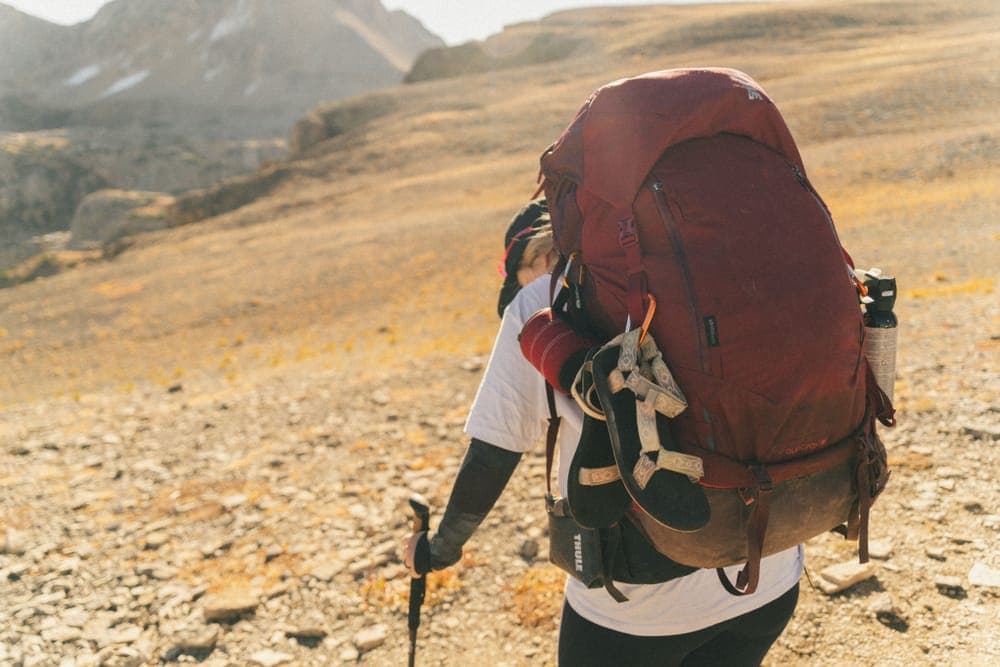
Best ventilated ultralight pack
Osprey Exos 58
1,320 g (2 lb 14.6 oz)$200–$300 band4.6 / 101,320 g with a LightWire frame, a 30-35 lb load range and Osprey's any-reason repair guarantee: the frame carries a five-day food carry and the warranty survives the trail.
Check price · Amazon#ad · Price as of November 3, 2026 · Affiliate disclosure for the link to Osprey Exos 58
Budget double-wall trekking-pole tent for 2
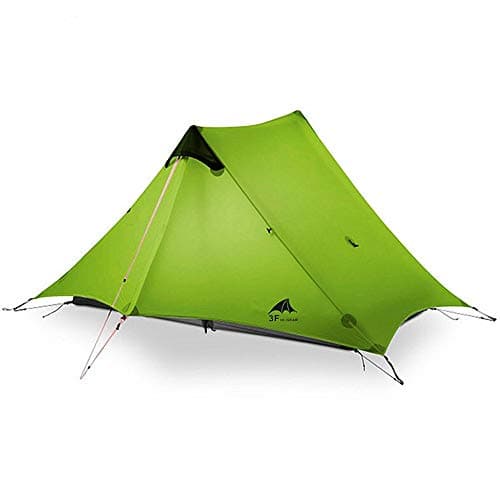
3F UL Gear Lanshan 2
1,060 g (2 lb 5.4 oz)$150–$200 band7.0 / 10A 1,060 g double-wall trekking-pole shelter with a 5,000 mm fly and 6,000 mm floor, cheap enough that replacing it mid-trail is a decision rather than a crisis.
$187.88Amazon#ad · Price as of November 3, 2026 · Affiliate disclosure for the link to 3F UL Gear Lanshan 2
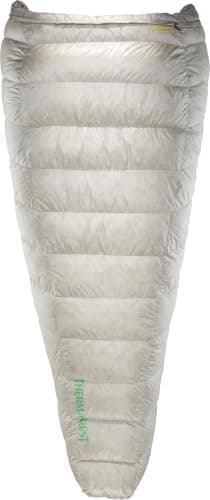
Lightest EN-rated 20°F quilt
Therm-a-Rest Vesper 20F/-6C Down Quilt
550 g (1 lb 3.4 oz)$400–$500 band7.4 / 10550 g at an EN-tested 20F limit, which covers shoulder-season sections on most long trails. The lightest sleep insulation on the site that carries a lab rating.
$459.95Amazon#ad · Price as of November 3, 2026 · Affiliate disclosure for the link to Therm-a-Rest Vesper 20F/-6C Down Quilt
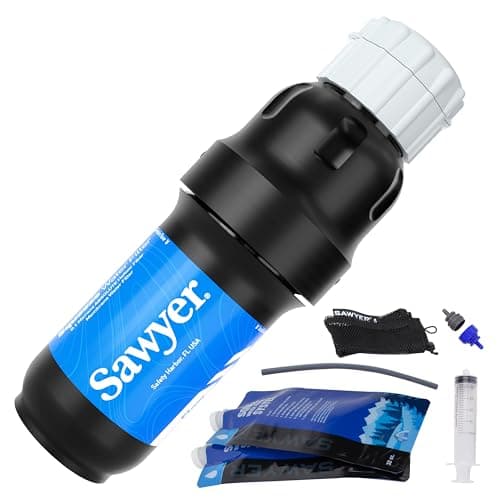
Best all-around squeeze filter
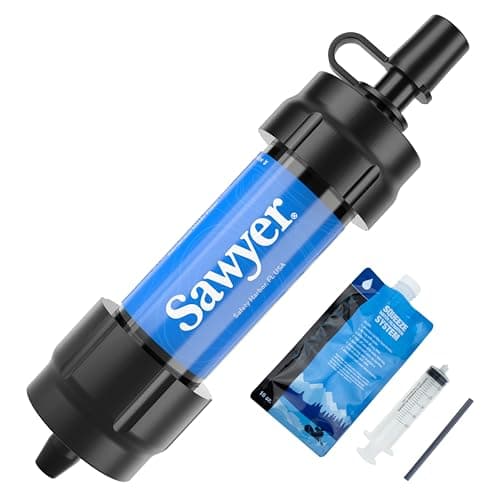
Sawyer Squeeze (SP129)
85 g (3.0 oz)$25–$50 band6.9 / 10The thru-hiking default: a 28 mm thread that fits the disposable bottles sold in every trail town, a lifetime limited warranty, and a backflush routine that keeps flow up.
$45.95Amazon#ad · Price as of November 3, 2026 · Affiliate disclosure for the link to Sawyer Squeeze (SP129)
Photos are illustrative, not the product. Scores are spec-derived.
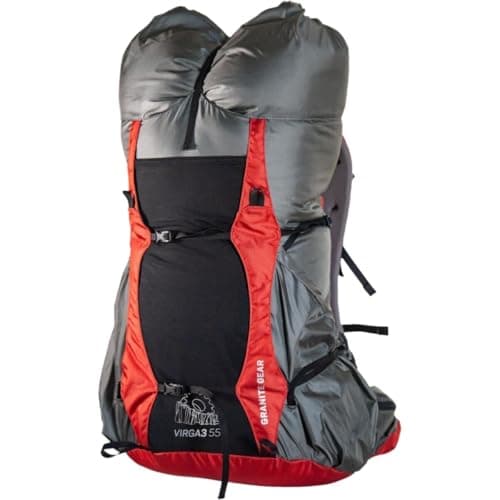
A note on the pack. The Granite Gear Virga3 55 at 762 g (1 lb 10.9 oz) is lighter and cheaper than the Exos, and is the right choice if your base weight is genuinely low and your food carries are short. Granite Gear rates it to 25 lb, and that rating is the thing to respect rather than argue with. The head-to-head logic is in frameless vs framed backpacks.
What you will replace on trail
- Shoes. Every 500-800 miles for most people. Budget for three or four pairs on a long trail and have them posted ahead.
- Socks. Faster than shoes. Two pairs at a time, replaced as they thin.
- Your water filter. A Sawyer can last the trail if you backflush it; it cannot survive freezing, and Sawyer gives no warranty for a frozen filter. Carry chemical backup and know the symptoms. See how to use a Sawyer Squeeze.
- Your sleeping pad, possibly. Air pads fail. Carry patches, know how to find a leak with soapy water, and accept that a replacement may be needed.
- Trekking pole tips and straps. Cheap, light, and they wear out. If your shelter needs the poles, this is a shelter-critical spare — see do you need trekking poles.
- Your shelter's guy lines and stakes. Stakes get lost. Carry two spares; they weigh almost nothing. The lightest options are on best ultralight tent stakes.
Why not sub-10?
You can thru-hike under a 10 lb base weight, and plenty of people do. But it is worth being clear about what it costs over five months rather than over one weekend.
A sub-10 kit is built on a frameless pack, which means your biggest food carry has to fit inside a 25 lb rating. It leaves no margin for a cold snap, and it usually deletes the comfort items that keep morale up in month three. A 12-16 lb base weight gives you a framed pack, a slightly warmer quilt and a pad you can sleep on, and the walking difference between 13 lb and 9 lb of base weight is far smaller than the difference between 13 lb and 25 lb.
If you do want the lighter target, the arithmetic is in our sub-10-pound gear list. For most people the honest answer is to build the 13 lb kit, hike a few hundred miles, and then cut what you have not used.
Mistakes first-time thru-hikers make
- Buying the pack first. The pack is a container. Its size and load rating depend on everything else. Buy it last, and size it with the sizing guide.
- Ignoring the food carry. The pack that feels perfect at a 13 lb base weight is a different pack out of a five-day resupply.
- No repair kit. Over five months something will tear, puncture or snap. A few grams of tape and thread is the highest-return weight in the pack.
- Buying the lightest of everything. The lightest shelter, pad and pack are usually the ones with the least margin. Thru-hiking rewards robust over minimal.
- Taking too much insulation for the middle and too little for the ends. Long trails have cold shoulder sections. Plan to post warm layers to yourself rather than carrying them for 2,000 miles.
- Not practicing first. A shakedown weekend with the exact kit, including the pitch and the filter routine, finds problems that a spreadsheet cannot.
One more pad note, because it is the item that most often ends a comfortable thru-hike: the Therm-a-Rest NeoAir XLite NXT at 370 g (13.1 oz) publishes R 4.5 and includes a field repair kit, which is the right combination for a long trail. Pair it with a 20°F quilt and you have a sleep system that works from the desert to the passes.
How we scored this
How these picks were chosen
Every weight and list price here comes straight from the maker's own product page, measured against a named mainstream reference, then turned into one number: grams saved per dollar. Every figure links to the page it came from, so you can check any of it in a click.
Value and weight are computed from those published numbers; function, durability and ease are scored from the specs, manuals and standards each maker publishes. Commissions never set a score or decide a pick. The formula, weights and references are published.
What changed
- Published.
Questions
Frequently asked
What base weight should I target for a thru-hike?
How much food weight do thru-hikers carry?
Do I need a framed pack for a thru-hike?
What gear will I have to replace during a thru-hike?
Is a trekking-pole tent a good idea for a thru-hike?
Receipts
Sources
- Osprey: Exos 58 product page, 30-35 lb load range (checked 2026-09-22)
- Granite Gear: Virga3 55 product page, 25 lb load rating (checked 2026-09-22)
- 3F UL Gear: Lanshan 2 product page (checked 2026-09-22)
- Therm-a-Rest: Vesper 20F/-6C Down Quilt product page (checked 2026-09-22)
- Therm-a-Rest: NeoAir XLite NXT product page, R 4.5 (checked 2026-09-22)
- Sawyer: Squeeze Water Filter System product page (checked 2026-09-22)
Weights, list prices and specs on this page come from each maker's own pages, linked on every product, and performance figures such as boil times or flow rates are the maker's claims, labeled that way, so you always know whose number you're reading. Amazon sets its own prices and changes them often, so buy buttons link to the live listing. Read the full method.