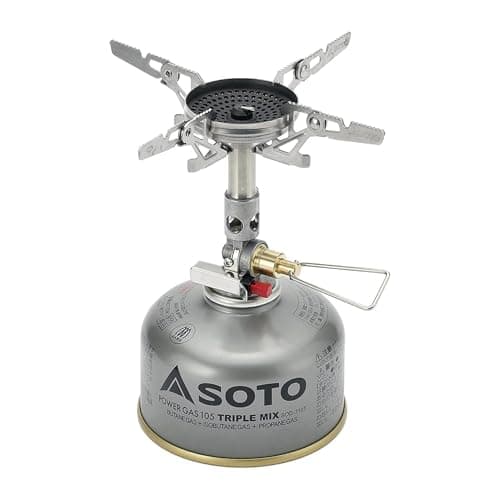
A backpacking stove is one of the few pieces of gear where the cheapest serious option is genuinely good and the most expensive one is not four times better. A 25 g titanium burner boils water. So does a 90 g regulated stove with a piezo. The difference is not whether dinner happens; it is how it goes in wind, in cold, and when you want to simmer rather than blast.
The question that decides everything
Ask yourself honestly: do you boil water, or do you cook?
- Boil only. Freeze-dried meals, instant noodles, coffee. You need heat quickly into a small pot and nothing else. Buy the lightest reliable burner you can and spend the saved money elsewhere.
- Actually cook. Frying, simmering a sauce, cooking for two from real ingredients. You need a broad burner that spreads heat and a valve with fine control, and you will accept 20-30 g more for it.
Most people who think they are in the second group are in the first. If every trip for the past two years ended with a pouch of dehydrated food, buy the boil-only stove.
The four stove types
| Type | Typical weight | Best at | Weak at |
|---|---|---|---|
| Upright canister | 25-90 g | Speed, simplicity, control | Wind, deep cold, tall pot stability |
| Integrated canister system | 340-500 g | Fuel efficiency, boiling in wind | Weight, cost, simmering, pot choice |
| Alcohol burner | 25-110 g | Silence, simplicity, cheap fuel | Speed, cold, fire bans, wind |
| Wood / solid fuel | 100-300 g | No fuel to carry | Fire bans, wet wood, soot, time |
For most readers of this site, the decision is between the first and the third, and the first wins unless you have a specific reason. Integrated systems are worth their weight for melting snow or boiling for a group — see our stove systems ranking.
Fuel: canister, alcohol, or neither
Canister fuel is an isobutane-propane blend in a sealed can with a screw valve. It lights instantly, burns hot, and the can is non-refillable. MSR publishes 60 minutes of burn and 16 litres boiled per 227 g IsoPro canister for the PocketRocket 2, which is a useful planning figure.
Alcohol is denatured spirit in a bottle. Trangia lists 1,150 W output for its Spirit Burner and 10 minutes for a litre, with roughly 25 minutes of burn per 100 ml fill. It is slow, silent, cheap to run, and has no moving parts to break.
The full comparison, including the weight crossover point where carrying alcohol stops being lighter than carrying a canister, is on canister vs alcohol stoves.
Do you need a pressure regulator?
A regulator holds the fuel pressure constant between canister and burner, so the flame does not fade as the can empties or the temperature drops. It adds cost and a few grams.
The honest answer: no, unless you cook below freezing. A canister stove in summer behaves the same regulated or not. Below about 40°F the difference starts to show, and below freezing it is the difference between dinner in four minutes and dinner in twelve. If that is your use case, our cold-weather stove ranking is the page to read, and it also lists the free techniques that matter more than the hardware.
Reading output and boil figures
Makers publish two different kinds of number and they are not comparable, which is the most common source of confusion when shopping.
- Output (watts or BTU) is the burner's ceiling. SOTO lists 3,260 W / 2,800 kcal/h for the Amicus, stated as 10,210 BTU. BRS lists 2,700 W for the BRS-3000T on the retail package shown on its product page. A higher ceiling means faster heat into the pot, all else equal.
- Boil time is a measurement the maker took under its own conditions. MSR publishes 1 litre in 3.5 minutes for the PocketRocket 2 on IsoPro. A boil time from one maker is not comparable with a boil time from another, because the water temperature, altitude, pot and windshield all differ.
Use output to compare burners and boil times only within one maker's range. And treat both as a guide: the pot you put on top, whether you use a lid, and how much wind there is will change your real boil time more than the stove does.
Four stoves across the range
One per approach: the lightest, the best value with an igniter, the proven all-rounder, and the alcohol option. Every figure is the maker's own.
Our picks for this
A stove per approach
Not a ranking. These four show what each step up the range actually buys, and each is ranked properly on the budget stove roundup.
Lightest canister stove for solo boiling
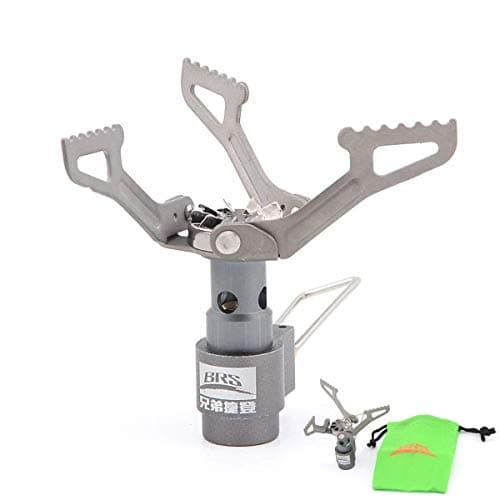
BRS-3000T
25 g (0.9 oz)No list price6.7 / 1025 g of titanium and 2,700 W, with no igniter and no regulator listed. The lightest way to boil water, with an 81.8 mm support span that suits small pots only.
$16.89Amazon#ad · Price as of November 3, 2026 · Affiliate disclosure for the link to BRS-3000T
Budget canister stove with an igniter
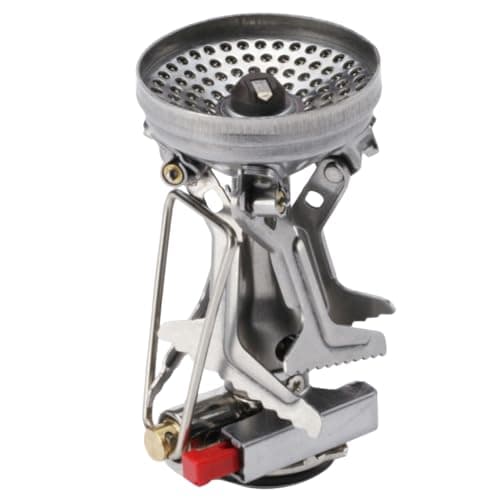
SOTO Amicus Stove with Igniter
81 g (2.9 oz)$25–$50 band3.2 / 1081 g with a built-in igniter, spring-loaded supports and a raised burner ledge for wind. The best value step up from the lightest option.
$64.95Amazon#ad · Price as of November 3, 2026 · Affiliate disclosure for the link to SOTO Amicus Stove with Igniter
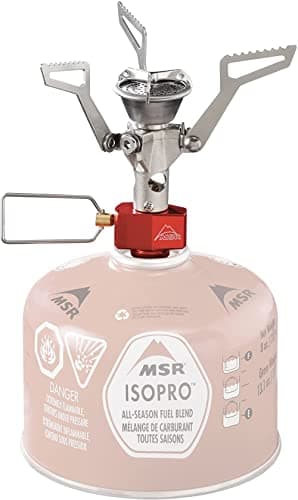
Proven all-round canister stove
MSR PocketRocket 2
73 g (2.6 oz)$25–$50 band2.9 / 1073 g, WindClip wind protection and a published 1 litre in 3.5 minutes. The proven all-rounder, with 16 litres boiled per 227 g canister.
$49.04Amazon#ad · Price as of November 3, 2026 · Affiliate disclosure for the link to MSR PocketRocket 2
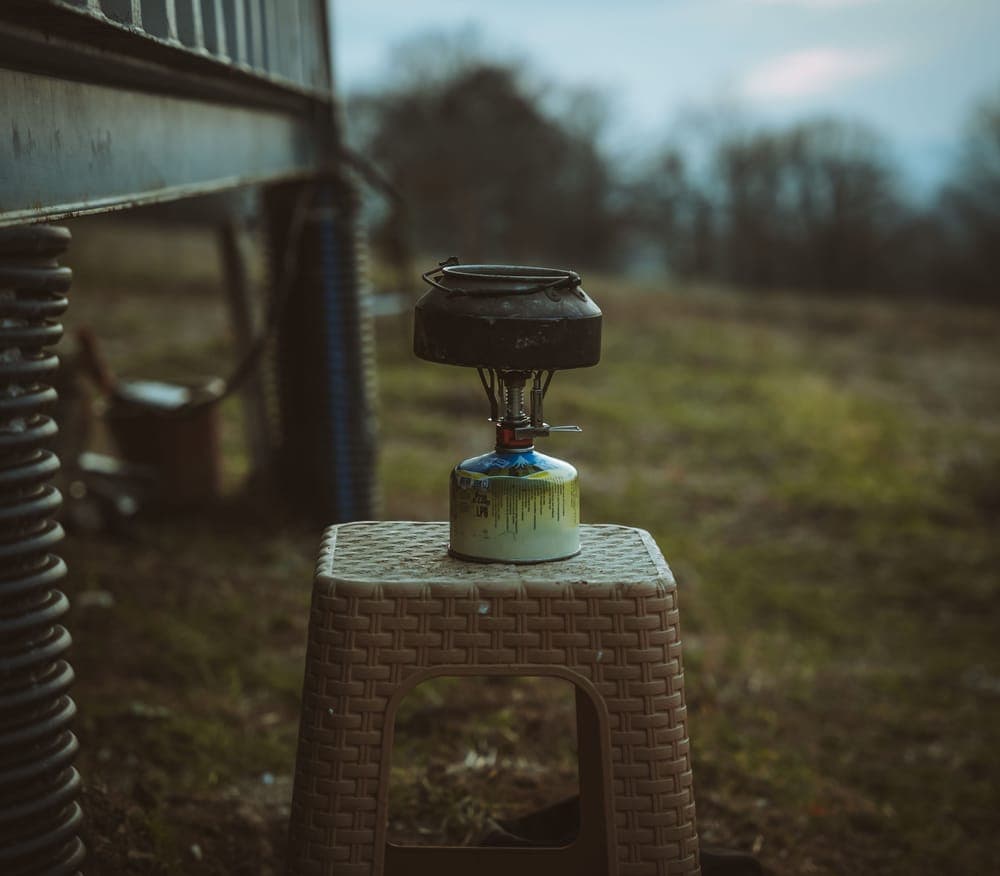
Alcohol burner for an existing stand
Trangia Spirit Burner (602500)
110 g (3.9 oz)Under $25 band2.1 / 10110 g of brass with no moving parts, 1,150 W and a 10 minute litre. Silent and cheap to run, and it needs a stand and a windshield you supply.
Check price · Amazon#ad · Price as of November 3, 2026 · Affiliate disclosure for the link to Trangia Spirit Burner (602500)
Photos are illustrative, not the product. Scores are spec-derived.
Buy the stove and the pot together
A stove is half a system, and pot diameter is the spec most people ignore. BRS publishes an 81.8 mm pot-support span on the BRS-3000T; a 115 mm wide pot on that stove is perched rather than supported, and it is why people describe that stove as tippy. SOTO publishes a 2 litre maximum pot size for the WindMaster's 4Flex support and about 800 ml for the optional TriFlex.
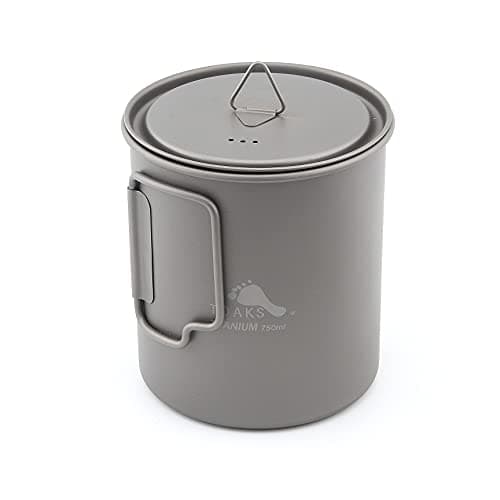
Match them: a narrow, tall pot for a lightweight burner, a wider pot only on a stove with a wide support span. Our titanium pot ranking lists the diameters, and titanium vs aluminium covers what the material changes.
Igniters and other things not to pay for
Igniters are genuinely convenient and genuinely unreliable: the piezo is the first part of a canister stove to fail. SOTO runs a hidden electric line on the Amicus and MSR protects the spark igniter inside the burner on its Deluxe, which are real improvements. You still carry a lighter.
Stuff sacks and hard cases add weight for nothing. MSR lists the PocketRocket 2 at 73 g minimum and 105 g packaged with its hard-shell case — 32 g of plastic you can leave at home.
Headline BTU figures above about 3,000 W. Past that point the limit is how fast heat moves into your pot, not how much the burner makes.
Three mistakes
Buying for the cooking you aspire to. The frying pan and the simmer-capable stove get carried twice and then stay home. Buy for the dinners you actually eat.
Buying a stove system for solo boiling. Integrated systems earn their 400 g melting snow and feeding groups. For one person boiling 500 ml, an upright burner and a titanium pot is half the weight.
Forgetting the fuel in the weight budget. A 230 g canister weighs more than any stove on this page. Work out how much you actually need with the fuel canister guide before you agonise over 20 g of burner.
How we scored this
How these picks were chosen
Every weight and list price here comes straight from the maker's own product page, measured against a named mainstream reference, then turned into one number: grams saved per dollar. Every figure links to the page it came from, so you can check any of it in a click.
Value and weight are computed from those published numbers; function, durability and ease are scored from the specs, manuals and standards each maker publishes. Commissions never set a score or decide a pick. The formula, weights and references are published.
What changed
- Published.
Questions
Frequently asked
What kind of stove is best for backpacking?
How many watts does a backpacking stove need?
Is a pressure-regulated stove worth it?
Do I need a stove with an igniter?
Can I use any pot on any backpacking stove?
Receipts
Sources
- BRS: BRS-3000T product page, English site (checked 2026-09-22)
- SOTO: Amicus Stove with Igniter product page (checked 2026-09-22)
- MSR (Cascade Designs): PocketRocket 2 Stove product page (checked 2026-09-22)
- Trangia: Spirit burner B25 product page (checked 2026-09-22)
Weights, list prices and specs on this page come from each maker's own pages, linked on every product, and performance figures such as boil times or flow rates are the maker's claims, labeled that way, so you always know whose number you're reading. Amazon sets its own prices and changes them often, so buy buttons link to the live listing. Read the full method.