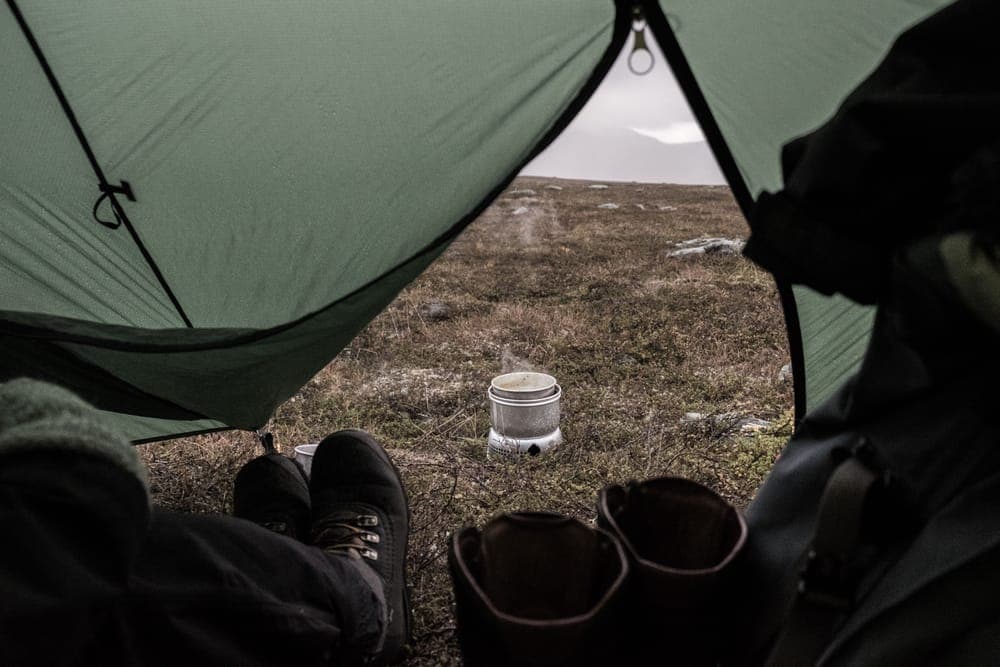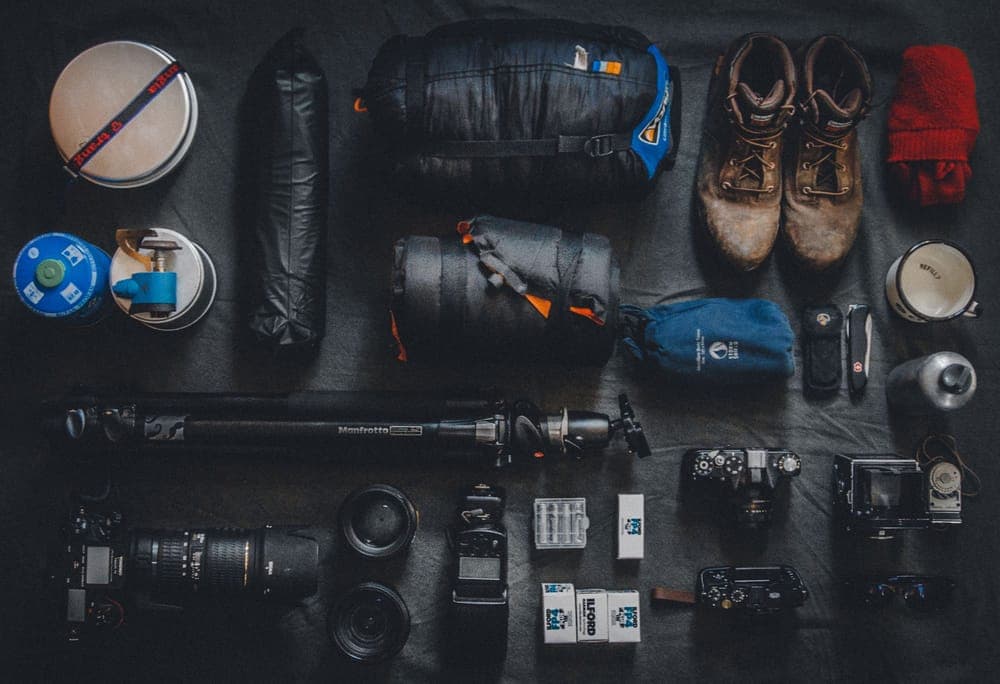
This question comes up before you've picked a specific stove, and it should: canister and alcohol stoves aren't two versions of the same tool, they're two different ways to boil water with different trade-offs in weight, price, speed and where you're legally allowed to use them. This guide compares the two fuel types on what their makers actually publish, then points you to specific stoves once you know which way you're leaning.
Neither fuel type is objectively correct, whatever a forum thread insists. A canister stove is the practical default for most three-season backpacking, and an alcohol stove earns its place with hikers who count grams against dollars differently, or who like the simplicity of a burner with no moving parts. Read through the trade-offs below before you shop for either.
If you've already decided on canister, go straight to our best budget backpacking stoves ranking, or see the closest head-to-head on this site at BRS-3000T vs. MSR PocketRocket 2.
Canister vs. alcohol, at a glance
| Canister stove | Alcohol stove | |
|---|---|---|
| Boil speed (maker-stated, per liter) | About 3.5 minutes (MSR, Fire Maple) | 8 to 10 minutes (Trangia) |
| Ignition | Valve plus a lighter, or a built-in igniter on some stoves | Direct flame; no igniter on any Trangia burner |
| Simmer control | A real valve on every canister stove; some add a stated simmer feature | Trangia's simmer ring only; coarser than a valve |
| Fuel gauge | Must weigh the canister; no window into a sealed can | See or weigh the fuel bottle directly |
| Fire restrictions | Often still allowed when the flame can be shut off instantly (varies by forest and stage) | An open flame; more often the target of restrictions |
| Wind and cold performance | Regulated stoves handle cold better; enclosed burner resists wind better | Needs a real windshield; fuel burns cooler and lights less readily when cold |
Figures as stated by MSR, Fire Maple and Trangia on their own product pages (checked 2026-09-22). Fire restriction treatment varies by land manager; always confirm the current rule for where you're headed.
The basic difference
A canister stove screws onto a threaded can of pressurized isobutane-propane gas. Open the valve, light the burner, and the flame is controllable and, on some stoves, regulated so output stays steadier as the canister empties or the air gets cold. Every canister stove in our rankings works this way.
An alcohol stove is usually just a small brass or aluminum cup that holds liquid fuel, which you light directly. Trangia's burners, for example, are simmer-capable brass cups with a screw cap for carrying unused fuel, but the burner itself can't hold a pot: it needs a stand or a windshield, which most alcohol stove kits include. There's no valve, no pressure regulator, and nothing that can fail mechanically, but also nothing that shuts the flame off instantly beyond starving it of fuel or smothering it.
Simmering and real cooking
A canister stove's valve gives you a real dial: turn it down and the flame drops with it, which is what lets the MSR PocketRocket Deluxe and SOTO WindMaster offer a stated simmer control on their burner heads. An alcohol stove has no equivalent control once it's lit; Trangia's simmer ring is the exception here, a metal disc that partially covers the flame to cut heat and can also extinguish the burner, but it's a coarser adjustment than a valve.
If your cooking is entirely boil-and-pour into a meal pouch, this difference doesn't matter much. If you simmer rice, pasta or a real sauce, a canister stove with a stated simmer feature gives you more control over scorching than an open alcohol flame does.
Weight: it depends what you're carrying
A bare canister stove is usually the lighter object in your hand. The Fire Maple FMS-300T weighs 45 g (1.6 oz), and even the heavier MSR PocketRocket 2 comes in at 73 g (2.6 oz). Trangia's bare spirit burner alone weighs more than either canister stove, and a complete alcohol setup like the Trangia Mini, which bundles the burner with its own windshield and pot stand, weighs more still, at 162 g (5.7 oz).
The canister itself changes this math. A canister stove needs a separate metal canister for every trip, which you carry full and pack out empty; an alcohol stove burns fuel you decant into a light plastic bottle, which gets lighter as you use it and produces no metal canister to pack out. On a short trip a full canister can outweigh the alcohol equivalent; on a long one, the fixed weight of the stove itself tends to dominate. Weigh your own fuel plan rather than assuming either fuel type automatically wins.
What each one costs
At MSRP, the bare Trangia Spirit Burner lists for a lower MSRP band than the MSR PocketRocket 2, but that burner can't hold a pot on its own — you need a stand, which the Trangia Mini bundles in for a little more than the bare burner's own price. Compare the complete kits and the price gap narrows a great deal. A canister stove is a one-time purchase for the stove itself, and then a running cost every trip for a fresh canister of gas. An alcohol stove is also a one-time purchase, and then a running cost for fuel you buy by the bottle at a hardware store, which is often cheaper per trip than a fresh gas canister, though we don't have a maker-published figure to put a number on that comparison.
Availability matters too. Denatured alcohol and similar fuels are sold at hardware and outdoor stores in most towns near a trailhead, which makes resupply on a longer trip simpler to plan around than tracking down the specific isobutane-propane canister size a stove needs.
Boil speed
This is where the makers' own numbers separate the two fuels clearly. MSR states a 1-liter boil in 3.5 minutes for the PocketRocket 2, and Fire Maple states roughly the same figure for the FMS-300T. Trangia states 8 to 10 minutes per liter for its spirit burner, depending on which of its own pages you read (trangia.se lists 10 minutes; Trangia's US shop lists 8). Either figure is more than double a canister stove's stated boil time.
That gap matters most at the end of a long day, in the cold, or when you're melting snow rather than boiling already-liquid water. It matters least if you're cooking on your own schedule with no rush.
Fire restrictions
Practically, an alcohol stove's open flame is harder to extinguish instantly than a canister stove's valve, and it can be difficult to see in bright daylight, which is exactly the combination that makes restriction rules pay closer attention to it. If you're heading somewhere with active fire restrictions, confirm the rule for your specific stove type before you pack it, not after you arrive.
Wind and cold
An open alcohol flame has nothing to shape it against wind, so it loses heat to moving air faster than a canister stove's enclosed burner head, and Trangia's own kits build a windshield in for exactly this reason. Cold works against alcohol fuel too: it burns cooler and lights less readily as the temperature drops. Canister stoves have the opposite cold-weather problem — the gas itself loses pressure in the cold — but a regulated canister stove like the MSR PocketRocket Deluxe or SOTO WindMaster in our stove rankings is built specifically to fight that. Neither fuel type has an easy answer for genuinely cold, windy conditions; both need real wind protection to perform close to their stated figures.
Maintenance and knowing how much fuel is left
An alcohol stove has almost nothing to break: no valve, no seal, no threads to cross-thread onto a canister. Trangia's screw cap with an O-ring is the only wear part on its burner. Knowing how much fuel you have left is simple, too, since you carry it in a bottle you can see through or measure by weight before you pour.
A canister stove has more that can go wrong in theory, a valve and a threaded connection, though none of the stoves in our rankings publish a failure rate, so we won't invent one. The harder practical problem is gauging a partly used canister: there's no window into a sealed metal can, so the only reliable way to check remaining fuel is to weigh the canister on a small scale against its printed empty weight, not to shake it and guess.
Our picks for this
One stove from each fuel type
Two canister stoves at different price points, and two ways into alcohol: a complete kit, or a bare burner if you already own a stand.
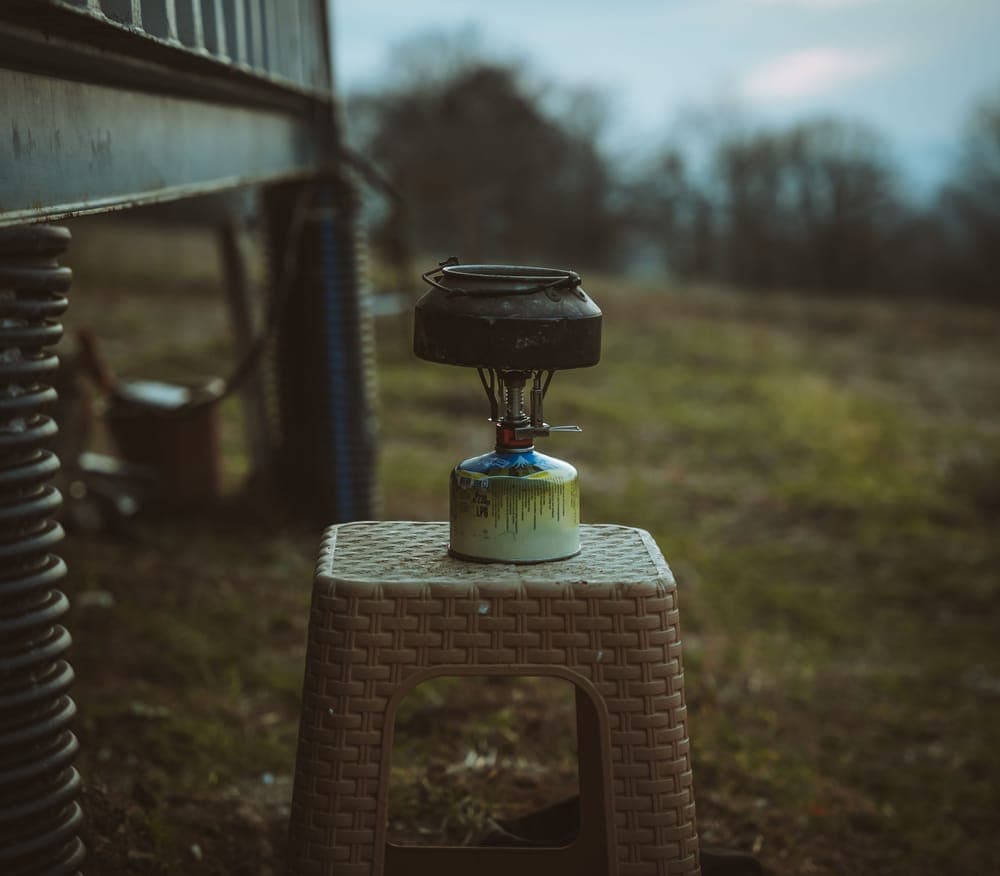
Proven all-round canister stove
MSR PocketRocket 2
73 g (2.6 oz)$25–$50 band2.9 / 10The mainstream canister default. MSR states a 3.5-minute liter boil and includes a hard case; no igniter or regulator.
Check price · Amazon#ad · Price set by Amazon · Affiliate disclosure for the link to MSR PocketRocket 2
Titanium stove on a tight budget
Fire Maple FMS-300T
45 g (1.6 oz)$25–$50 band5.1 / 10A titanium canister stove that undercuts the PocketRocket 2 on weight and price, with the same stated boil time.
Check price · Amazon#ad · Price set by Amazon · Affiliate disclosure for the link to Fire Maple FMS-300T
Complete alcohol stove kit
Trangia Mini Stove (100281)
162 g (5.7 oz)$25–$50 band2.4 / 10A complete alcohol kit: the spirit burner plus its own windshield and pot stand in one box, so nothing else is needed but fuel.
Check price · Amazon#ad · Price set by Amazon · Affiliate disclosure for the link to Trangia Mini Stove (100281)
Alcohol burner for an existing stand
Trangia Spirit Burner (602500)
110 g (3.9 oz)Under $25 band2.1 / 10The bare burner alone, for readers who already own a Trangia stand or windshield to set it in.
Check price · Amazon#ad · Price set by Amazon · Affiliate disclosure for the link to Trangia Spirit Burner (602500)
Photos are illustrative, not the product. Scores are spec-derived.
What to buy for each
If you're leaning canister, start with our full best budget backpacking stoves ranking, which covers eight stoves from a maker-stated 25 g flyweight up to stoves with a pressure regulator and igniter for cold-weather trips. If you're leaning alcohol, the Trangia Mini is the simplest complete setup at $25–$50 MSRP band; the bare Trangia Spirit Burner only makes sense if you already own a stand or windshield to hold it, since the burner can't support a pot on its own.
Whichever fuel you pick, size a pot to match it: see our best titanium backpacking pots ranking. And if you'd rather skip open flame entirely, our cold-soaking guide covers cooking with no stove at all.
How we scored this
Units we claim to have tested: 0
Most gear sites say they tested everything. We didn't, and we say so. What we did instead: took every weight and list price from the maker's own page, measured each product against a named mainstream reference, and computed grams saved per dollar. Every number links to where it came from.
The score is spec-derived: value and weight are computed from those numbers, and the rest are judgments from published specs, not test results. Commissions never set a score or decide a pick. The formula, weights and references are published.
Questions
Frequently asked
Is a canister stove or an alcohol stove better for backpacking?
Are alcohol stoves banned under fire restrictions?
Is an alcohol stove cheaper than a canister stove?
How much faster does a canister stove boil water than an alcohol stove?
Can I use an alcohol stove in windy conditions?
How do I know how much fuel is left in a canister stove?
Can I simmer food on an alcohol stove?
Is an alcohol stove good for a beginner backpacker?
Receipts
Sources
- MSR (Cascade Designs): PocketRocket 2 Stove product page (checked 2026-09-22)
- Fire Maple: FMS-300T Titanium Backpacking Stove product page (checked 2026-09-22)
- Trangia: Mini stove (BF100281) product page, trangia.se (checked 2026-09-22)
- Trangia USA (official US web shop): Mini Windshield with Spirit Burner (100281) page (checked 2026-09-22)
- Trangia: Spirit burner B25 (BF602500) product page, trangia.se (checked 2026-09-22)
- Trangia USA (official US web shop): Spirit Burner with Screwcap (602500) page (checked 2026-09-22)
- USDA Forest Service, San Juan National Forest: Fire danger levels and restrictions explained (checked 2026-09-22)
- Smokey Bear (USDA Forest Service / Ad Council): campfire safety guidance (checked 2026-09-22)
We haven't tested the gear on this page and we don't pretend to. Weights, list prices and specs come from each maker's own pages (linked on every product), and performance figures such as boil times or flow rates are the maker's claims, labeled that way. Amazon sets its own prices and changes them often, so buy buttons link to the live listing. Where a figure isn't published, we say so. Read the full method.