What cold soaking is
Cold soaking is rehydrating dehydrated or freeze-dried trail food in cold or room-temperature water instead of boiling water, usually by letting it sit, sealed, for anywhere from thirty minutes to a couple of hours. No stove, no fuel, no flame, no waiting for water to boil at altitude. Some hikers cold soak everything; more use it for breakfast or lunch and still carry a stove for a hot dinner. Either way, it's a real way to cut weight from a kit, and it comes with real trade-offs the maker of your food usually spells out, if you read the label.
This page covers what cold soaking actually removes from your pack, what you give up for it, which meals in our catalog their own makers say tolerate cold water, and a food-safety point worth knowing before you let a meal sit for hours in the sun. If you just want the ranked meal list, start with our best backpacking meals roundup.
The weight you actually save
Going stoveless removes exactly two things from your kit: the stove and the fuel. It does not remove the container, because a cold-soaked meal still needs something to soak in, whether that's a dedicated wide-mouth jar or the pot you'd otherwise boil water in. So the honest saving is the stove's weight plus a canister's, not the pot's.
Our lightest stove, the BRS-3000T, weighs a maker-stated 25 g (0.9 oz). The mainstream benchmark, the MSR PocketRocket 2, weighs 73 g (2.6 oz), a gap of 48 g (1.7 oz) between the two. Either way you still need to add the fuel canister itself, which is its own line item; we work through canister weights and how long one lasts in how long does a fuel canister last. Add stove and canister together and a stoveless kit typically drops somewhere in the low hundreds of grams, depending on which stove and canister size you'd otherwise carry.
What it costs you
Cold soaking trades weight for time, texture and certainty, and the makers say so themselves once you look past the marketing copy. Mountain House's FAQ states its pouches work with cold water “in a pinch,” but “give it about twice as long to re-hydrate,” per its FAQ page. Backpacker's Pantry is more cautious still: its customer service page says it has “not tested rehydrating our meals with cold water,” and while it “should work,” it “could take upwards of an hour to fully rehydrate the meal” ( Backpacker's Pantry). And Good To-Go's Thai Curry directions are blunt about the opposite: they call for “BOILING (yes, boiling)” water, full stop, per the product page.
So the cost isn't hypothetical: real time, sometimes close to an hour longer than the label's boiling-water directions, and a real chance a given meal simply wasn't designed for it. Rice and dense starches take the longest to soften cold. Instant-style ingredients (freeze-dried vegetables, pre-cooked pasta, thin noodles) soften faster. None of the makers we cite publish a temperature-by-minute chart for cold rehydration, so treat the “twice as long” and “up to an hour” figures above as the best real numbers available, not a guarantee for every meal.
Who cold soaking actually suits
Cold soaking fits a specific kind of trip better than others. It suits fast, warm-weather miles where a hot meal isn't the point of the day, the kind of trip where you'd rather eat while you walk than stop and set up a stove. It also suits a genuinely budget-minded kit: no stove and canister to buy at all is a real saving on top of the weight, on a stove roundup where even our cheapest pick still costs something.
It suits cold and wet weather less well. A hot dinner does real work for morale and warmth at the end of a cold day, and none of the makers above claim their cold-soak directions were tested in freezing temperatures; colder water rehydrates food more slowly than the room-temperature figures they publish, not faster. If your trips regularly drop below freezing at camp, a stove earns its weight back in ways a spreadsheet of grams doesn't capture.
Which meals actually work cold
Here's what each maker in our meal research actually says about cold water, in its own words.
| Maker | What it says about cold water |
|---|---|
| Mountain House | Works “in a pinch”; allow about twice as long to rehydrate. |
| ReadyWise Outdoor | “Just add water (hot or cold)”; eat straight from the pouch. |
| Backpacker's Pantry | Not tested by the maker; should work but could take up to an hour. |
| Good To-Go (Thai Curry) | Directions require boiling water; not built for cold soaking. |
| Peak Refuel | Its FAQ doesn't address cold water either way. |
Of the eight meals in our best backpacking meals roundup, ReadyWise Chili Mac with Beef is the only one whose maker states cold water outright with no caveat, and the three Mountain House pouches all carry the “in a pinch, twice as long” caveat. Grocery-store cold-soak staples like instant oats, couscous and instant mashed potatoes are common trail choices for the same reason, though none of them publish a maker rehydration claim the way these pouches do, so we won't score them here.
The food-safety window
The practical takeaway: don't mix a cold-soak meal at lunch and plan to eat it at dinner on a hot day. Soak it closer to when you'll eat it, keep it out of direct sun while it sits, and if a meal is taking noticeably longer than the maker's cold-water figure to soften, treat that as a sign something's off rather than pushing through. And the water itself still needs to be safe before it goes in the bag; cold soaking changes nothing about that. The CDC's hiking guidance covers what to look for in a filter or treatment method (CDC), and our best backpacking water filters roundup ranks the options.
How to cold soak
- Pick a wide container. A wide mouth is easier to stir, eat from and clean than a narrow bottle. Many hikers reuse a plastic jar for this; if I were building a stoveless kit, I'd rather carry one wide pot that also boils water on the nights I want a hot meal than a jar with no other use.
- Add the water first, then the food, and seal it. Give yourself room in the container for the food to expand as it rehydrates.
- Let it sit while you hike or set up camp. Strap it to the outside of your pack (upright, so it doesn't leak) so it's soaking while you cover ground, rather than waiting around for it.
- Check it before you eat. If it's still crunchy after the maker's stated time, give it more water and more time rather than eating it underdone.
What to buy for it
Our catalog doesn't include a dedicated cold-soak jar, since most hikers reuse a container that never had a manufacturer product page to source from. What we can point to honestly: a titanium pot wide enough to double as a cold-soak container, and the two meals in our roundup whose makers explicitly say cold water works.
Our picks for this
A wide container and two meals their makers say work cold
The pot below is sold and scored as a stove pot; we point to it here for its wide 115 mm mouth, not a cold-soak-specific claim. Both meals carry a real maker statement about cold water.
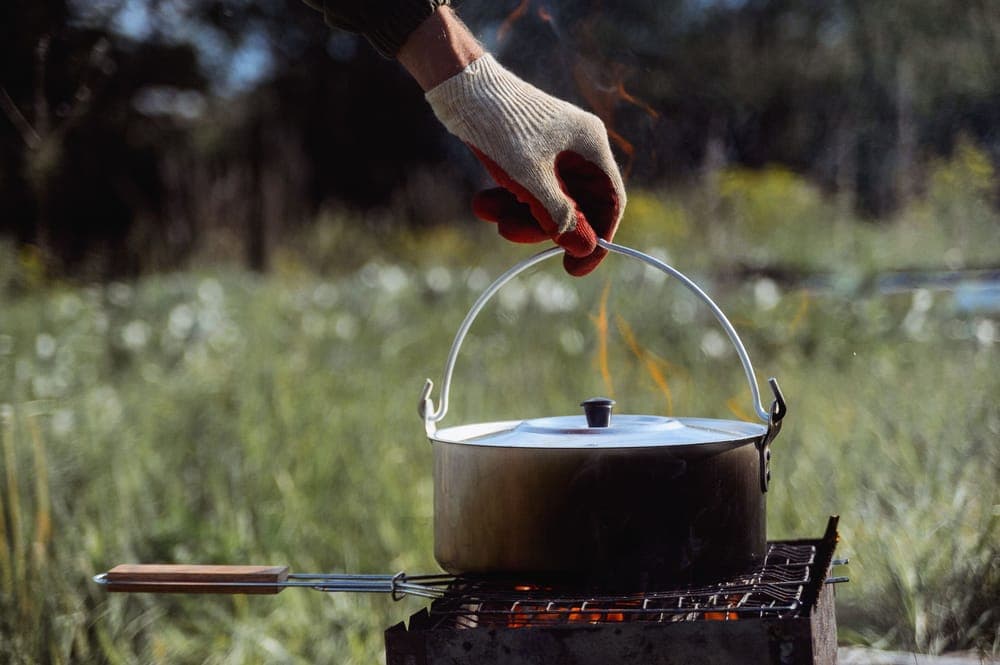
Solo pot that holds a 200 g canister
TOAKS Titanium 900ml D115mm Pot (POT-900-D115)
116 g (4.1 oz)$25–$50 band6.1 / 10115 mm across, the widest pot in our cook catalog, per TOAKS, so there's room to stir a cold-soaked meal. Doubles as a boil pot if you bring a stove as backup.
Check price · Amazon#ad · Price set by Amazon · Affiliate disclosure for the link to TOAKS Titanium 900ml D115mm Pot (POT-900-D115)
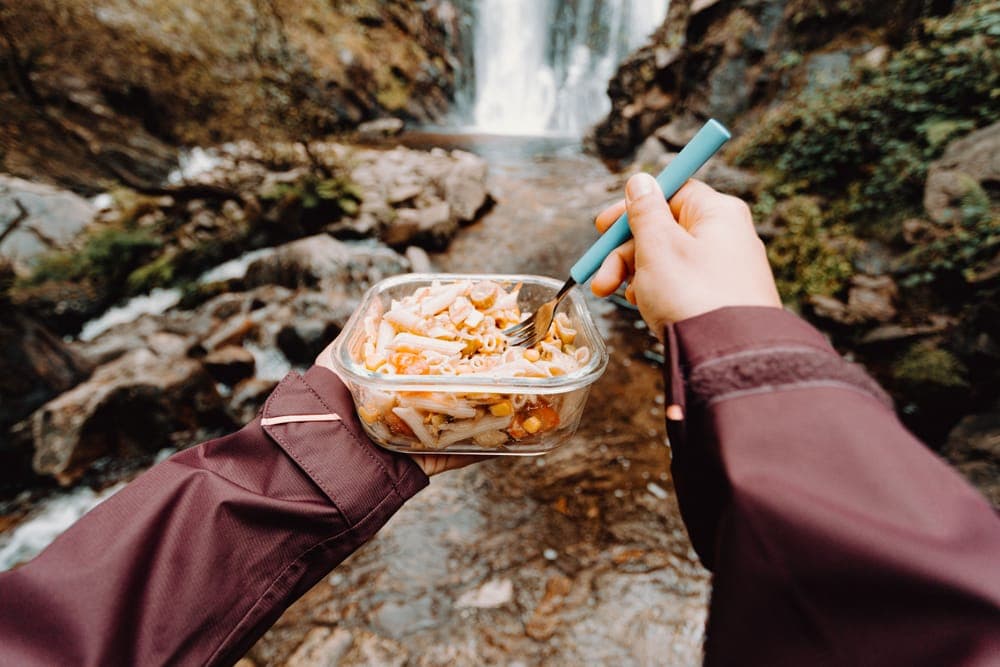
Gluten-free dinner with a 30-year shelf life
Mountain House Chicken Fried Rice
133 g (4.7 oz)Under $25 band6.6 / 10Mountain House says cold water works in a pinch, about twice the normal wait. Certified gluten-free, 600 calories.
Check price · Amazon#ad · Price set by Amazon · Affiliate disclosure for the link to Mountain House Chicken Fried Rice
Lowest-price pouch dinner
ReadyWise Chili Mac with Beef
131 g (4.6 oz)Under $25 band6.3 / 10ReadyWise Outdoor's own directions say hot or cold water, no caveat, and the lowest list price in our meal roundup.
Check price · Amazon#ad · Price set by Amazon · Affiliate disclosure for the link to ReadyWise Chili Mac with Beef
Photos are illustrative, not the product. Scores are spec-derived.
Skip Good To-Go's Thai Curry and Backpacker's Pantry's Pad Thai for a cold-soak kit: the first requires boiling water by its own directions, and the second's maker hasn't tested cold water and warns it could take up to an hour.
Mistakes to avoid
- Assuming every pouch cold soaks. Good To-Go's Thai Curry directions require boiling water; check the label before you commit a meal to a stoveless trip.
- Under-planning the wait. Mountain House says cold water takes about twice as long; Backpacker's Pantry says up to an hour. Start soaking well before you're hungry.
- Letting a soaked meal sit too long in the heat. The CDC's danger-zone guidance is written for food generally, but it's a reasonable ceiling: don't mix a meal at lunch to eat at dinner on a warm day.
- Using untreated water because it's not being boiled. Cold soaking changes nothing about water safety; treat it the same way you would water for drinking.
- Buying a narrow bottle instead of a wide container. Stirring and eating from a narrow mouth is a real, avoidable annoyance at camp.
If cold soaking is one piece of a bigger effort to cut weight, our guide to lowering your base weight covers the rest of the kit, and the Cook & Water hub has the full stove, pot and filter lineup for whichever way you decide to cook.
How we scored this
Units we claim to have tested: 0
Most gear sites say they tested everything. We didn't, and we say so. What we did instead: took every weight and list price from the maker's own page, measured each product against a named mainstream reference, and computed grams saved per dollar. Every number links to where it came from.
The score is spec-derived: value and weight are computed from those numbers, and the rest are judgments from published specs, not test results. Commissions never set a score or decide a pick. The formula, weights and references are published.
Questions
Frequently asked
What is cold soaking in backpacking?
Is cold soaking backpacking food safe?
How long does it take to cold soak backpacking food?
What backpacking meals can you cold soak?
Do you still need to treat water for cold soaking?
How much weight does cold soaking actually save?
Receipts
Sources
- CDC: Food Safety prevention overview, danger zone and 2-hour rule (checked 2026-09-22)
- CDC: Water Treatment Options When Hiking, Camping, or Traveling (checked 2026-09-22)
- Mountain House: FAQs page (cold-water rehydration) (checked 2026-09-22)
- Backpacker's Pantry: Customer Service / FAQ page (checked 2026-09-22)
- ReadyWise Outdoor: Chili Mac with Beef product page (checked 2026-09-22)
- Good To-Go: Thai Curry product page (checked 2026-09-22)
- BRS (Yongkang Jiedeng Outdoor Products): BRS-3000T product page (checked 2026-09-22)
- MSR (Cascade Designs): PocketRocket 2 Stove product page (checked 2026-09-22)
- TOAKS: Titanium 900ml D115mm Pot (POT-900-D115) product page (checked 2026-09-22)
We haven't tested the gear on this page and we don't pretend to. Weights, list prices and specs come from each maker's own pages (linked on every product), and performance figures such as boil times or flow rates are the maker's claims, labeled that way. Amazon sets its own prices and changes them often, so buy buttons link to the live listing. Where a figure isn't published, we say so. Read the full method.