The bivy sack occupies an odd place in backpacking. It is the shelter people romanticise — stars overhead, nothing between you and the mountain — and it is also the shelter most people sell within two seasons. Both of those things are true for the same reason: a bivy is a brilliantly efficient solution to a problem that most backpackers do not actually have.
The short answer, with the arithmetic
Ten years ago this comparison went the other way. Solo tents weighed 1,500 g and bivies weighed 450 g, so the bivy was a genuine ultralight play. Budget trekking-pole shelters closed that gap, and the bivy's case now rests on packed size, pitch flexibility and speed rather than weight.
What a bivy actually is
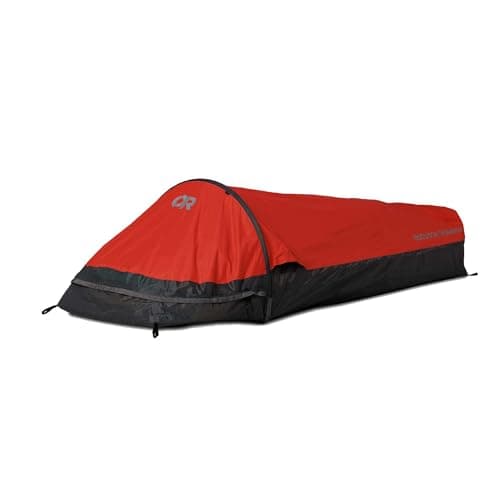
A bivy (short for bivouac sack) is a waterproof-breathable shell that goes around your sleeping bag. The lightest ones are a sack with a drawcord. Most backpacking bivies add a single short hoop pole over the head end so the fabric does not rest on your face, plus a floor in a tougher denier and a few stake loops.
The Helium UL is the archetype: 2.5-layer Pertex Shield Net plus canopy in 30D recycled nylon ripstop, a 40D PU-coated floor, a clamshell opening, one DAC aluminium pole and four stakes. Outdoor Research covers it with the Infinite Guarantee, stating the gear is guaranteed to perform for the lifetime of the product. It is a well-made object. It is also a sack.
The weight saving is smaller than you think
Compare like with like: a waterproof shelter you can sleep in through rain.
| Shelter | Maker weight | Sit up? | Dry gear space? |
|---|---|---|---|
| Outdoor Research Helium UL Bivy | 511 g | No | No vestibule |
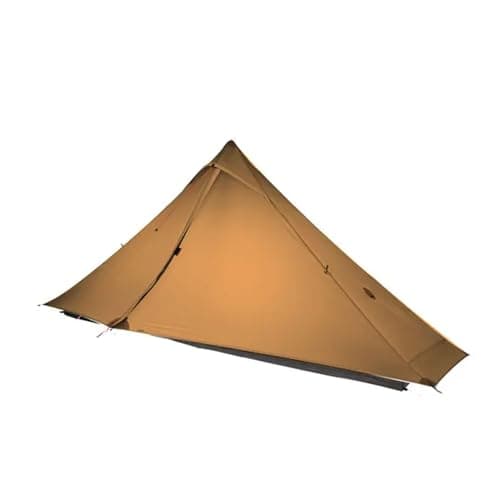
| 3F UL Gear Lanshan 1 | 775 g (plus a pole you carry) | Yes, 125 cm peak | Vestibule plus a side gear space |
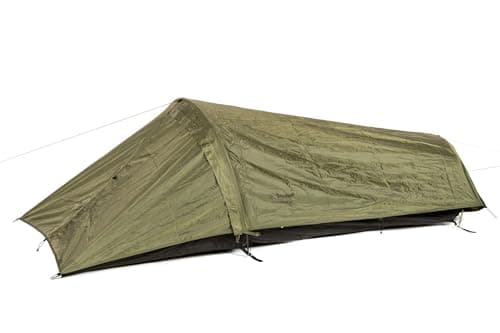
| Snugpak Ionosphere IX | 1,200 g trail weight | No | Small porch |
And that Lanshan figure is before you account for the pole, which you are carrying in your hands anyway if you use trekking poles. Read ultralight tent vs bivy for the full side-by-side on weight and pitch.
The price is the real surprise
People assume a bivy is the cheap option because it is less tent. It is not. A waterproof-breathable laminate in a small panel area is expensive to make, and the mainstream bivies sit at mid-range solo tent money or above. You are paying more, for less shelter, to save a quarter of a kilo.
That is a defensible trade if the quarter-kilo matters enormously to you and the shelter rarely does. It is a bad trade if you camp in weather. Our gear cost guide puts shelter spending in context against the rest of a kit.
Condensation: the thing nobody warns you about
You exhale roughly a litre of water overnight. In a double-wall tent that moisture condenses on the fly, which is not touching you, and drips outside. In a bivy, the only surface available is the inside of the bivy — which is pressed against your sleeping bag.
Waterproof-breathable laminates move vapour, but only when there is a temperature and humidity gradient across them. On a cold, still, humid night — exactly the night you most want a shelter — that gradient collapses and the laminate stops keeping up. The result is a damp bag by morning, and down loses loft when it is damp. This is the single most common reason bivies get resold.
Four times a bivy is the right call
- Alpine starts and bivouacs. If the plan is to sleep four hours on a ledge and move at 3 a.m., you do not need a vestibule. You need something that packs to nothing and goes up in twenty seconds on ground where no tent would stand.
- Hunting and photography. Low profile, no bright fly, no setup noise, and the ability to sleep wherever you happen to be at dusk.
- Bikepacking and fastpacking. Packed size matters more than packed weight on a bike frame or a running vest, and a bivy stuffs into spaces no tent fits.
- As a second layer, not a shelter. A bivy under a tarp is a genuinely good system: the tarp handles rain and gives you space, the bivy handles splash, wind and bugs, and the combination is lighter and more adaptable than most tents.
Notice what is not on that list: three-season backpacking in the lower 48 with a pack on, which is what most people reading this actually do.
What to buy at each point on the scale
Three shelters, one per answer. Every weight and specification is the maker's own published figure.
Our picks for this
Bivy, bivy-tent, or just buy a tent
Ordered by how much shelter you get, lightest first. The third one is here because for most readers it is the honest answer to the question in the title.
Lightest weatherproof bivy
Outdoor Research Helium UL Bivy
511 g (1 lb 2.0 oz)$300–$400 band6.1 / 10The real thing: 511 g, a hoop over the head, a lifetime guarantee, and no vestibule or sitting room whatsoever.
$299.95Amazon#ad · Price as of November 3, 2026 · Affiliate disclosure for the link to Outdoor Research Helium UL Bivy
Best bivy-style tent
Snugpak Ionosphere IX
1,200 g (2 lb 10.3 oz)$200–$300 band4.3 / 10A bivy-shaped tent with a separate fly and a bathtub floor, so condensation lands on the fly. The cost is 1,200 g trail weight.
$269.95Amazon#ad · Price as of November 3, 2026 · Affiliate disclosure for the link to Snugpak Ionosphere IX
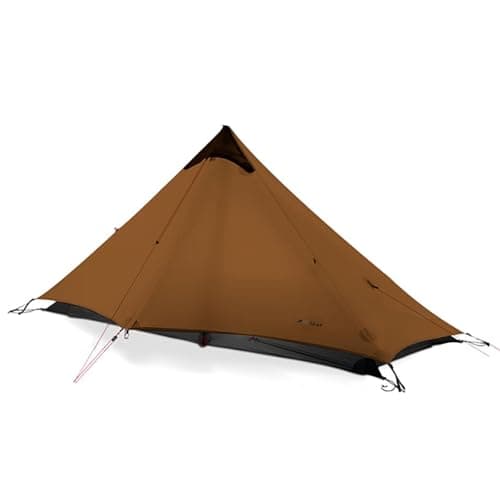
Cheapest double-wall solo tent
3F UL Gear Lanshan 1
775 g (1 lb 11.3 oz)$100–$150 band7.4 / 10The reason most people should not buy a bivy: a double-wall solo tent at 775 g with a vestibule, taped seams and a lower list price.
$146.99Amazon#ad · Price as of November 3, 2026 · Affiliate disclosure for the link to 3F UL Gear Lanshan 1
Photos are illustrative, not the product. Scores are spec-derived.
The middle ground: bivy-shaped tents
If you like the footprint of a bivy but not the damp bag, a bivy-shaped tent solves the condensation problem by putting a fly back. The Snugpak Ionosphere IX is the clearest example on this site: a mesh inner and a separate 210T polyester fly with 5,000 mm coatings and taped seams, with a bathtub floor and ten interior pockets, at 240 cm long.
The price is weight. At 1,200 g (2 lb 10.3 oz) trail weight it is heavier than several full solo tents we rank, and Snugpak lists a packed weight of about 1.5 kg once the sixteen stakes and the bag are in. You get bivy geometry and tent moisture management, and you give up the weight saving that made a bivy interesting. Whether that is a good deal depends entirely on whether you wanted the shape or the grams.
The verdict
Buy a bivy if you have a specific use for one: alpine bivouacs, hunting, bikepacking, or as the inner half of a tarp system. In those jobs nothing else is as good, and the Helium UL is a well-built example with a lifetime guarantee behind it.
Do not buy one as a general-purpose ultralight shelter. The weight gap against a budget double-wall solo tent is now a few hundred grams, the price gap runs the wrong way, and the first rainy afternoon spent lying flat in a wet sack is the moment most people decide they would rather have carried the tent. Start instead with the solo tent ranking, or with ultralight tents under $200 if budget is the binding constraint.
How we scored this
How these picks were chosen
Every weight and list price here comes straight from the maker's own product page, measured against a named mainstream reference, then turned into one number: grams saved per dollar. Every figure links to the page it came from, so you can check any of it in a click.
Value and weight are computed from those published numbers; function, durability and ease are scored from the specs, manuals and standards each maker publishes. Commissions never set a score or decide a pick. The formula, weights and references are published.
What changed
- Published.
Questions
Frequently asked
Is a bivy sack lighter than a tent?
Can you sleep in a bivy in the rain?
Do bivy sacks cause condensation?
Is a bivy good for a beginner backpacker?
Receipts
Sources
- Outdoor Research: Helium UL Bivy product page (checked 2026-09-26)
- Snugpak USA: Ionosphere IX product page (checked 2026-09-26)
- 3F UL Gear: Lanshan 1 product page (checked 2026-09-22)
Weights, list prices and specs on this page come from each maker's own pages, linked on every product, and performance figures such as boil times or flow rates are the maker's claims, labeled that way, so you always know whose number you're reading. Amazon sets its own prices and changes them often, so buy buttons link to the live listing. Read the full method.