The contenders
Side by side
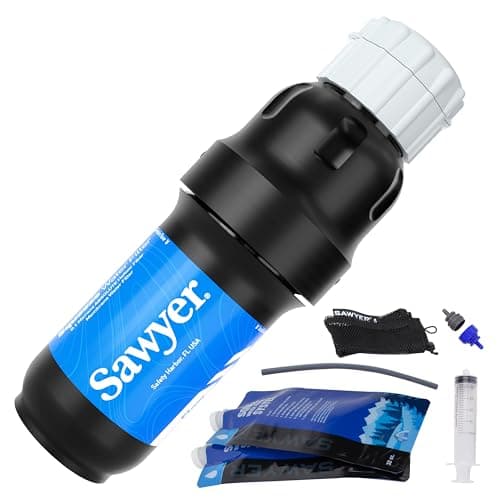
The one to buy for a thru-hike
Sawyer Squeeze (SP129)
6.9 / 100.1 micron, dual-threaded, lifetime limited warranty and a flow Sawyer ranks first among its pocket filters. The default for anyone filtering every day.
$45.95Amazon#ad · Price as of November 3, 2026 · Affiliate disclosure for the link to Sawyer Squeeze (SP129)
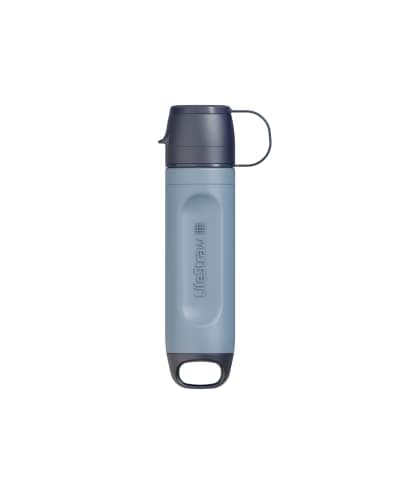
LifeStraw's real answer to the Squeeze
LifeStraw Peak Series Solo
8.6 / 10Threads onto the same 28 mm bottles, ships with a backwash syringe and publishes a flow figure the Squeeze does not. Its rated life is the catch.
Check price · Amazon#ad · Price as of November 3, 2026 · Affiliate disclosure for the link to LifeStraw Peak Series Solo
 Illustrative photo
Cheapest way to drink from a stream
LifeStraw Personal Water Filter Straw
8.4 / 10The original straw. Lightest and cheapest filter here, but you drink at the water's edge and carry nothing filtered away with you.
Check price · Amazon#ad · Price as of November 3, 2026 · Affiliate disclosure for the link to LifeStraw Personal Water Filter Straw
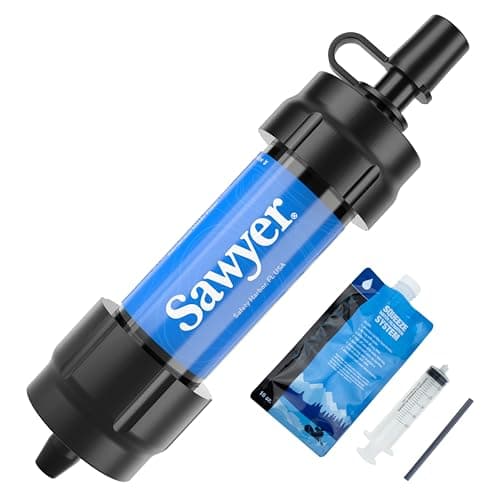
Sawyer's budget answer
Sawyer Mini (SP128)
7.8 / 10The cheapest 0.1 micron Sawyer. Pays for that with the slowest flow and the most backwashing of Sawyer's three pocket filters, by Sawyer's own ranking.
$28.99Amazon#ad · Price as of November 3, 2026 · Affiliate disclosure for the link to Sawyer Mini (SP128)
“Sawyer vs LifeStraw” is really a question about two product lines, not two products. Sawyer sells three pocket hollow-fiber filters that all thread onto a standard disposable bottle. LifeStraw sells a famous bare straw and a newer Peak Series that includes a filter which does the same bottle job. Compare the Sawyer Squeeze against the original LifeStraw Personal and you are comparing a complete water system against a drinking straw — which tells you very little about which brand to buy.
So this page runs two comparisons at once: the honest like-for-like (Squeeze against Peak Series Solo), and the budget match-up most searchers actually mean (Sawyer Mini against LifeStraw Personal).
Most people compare the wrong two
The LifeStraw Personal is a straw and nothing else. You kneel at the water, put one end in, and drink. It carries nothing away with you, so you cannot fill a bottle at a creek at noon and drink it at camp at four. The Sawyer Squeeze is a filter unit: it threads onto the pouches in the box, onto a standard 28 mm disposable bottle, inline on a hydration hose, or into a gravity setup with the tubing Sawyer includes.
That is a difference in what the thing does, not in how well it filters. LifeStraw's Peak Series Solo is the product that closes the gap: it threads onto the same 28 mm bottles the Squeeze does, at a lower weight. If you came here to decide between brands rather than between a straw and a system, the Squeeze and the Peak Solo are the pair to read.
| If you want | Sawyer | LifeStraw |
|---|---|---|
| A filter that threads onto a bottle | Squeeze (SP129) | Peak Series Solo |
| The cheapest way into the brand | Mini (SP128) | Personal |
| To drink at the source and nothing else | Mini, using the included straw | Personal |
| A gravity or inline setup | Squeeze, with the included tubing | Not covered by the filters here |
The numbers side by side
| Published spec | Sawyer Squeeze (SP129) | LifeStraw Peak Series Solo | LifeStraw Personal Water Filter Straw | Sawyer Mini (SP128) |
|---|---|---|---|---|
| Weight | 85 g (3.0 oz) | 48 g (1.7 oz) | 46 g (1.6 oz) | 57 g (2.0 oz) |
| List price | $25–$50 band | $25–$50 band | Under $25 band | $25–$50 band |
| Value | Value 4.9/10 | Value 8.8/10 | Value 10.0/10 | Value 8.7/10 |
| Filter | 0.1 micron absolute hollow-fiber membrane | 0.2 micron membrane microfilter | 0.2 micron membrane microfilter | 0.1 micron absolute hollow-fiber membrane |
| Score | 6.9 / 10 | 8.6 / 10 | 8.4 / 10 | 7.8 / 10 |
Weight first, because it is the cleanest number here. The Peak Solo is 37 g (1.3 oz) lighter than the Squeeze for the same bottle-threading job, and the Personal is lighter still at 46 g (1.6 oz). On grams saved per dollar against our pump reference, the Personal leads everything we track (Value 10.0/10), which is exactly what you would expect of the cheapest and lightest filter in the catalog — and exactly why a value score on its own is a bad way to buy a water filter.
Rated life is the real gap between these brands
This is the number that should decide the purchase for a long-trip hiker, and it is the one most comparisons skip.
LifeStraw publishes a finite life for every filter here and says plainly that the element is not replaceable: the Personal and the Peak Series Straw are rated up to 4,000 liters (1,000 gallons), and the Peak Series Solo up to 2,000 liters (500 gallons) (LifeStraw). When the rated life is used up, you buy another filter.
Sawyer does not publish a liter rating for the Squeeze in the same way. What it publishes is a lifetime limited warranty on the Squeeze (Sawyer), and for the Mini a rated life of up to 100,000 gallons (Sawyer). Those are different kinds of promise — a warranty is not a flow guarantee, and a 100,000-gallon figure is a maker claim, not something we can verify — but either way the Sawyer filters are sold as items you keep and clean, and the LifeStraw filters as items you use up.
For a weekend hiker filtering a few liters a month, 2,000 liters is a very long time and the gap is academic. For a thru-hiker drinking four to six liters a day, a 2,000-liter rating is a few months of walking. That is the single strongest argument for the Squeeze over the Peak Solo on a long trail, and it has nothing to do with how clean the water is.
0.1 vs 0.2 micron: does the difference matter?
Sawyer's hollow-fiber membranes are 0.1 micron absolute; LifeStraw's are 0.2 micron. On paper Sawyer filters finer. In practice both makers claim removal of the two things that matter in North American backcountry water, and their claimed percentages are close enough that the micron number should not be your deciding factor:
| Claim | Sawyer Squeeze | LifeStraw Peak Solo |
|---|---|---|
| Membrane | 0.1 micron absolute hollow fiber | 0.2 micron membrane microfilter |
| Bacteria | 99.99999% claimed | 99.999999% claimed |
| Protozoa (Giardia, Crypto) | 99.9999% claimed | 99.999% claimed |
| Microplastics | 100% claimed | 99.999% claimed |
| Viruses | No claim | No claim |
Both sets of figures are the makers' own; Sawyer cites an independent lab report (Hydreion, LLC, microbiological report S05-03) on its product page, which is more than most brands in this category publish. Neither brand claims to remove chemicals, heavy metals, salt or dissolved minerals, and both say so directly. If your water worry is agricultural runoff or mine tailings rather than Giardia, neither of these filters is the answer; see water filter vs purifier.
What neither brand claims
Viruses. Not the Squeeze, not the Mini, not the Personal, not the Peak Solo. Hollow-fiber filters at 0.1 or 0.2 micron are not rated for viruses, and both makers are explicit about it. In most of the United States and Canada that is an acceptable risk on backcountry water; traveling somewhere with sanitation runoff in the water supply is a different problem, and the hardware for it is on best backpacking water purifiers.
A real-world flow rate for the Squeeze. LifeStraw publishes 3 liters per minute for the Peak Series Solo as a maker claim. Sawyer publishes no flow figure at all for the Squeeze; it only ranks its own three pocket filters against each other — Squeeze fastest, then Micro, then Mini (Sawyer). A laboratory flow number and a flow rate through a half-clogged filter after three weeks on trail are not the same thing, so treat the 3 L/min as a ceiling, not an expectation.
Flow, clogging and cleaning
Every hollow-fiber filter slows down as sediment loads the membrane. What separates them is how easily you can reverse it.
- Sawyer Squeeze: backwash with the cleaning plunger included in the kit. Sawyer also ships a cleaning coupling, so you can backflush from a bottle in the field.
- LifeStraw Peak Series Solo: ships with a threaded backwash syringe in the box rather than selling it separately, which is a genuinely good call by LifeStraw.
- LifeStraw Personal: not backflushable. You blow back through it and hope. When it is done, it is done.
- Sawyer Mini: backwashable with the included syringe, but Sawyer says it needs backwashing more often than the Micro, which needs it more often than the Squeeze.
If you want the step-by-step on keeping a squeeze filter flowing, we wrote it up at how to use a Sawyer Squeeze. The same backflushing logic applies to the Peak Solo with its syringe.
The freezing problem, and what each maker says about it
A wetted hollow-fiber filter that freezes can crack internally where you cannot see it, which is a safety problem rather than a flow problem. Sawyer is direct about it: there is no warranty coverage for a filter that has frozen, Sawyer advises replacing one you suspect has frozen, and it says a filter that has never been wetted is safe from freezing (Sawyer Help Center).
The LifeStraw product pages we sourced for this page do not state a freezing policy, so we are not going to put words in LifeStraw's mouth either way. Treat any hollow-fiber filter the same way in the cold: sleep with it in your quilt or bag, and if you think it froze while wet, retire it. That rule costs you nothing and covers both brands.
Who should buy which
Buy the Sawyer Squeeze if you filter water every day
Dual-threaded, the fastest-flowing of Sawyer's three pocket filters by Sawyer's own ranking, and sold with a lifetime limited warranty rather than a liter count. The kit also turns into a gravity system with the included tubing, which is the setup you want when you are filtering six liters for two people at camp. Skip it if every gram counts and you only filter a couple of liters a day: the Squeeze is the heaviest filter on this page.
Buy the LifeStraw Peak Series Solo if you want the lightest bottle filter
37 g (1.3 oz) lighter than the Squeeze and cheaper at list, with the backwash syringe already in the box and a published flow figure. It is a genuinely good weekend and short-trip filter. Skip it if you are walking a long trail: 2,000 rated liters with no replaceable element is the whole argument against it, and LifeStraw says so itself.
Buy the LifeStraw Personal if drinking at the source is the entire job
The cheapest and lightest filter in our catalog, with 4,000 rated liters, and nothing to assemble. Skip it if you need water later: it fills no bottle, it is not backflushable, and on a dry stretch it does nothing for you at all. It is an emergency-kit and day-hike filter that happens to be famous, not a backpacking water system. The rest of that category is ranked on best water filter straws.
Buy the Sawyer Mini only as a second filter
Cheapest 0.1 micron Sawyer, about 57 g (2.0 oz), and threaded on one side only. Sawyer itself ranks it slowest of the three. Skip it if it will be the only filter for two people; the Squeeze is the better buy and Squeeze vs Mini vs Micro Squeeze lays out that decision in full.
What we can't tell you
We rank gear from published specifications, not from field testing, and water filters are the category where that limit bites hardest. Three things we deliberately will not assert:
- Real-world flow after a season. Sawyer publishes no flow figure; LifeStraw's 3 L/min is a maker claim on a clean filter. Neither tells you what either filter does on silty snowmelt in week six.
- Whether a rated life is conservative. 2,000 liters and 100,000 gallons are both maker numbers, arrived at by methods neither company publishes in full.
- Failure rates. No published, independent, current failure data exists for either line that we could cite, so we do not pretend to know which brand breaks more often.
What the specifications do support is the recommendation at the top: the Squeeze for daily filtering on a long trip, the Peak Solo for the lightest bottle setup on shorter ones. If you want the whole field rather than these two brands, start at best backpacking water filters.
In detail
The contenders, in full
The one to buy for a thru-hike
Sawyer Squeeze (SP129)
0.1 micron, dual-threaded, lifetime limited warranty and a flow Sawyer ranks first among its pocket filters. The default for anyone filtering every day.
Published specsFrom the maker, with the source linked
How the 6.9 score breaks down
- Grams per dollar (35%, computed)
- 4.9
- Weight (20%, computed)
- 9.0
- Protection & flow (25%)
- 7.5
- Materials & durability (10%)
- 7.0
- Ease & versatility (10%)
- 8.0
What the specs support
- Threads straight onto standard 28 mm bottles, so a disposable water bottle can be your dirty-water container.
- The kit adds gravity tubing and inline hydration adapters, so one filter covers squeeze, gravity and inline setups.
- Sawyer ranks its flow fastest of its three pocket filters (Squeeze, Micro, Mini).
- Backed by a lifetime limited warranty.
Where it falls short
- No virus claim: Sawyer lists bacteria, protozoa and microplastics only.
- Sawyer publishes no flow-rate figure, and slowing flow means backwashing with the plunger.
- About 1 oz heavier than the Micro Squeeze and Mini, by Sawyer's own figures.
Skip it if…
Skip it if you hike in sub-freezing nights and can't keep it in your sleeping bag: Sawyer gives no warranty for a frozen filter and says to replace one you suspect has frozen.
#ad · Price as of November 3, 2026 · Affiliate disclosure for the link to Sawyer Squeeze (SP129)
LifeStraw's real answer to the Squeeze
LifeStraw Peak Series Solo
Threads onto the same 28 mm bottles, ships with a backwash syringe and publishes a flow figure the Squeeze does not. Its rated life is the catch.
Published specsFrom the maker, with the source linked
| Weight | 48 g (1.7 oz) (listed weight, 1.7 oz (48.2 g), filter only, bottle not included) |
|---|---|
| List price | $25–$50 MSRP band (per lifestraw.com, checked Sep 2026) |
| Value | Value 8.8/10vs the reference Katadyn Hiker at 310 g (10.9 oz) |
| Filter | 0.2 micron membrane microfilter |
| Removes (LifeStraw claim) | 99.999999% of bacteria including E. coli and Salmonella, 99.999% of parasites including Giardia and Cryptosporidium, 99.999% of microplastics, silt and sand. No virus claim.As stated |
| Flow rate | 3 L per minuteAs stated |
| Lifespan | Up to 2,000 liters (500 gallons) |
| Bottle fit | Threads onto most standard 28 mm bottles |
| Included | Leak-proof top and bottom caps, a threaded backwash syringe, user manual |
| Size | 5.1 in tall x 1.3 in diameter (12.9 x 3.3 cm) |
How the 8.6 score breaks down
- Grams per dollar (35%, computed)
- 8.8
- Weight (20%, computed)
- 10.0
- Protection & flow (25%)
- 8.0
- Materials & durability (10%)
- 7.0
- Ease & versatility (10%)
- 8.5
What the specs support
- Threads onto a standard 28 mm bottle, so a disposable bottle becomes your dirty-water container.
- Comes with the backwash syringe rather than selling it separately.
- The shortest and most pocketable filter here, at 5.1 in.
Where it falls short
- 2,000 liters of rated life, half the Personal's and half the Peak Series Straw's.
- The priciest straw on this page.
- No virus claim.
Skip it if…
Skip it if you will only ever drink at the source: you are paying for bottle threads and a syringe you will not use, and the Personal does the drinking job for a lot less.
#ad · Price as of November 3, 2026 · Affiliate disclosure for the link to LifeStraw Peak Series Solo
Illustrative photoCheapest way to drink from a stream
LifeStraw Personal Water Filter Straw
The original straw. Lightest and cheapest filter here, but you drink at the water's edge and carry nothing filtered away with you.
Published specsFrom the maker, with the source linked
| Weight | 46 g (1.6 oz) (listed weight, 1.6 oz (46 g), straw only) |
|---|---|
| List price | Under $25 MSRP band (per lifestraw.com, checked Sep 2026) |
| Value | Value 10.0/10vs the reference Katadyn Hiker at 310 g (10.9 oz) |
| Filter | 0.2 micron membrane microfilter |
| Removes (LifeStraw claim) | 99.999999% of bacteria, 99.999% of parasites including Giardia and Cryptosporidium, and 99.999% of microplastics, dirt, sand and cloudiness. No virus claim.As stated |
| Does not remove | Chemicals and heavy metals; LifeStraw says it is designed for biological contaminants |
| Lifespan | Up to 1,000 gallons (4,000 liters) |
| Size | 9 x 1.2 in (22.9 x 2.5 cm) |
| Standards | LifeStraw states it meets US EPA and NSF P231 drinking water standards for bacteria and parasite removalAs stated |
How the 8.4 score breaks down
- Grams per dollar (35%, computed)
- 10.0
- Weight (20%, computed)
- 10.0
- Protection & flow (25%)
- 6.0
- Materials & durability (10%)
- 6.5
- Ease & versatility (10%)
- 7.5
What the specs support
- The cheapest 0.2 micron filter we track, at the lowest weight of the three straws here.
- 4,000 liters of rated life, the same figure as the Peak Series Straw.
- Nothing to assemble: put the end in the water and drink.
Where it falls short
- A bare straw: you drink at the source and carry nothing filtered away with you.
- No virus claim, and LifeStraw does not make one.
- The filter is not replaceable; when it is done, the straw is done.
Skip it if…
Skip it if you need to fill a bottle and walk: a bare straw only works with your face at the water, and the Peak Series Solo threads onto a bottle for a small step up.
#ad · Price as of November 3, 2026 · Affiliate disclosure for the link to LifeStraw Personal Water Filter Straw
Sawyer's budget answer
Sawyer Mini (SP128)
The cheapest 0.1 micron Sawyer. Pays for that with the slowest flow and the most backwashing of Sawyer's three pocket filters, by Sawyer's own ranking.
Published specsFrom the maker, with the source linked
How the 7.8 score breaks down
- Grams per dollar (35%, computed)
- 8.7
- Weight (20%, computed)
- 10.0
- Protection & flow (25%)
- 6.0
- Materials & durability (10%)
- 6.0
- Ease & versatility (10%)
- 6.5
What the specs support
- The lowest maker list price of any filter in this group.
- About 2 oz, and Sawyer rates it up to 100,000 gallons.
- Works on the pouch, on a 28 mm bottle, inline on a hydration hose, or as a straw.
Where it falls short
- Slowest flow and most frequent backwashing of Sawyer's three pocket filters, per Sawyer.
- Threaded on one side only, unlike the dual-threaded Squeeze and Micro.
- No virus claim.
Skip it if…
Skip it if it will be the only filter for two people on a long trip: Sawyer says the Mini flows slowest and needs backwashing most often of its three pocket filters, so filtering camp water for two gets slow.
#ad · Price as of November 3, 2026 · Affiliate disclosure for the link to Sawyer Mini (SP128)
How we scored this
How these picks were chosen
Every weight and list price here comes straight from the maker's own product page, measured against a named mainstream reference, then turned into one number: grams saved per dollar. Every figure links to the page it came from, so you can check any of it in a click.
Value and weight are computed from those published numbers; function, durability and ease are scored from the specs, manuals and standards each maker publishes. Commissions never set a score or decide a pick. The formula, weights and references are published.
What changed
- Published.
Questions
Frequently asked
Is Sawyer better than LifeStraw?
Does the Sawyer Squeeze or LifeStraw filter viruses?
How long does a LifeStraw last compared with a Sawyer?
Is 0.1 micron better than 0.2 micron?
Can you use a LifeStraw to fill a water bottle?
Which is lighter, the Sawyer Squeeze or a LifeStraw?
What happens if a water filter freezes?
Do I still need to backflush these filters?
Receipts
Sources
- Sawyer: Squeeze Water Filtration System (SP129CL) product page (checked 2026-09-22)
- Sawyer Help Center: Squeeze Filter FAQs (checked 2026-09-22)
- Sawyer: MINI Water Filtration System (SP128) product page (checked 2026-09-22)
- Sawyer: Micro Squeeze Water Filtration System (SP2129) product page (checked 2026-09-22)
- LifeStraw: Personal Water Filter Straw product page (checked 2026-09-26)
- LifeStraw: Peak Series Solo product page (checked 2026-09-26)
Weights, list prices and specs on this page come from each maker's own pages, linked on every product, and performance figures such as boil times or flow rates are the maker's claims, labeled that way, so you always know whose number you're reading. Amazon sets its own prices and changes them often, so buy buttons link to the live listing. Read the full method.